A Face Fractured by Ideology
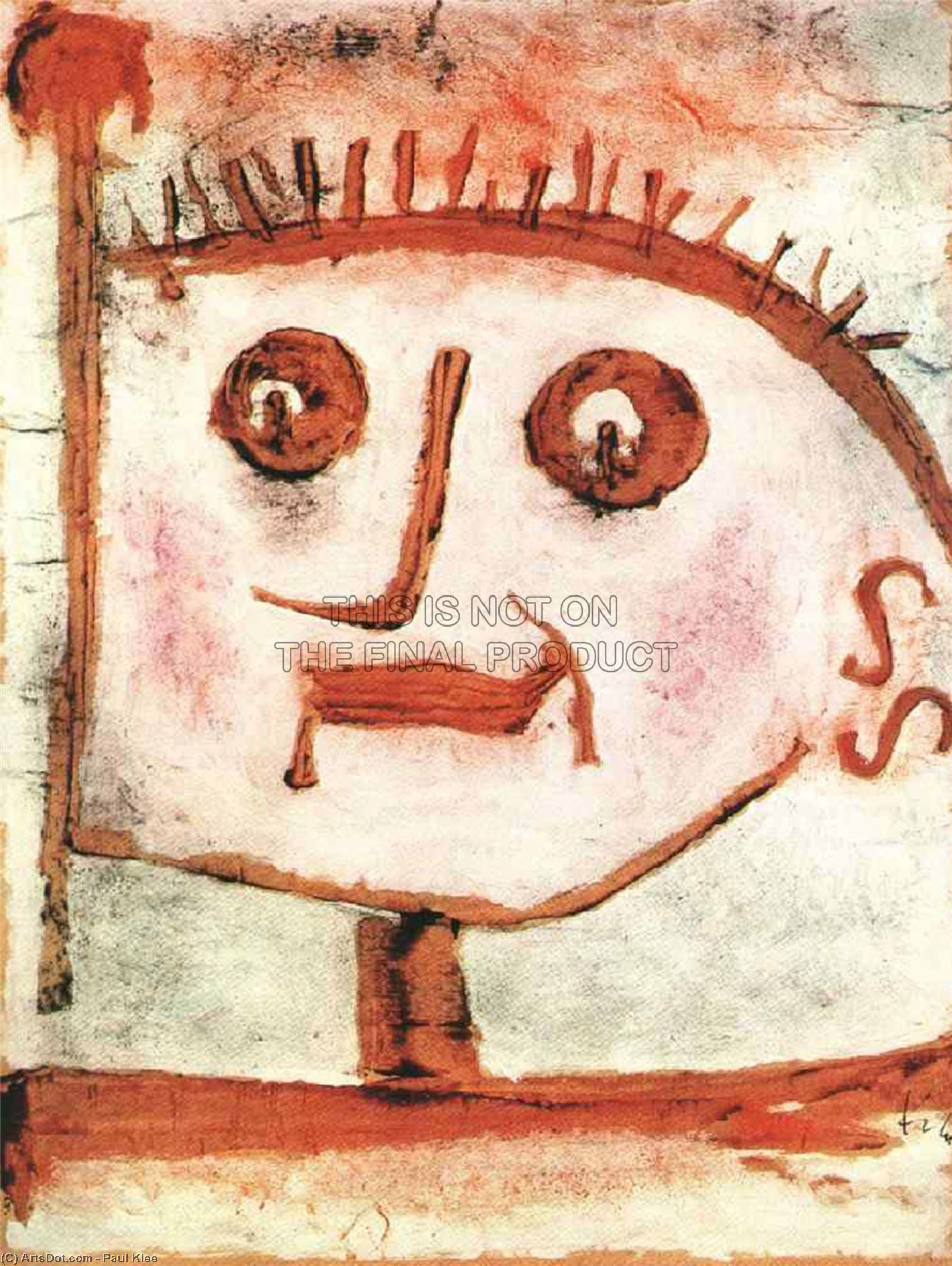
In the twilight of his life, amidst the gathering shadows of a continent on the brink of catastrophe, Paul Klee produced one of his most hauntingly evocative works, "An Allegory of Propaganda." Created in 1939, this masterpiece serves as a visceral window into the psychological landscape of an era defined by political upheaval. The painting does not merely depict a subject; it captures a state of being—a face fractured and distorted by the insidious weight of external messaging. To gaze upon this work is to witness the very moment where individual perception begins to dissolve under the pressure of systemic manipulation, making it a profound choice for collectors who value art that speaks to the enduring complexities of the human condition.
The composition is a masterclass in Expressionist tension. Klee eschews the comfort of stable forms, opting instead for a deliberate fragmentation of the visage. Through a sophisticated use of watercolor and gouache on paper, he layers translucent washes with sharp, decisive lines to create a sense of depth that feels both ethereal and claustrophobic. The vibrant, almost aggressive hues are balanced by intricate geometric patterns—overlapping circles and squares that pulse with a rhythmic, yet unsettling, energy. This technique does more than showcase Klee's technical prowess; it mirrors the subject matter itself, where the structured geometry of propaganda attempts to impose order upon the organic, emotional reality of the human face.
The Symphony of Symbolism and Shadow
Beyond its striking visual rhythm lies a deep, symbolic resonance that continues to captivate art historians and enthusiasts alike. The "allegory" referenced in the title is found in the way Klee uses distortion as a metaphor for truth. The eyes, positioned with a disorienting lack of symmetry, seem to peer out from a fractured reality, suggesting a loss of clarity and the fragmentation of the self. For the discerning interior designer, this piece offers a sophisticated focal point that invites contemplation; its abstract elements allow it to integrate seamlessly into modern, minimalist, or avant-garde spaces, while its historical gravity provides an intellectual anchor to any curated collection.
The historical context of 1939 adds a layer of profound emotional weight to the viewing experience. As fascism rose across Europe, Klee’s work became a silent protest against the erasure of individuality. The painting captures the anxiety of a world where truth was being systematically rewritten. When bringing a high-quality reproduction of this work into a home or gallery, one is not merely displaying an aesthetic object, but preserving a piece of cultural memory. It remains a powerful testament to the resilience of the artistic spirit, standing as a beautiful yet somber reminder of the importance of seeing clearly in an age of distortion.