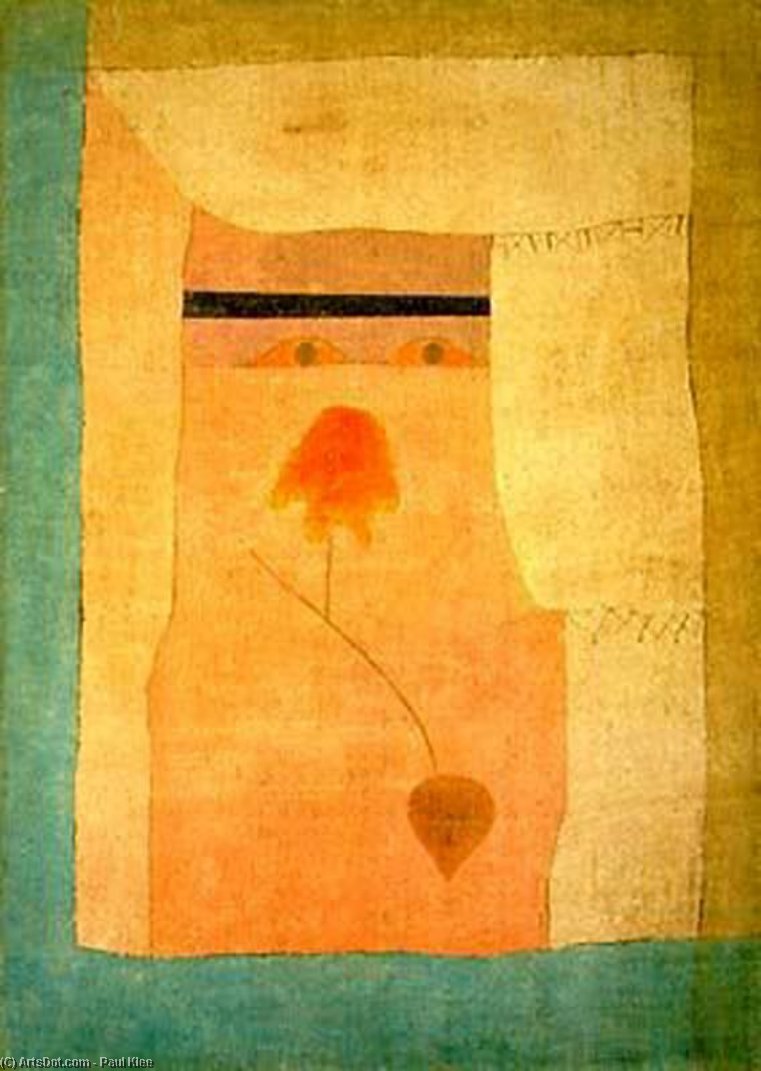
Arab Song

Paul Klee’s vibrant ‘Arab Song’ captures an evocative mood through playful abstraction—a man adorned in bandana holds a crimson flower against a serene blue sky, embodying the artist's signature expressive style of the early 20th century. Explore this captivating artwork and bring its beauty into your home.


Paul Klee (1879 - 1940)

Discover Paul Klee (1879-1940): Swiss-German artist blending Expressionism, Cubism & Surrealism. Explore his color theory, Bauhaus influence, and playfully insightful art.

Paul Klee’s “Arab Song”: A Symphony of Color and Quiet Contemplation

  • Subject Matter: The painting depicts a solitary figure—a man adorned with a bandana—holding aloft a vibrant red flower. This simple yet striking image immediately draws the viewer's eye, establishing a focal point amidst the expansive blue sky backdrop.
  • Style and Technique: Klee’s signature style is characterized by geometric abstraction combined with lyrical spontaneity. He employs a technique known as “tonal painting,” layering washes of color to create subtle gradations and textures that imbue the artwork with an ethereal quality. The deliberate absence of precise contours contributes to the piece's dreamlike atmosphere.
  • Historical Context: Created during Klee’s prolific period between 1937 and 1940, “Arab Song” reflects the artist’s engagement with Surrealist influences while retaining his distinctive aesthetic sensibilities. The painting emerged from a broader artistic dialogue concerning exploration of subconsciousness and emotional resonance—a response to the anxieties of wartime Europe.
  • Symbolism: The red flower serves as a potent symbol of passion, vitality, and remembrance. Its placement in the man’s hand suggests an offering or gesture of devotion, hinting at themes of love and connection. Simultaneously, the blue sky represents serenity, openness, and infinite possibility—creating a harmonious juxtaposition that underscores the painting's contemplative mood.
  • Emotional Impact: “Arab Song” transcends mere visual representation; it invites viewers into a realm of quiet introspection. The muted color palette combined with the geometric forms evokes feelings of tranquility and melancholy, prompting contemplation on themes of solitude and beauty. It’s a piece that speaks to the human condition—a reminder that profound emotion can be conveyed through understated artistry.