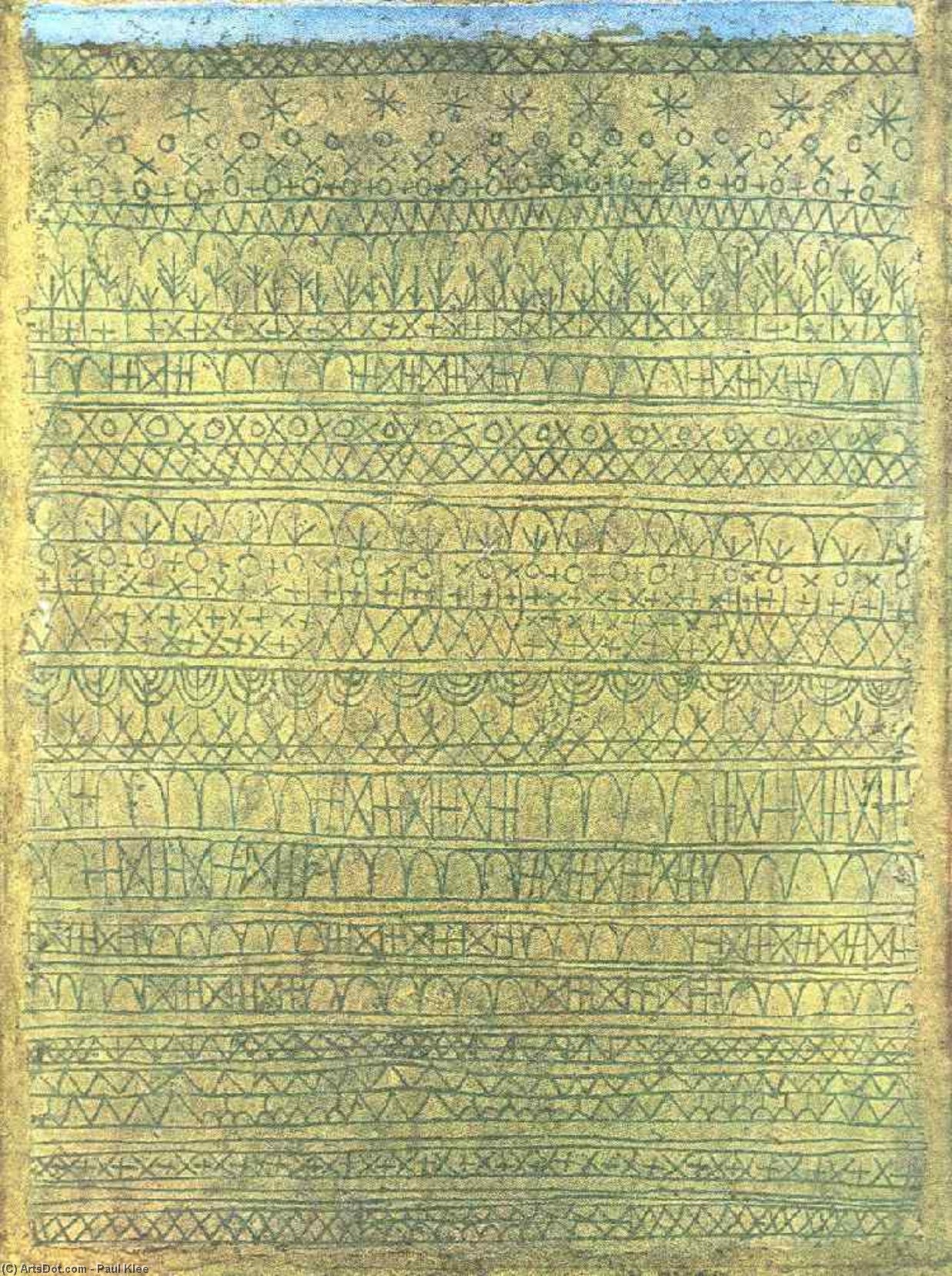
Paul Klee’s "Pastoral (Rhythms)" – an abstract masterpiece of geometric patterns & earthy tones. Explore its rhythmic lines, textured surface & primitive abstraction.
Discover Paul Klee (1879-1940): Swiss-German artist blending Expressionism, Cubism & Surrealism. Explore his color theory, Bauhaus influence, and playfully insightful art.
Paul Klee’s Pastoral (Rhythms): A Symphony of Geometric Simplicity
Paul Klee's "Pastoral (Rhythms)," created in 1927, stands as a testament to the artist’s unwavering commitment to abstract expression and his profound understanding of visual harmony. More than just a decorative element, this tempera painting on canvas mounted on wood embodies a complex interplay of influences—Expressionism's emotive intensity, Cubism’s fragmented perspectives, and Surrealism’s dreamlike logic—resulting in an artwork that transcends mere representation to communicate directly with the viewer’s subconscious. Its presence at MoMA underscores its enduring significance within the canon of modern art.
Composition & Technique: Rhythm and Texture
The painting's visual core is dominated by a vertical arrangement of repeating geometric patterns – rectangles, triangles, and stylized plant motifs – meticulously interwoven into a grid-like structure. Thick, bold lines propel movement across the canvas surface, establishing a rhythmic cadence that mirrors musical composition, reflecting Klee’s lifelong fascination with music as an artistic counterpart. The artist skillfully employed layering and scraping techniques to build up texture, creating an uneven surface that captures light in unexpected ways—a deliberate departure from traditional realism. This tactile quality invites contemplation and encourages viewers to engage actively with the artwork's materiality.
Color Palette & Symbolic Resonance
A predominantly earthy palette of greens and yellows anchors “Pastoral (Rhythms),” accented by subtle blues and whites, evoking images of verdant landscapes and serene skies. These colors aren’t merely decorative; they resonate with symbolic associations rooted in nature—fertility, growth, and tranquility—suggesting a deeper meditation on themes of pastoral beauty and spiritual contemplation. The thin blue line traversing the central area serves as a visual divider, subtly separating contrasting zones of color and reinforcing the painting's compositional balance.
Historical Context & Artistic Influences
“Pastoral (Rhythms)” emerged during Klee’s formative years at the Bauhaus school in Weimar, where he wrestled with innovative ideas about art and design—a period marked by experimentation and a rejection of academic conventions. The influence of primitive abstraction is palpable, hinting at connections to ancient textile art and early geometric abstraction movements. This stylistic choice reflects Klee's desire to liberate painting from representational constraints, prioritizing form and color as vehicles for conveying emotion and exploring the fundamental principles of visual perception.
Emotional Impact & Artistic Legacy
Ultimately, “Pastoral (Rhythms)” transcends its formal elements to elicit a profound emotional response. Its simplicity belies a depth of feeling—a quiet contemplation of beauty and harmony that speaks to the human spirit’s yearning for connection with nature and transcendence. Like many of Klee's works, it invites viewers into a realm of imagination where geometric forms coalesce into evocative imagery, securing its place as an iconic masterpiece of abstract art and demonstrating Klee’s enduring contribution to the artistic landscape of the 20th century.