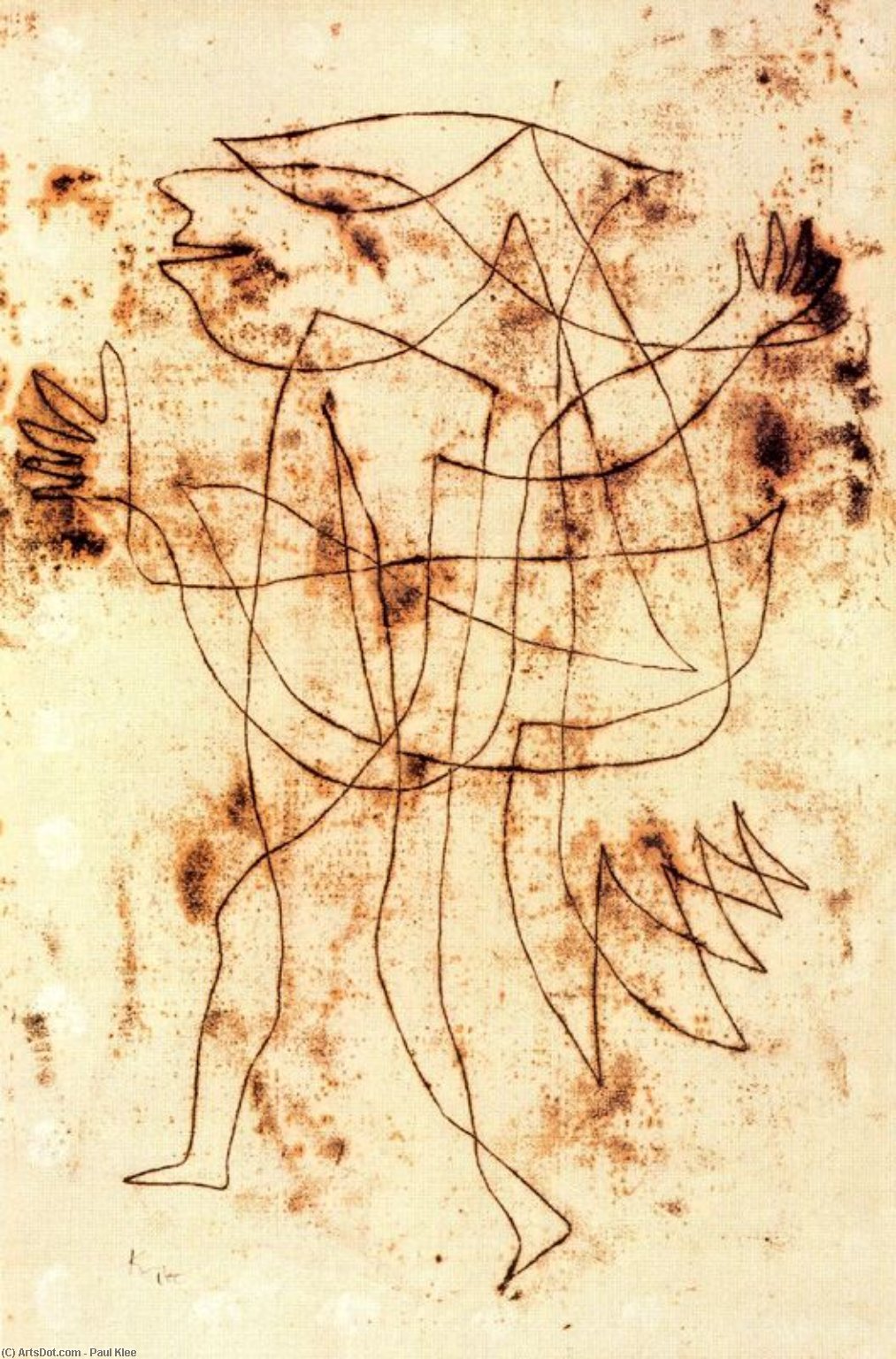
A Dance Between Form and Emotion: Exploring Paul Klee’s “Small Fool in Trance 2”
Paul Klee's "Small Fool in Trance 2" isn't merely a painting; it’s an invitation into a realm where logic yields to intuition, and visual elements intertwine to convey profound psychological states. Created in 1940 during the tumultuous years of World War II, this artwork embodies Klee’s signature expressive style—a blend of Cubist fragmentation and Surrealist dreamlike imagery—resulting in a composition that simultaneously captivates and unsettles the viewer.
- Subject Matter: At first glance, the painting presents an arresting juxtaposition: a figure with a dog's head perched atop their shoulders. This unconventional depiction immediately establishes a sense of disorientation and challenges conventional notions of representation. The posture exudes vulnerability yet possesses an underlying resilience, mirroring the anxieties of wartime Europe.
- Style & Technique: Klee’s masterful use of color—primarily muted yellows, blues, and reds—creates a harmonious yet subtly dissonant palette that reflects the emotional complexity inherent in the scene. The painting employs a technique characterized by angular lines and geometric shapes, reminiscent of Cubist explorations but infused with Klee's distinctive organic sensibility. Thickly applied paint lends texture to the surface, emphasizing the physicality of the artwork and conveying a palpable sense of immediacy.
Historical Context & Artistic Influences
The painting’s genesis lies within the broader context of Klee's engagement with Surrealist principles championed by André Breton. However, unlike many Surrealists who sought to liberate subconscious desires through fantastical imagery, Klee approached dreamlike states as a means of accessing deeper layers of psychological awareness. The influence of Expressionism is evident in Klee’s preoccupation with conveying emotion—specifically anxiety and introspection—through distorted forms and vibrant hues. He deliberately eschewed realism, prioritizing instead the exploration of inner experience.
- Symbolism: The dog's head symbolizes loyalty, protection, and perhaps even primal instinct – qualities that resonate with themes of vulnerability and strength simultaneously. Its placement atop the figure’s shoulders suggests a burden carried willingly, representing the psychological challenges faced during times of crisis. The hat worn by the figure adds another layer of symbolism, hinting at concealment and disguise—a reflection of the anxieties surrounding wartime secrecy.
Emotional Impact & Artistic Legacy
“Small Fool in Trance 2” transcends mere visual representation; it communicates a powerful emotional resonance that lingers long after viewing. The painting evokes feelings of melancholy, apprehension, and yet simultaneously inspires contemplation on the human condition. Klee’s ability to distill complex psychological states into deceptively simple geometric forms underscores his enduring artistic legacy—a testament to the transformative power of abstraction in conveying profound truths about human experience. It remains a cornerstone of Klee's oeuvre, demonstrating his unwavering commitment to exploring the intersection between form and emotion.
- Interior Design Considerations: For interior designers seeking inspiration, “Small Fool in Trance 2” offers a captivating dialogue between color psychology and artistic expression. Its muted palette can be skillfully incorporated into calming spaces—perhaps paired with natural textures like linen or wool—to create an atmosphere of understated elegance.
Concluding Thoughts
Ultimately, Paul Klee’s “Small Fool in Trance 2” stands as a poignant reminder that art possesses the capacity to illuminate the darkest recesses of our inner selves. It is a painting that demands engagement—a challenge to preconceived notions and an invitation into a world where beauty resides not merely in visual perfection but in the honest articulation of human emotion.