A Snapshot of London Life: Paul Sandby’s “London Cries”
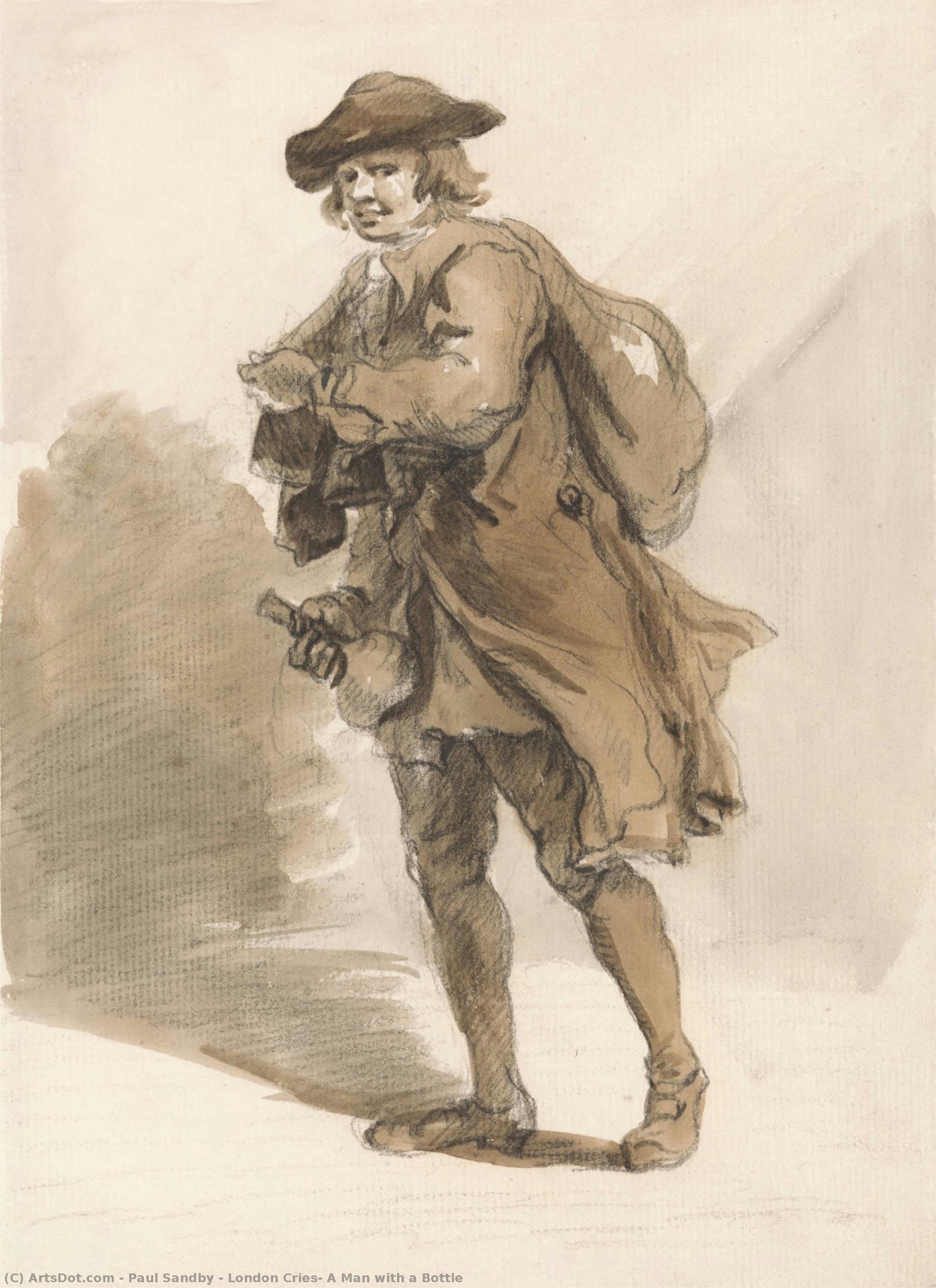
Paul Sandby's "London Cries: A Man with a Bottle," painted in 1759, isn’t merely a depiction of a street scene; it’s a vibrant, almost theatrical window into the bustling heart of eighteenth-century London. This watercolor, now meticulously reproduced as a hand-painted artwork by ArtsDot, captures a moment of everyday commerce and perhaps, a touch of wry observation, offering a glimpse into the lives of ordinary people within the grand tapestry of the city.
The scene unfolds in a shadowed alleyway, dominated by a weathered brick wall – a common feature of London’s densely packed streets. A man, dressed in a simple brown coat and hat, stands center stage, holding a bottle and a small bag. His posture suggests a practiced routine, a familiar dance with the city's commerce. The details are remarkably precise for the era: the folds of his clothing, the worn texture of the brick, even the subtle shadows cast by the light – all speak to Sandby’s keen eye for observation and his commitment to realistic representation. The background hints at a tavern or public space, filled with figures engaged in conversation, further immersing the viewer within the scene.
A Master of Watercolor Technique
Sandby was a pioneer in watercolor painting, particularly known for his ability to capture light and atmosphere with remarkable subtlety. This work exemplifies his mastery of the medium. Notice how he uses washes of color – delicate blues and greens for the shadows, muted browns for the brickwork – to create depth and volume. The loose, expressive brushstrokes contribute to a sense of immediacy and spontaneity, as if Sandby were capturing the scene in real-time. He employed a technique known as ‘grisaille,’ using monochrome washes to establish the tonal values before adding color, ensuring accuracy and balance within the composition.
The choice of paper – slightly textured laid paper – is also significant. It provides an ideal surface for watercolor, allowing the pigment to flow freely while maintaining a certain toothiness that enhances the visual impact of the brushstrokes. The overall effect is one of luminous quality, with light dancing across the figures and surfaces.
Historical Context: London in Transition
"London Cries" offers a fascinating insight into the social and economic landscape of 18th-century London. The title itself refers to the practice of street vendors hawking their wares – bottles of ale, small bags of goods, and various other items – to passersby. These “criers” were an integral part of the city’s economy and daily life. Sandby's painting isn’t simply a portrait of a vendor; it’s a representation of a vital urban activity.
Painted during a period of significant social change, London was experiencing rapid growth and transformation. The city was becoming increasingly crowded and diverse, with new industries emerging and traditional trades evolving. Sandby's work reflects this dynamism, capturing the energy and complexity of a rapidly changing metropolis. The painting also provides a poignant reminder of the lives of ordinary people – often overlooked in grand historical narratives – who contributed to the vibrant pulse of the city.
Symbolism and Emotional Resonance
Beyond its documentary value, “London Cries” possesses a subtle emotional resonance. The man’s expression is ambiguous—is he weary, hopeful, or simply focused on his trade? The shadows and muted colors contribute to a sense of quiet melancholy, suggesting the hardships and uncertainties of urban life. Yet, there's also an undeniable charm in the scene – a testament to the resilience and adaptability of Londoners.
As a hand-painted reproduction by ArtsDot, this artwork retains Sandby’s original spirit while offering exceptional clarity and detail. It’s more than just a print; it’s a tangible connection to a pivotal moment in British art history—a captivating glimpse into the soul of London itself.