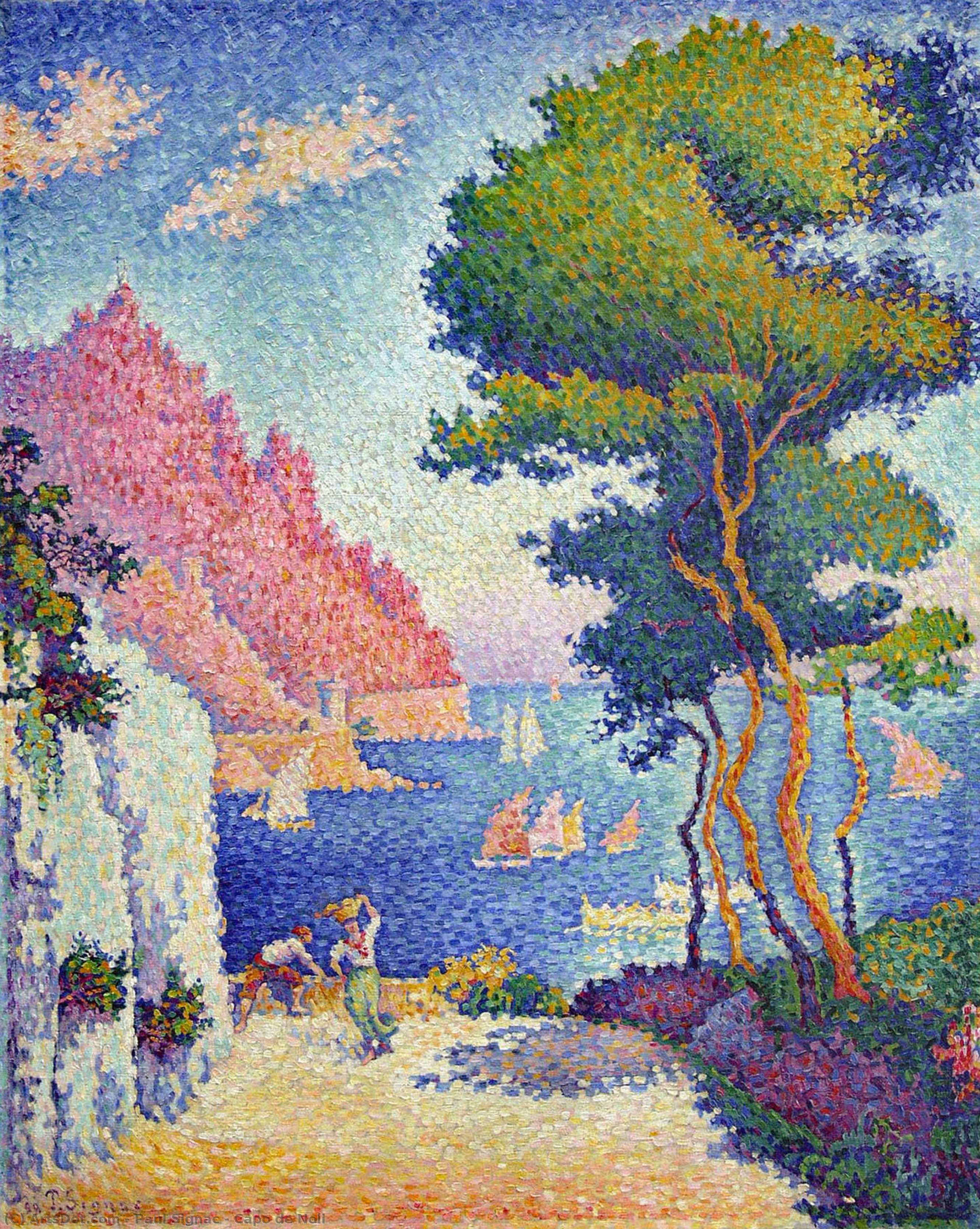
Paul Signac’s ‘Capo di Noli,’ a stunning Neo-Impressionist masterpiece from 1898, captures coastal serenity through its revolutionary Pointillism technique. Explore the luminous beauty of this iconic artwork and bring it into your collection.
Discover Paul Signac (1863-1935), a key Neo-Impressionist painter & master of Pointillism. Explore vibrant coastal scenes, harbor views & his influence on modern art at ArtsDot!
Explore European art history at the Wallraf-Richartz Museum & Fondation Corboud! From Gothic masterpieces to Impressionist beauty, discover Cologne's artistic soul on Roman foundations.
A Symphony of Light and Color: Exploring Paul Signac’s ‘Capo di Noli’
Paul Signac's 'Capo di Noli', painted in 1898, stands as a cornerstone of Neo-Impressionism—a movement that irrevocably altered the landscape of late nineteenth-century art. More than just a depiction of the Italian Riviera coastline, it embodies Signac’s profound dedication to scientific observation and his masterful manipulation of color theory to convey emotion and atmosphere. This stunning canvas resides in the Wallraf-Richartz Museum in Cologne, Germany, offering visitors an unparalleled opportunity to immerse themselves in Signac's artistic vision.
The Scene: Coastal Serenity Captured in Detail
The painting portrays a tranquil vista overlooking Genoa, Italy. A woman walks along a path bordered by lush vegetation, gazing out at the expansive Mediterranean sea – a scene imbued with palpable serenity. Scattered boats punctuate the water’s surface, ranging from smaller craft near shore to larger vessels further afield. Adding to the composition is another figure positioned on the right side of the canvas, subtly enhancing the sense of depth and dynamism. And nestled amongst the foliage is a dog, anchoring the viewer's gaze and contributing to the overall feeling of pastoral beauty. Signac’s meticulous attention to detail isn’t merely decorative; it serves as a testament to his belief that art should strive for accuracy in representing nature—a principle championed by Impressionists like Monet and Sisley before him.
The Technique: Pointillism – A Revolutionary Approach
At the heart of ‘Capo di Noli’ lies Signac's groundbreaking technique: Pointillism. Unlike traditional painting where pigment is blended on the canvas, Pointillism employs tiny dots of pure color—primarily complementary hues—that optically merge in the viewer’s eye to create an illusion of luminosity and vibrancy. This method, pioneered by Georges Seurat, was born from Signac's fascination with optics and his desire to translate scientific discoveries into artistic expression. Each dot is carefully placed to maximize its impact on perceived color, resulting in a textured surface that shimmers with reflected light—a technique that distinguishes itself dramatically from the smoother brushstrokes of Impressionism. The artist’s deliberate layering of dots creates an ethereal quality, mirroring the hazy atmosphere characteristic of coastal landscapes at dusk.
Influence and Legacy: Shaping Modern Artistic Expression
Signac's innovative approach had a profound influence on subsequent generations of painters. He served as a pivotal mentor to artists like Maurice Denis and Henri Matisse, who embraced Pointillism and adapted it to their own stylistic sensibilities. Furthermore, Signac’s unwavering commitment to scientific rigor resonated with the burgeoning Fauves movement in France—artists who boldly rejected academic conventions and prioritized expressive color over realistic representation. Similarly, the Expressionists in Germany adopted similar principles of color and texture to convey emotional intensity. ‘Capo di Noli’, therefore, represents not merely a beautiful artwork but also a pivotal moment in art history—a demonstration of how scientific observation could inspire artistic innovation and reshape our understanding of visual perception.
A Window into Signac’s Artistic Journey
Initially influenced by Monet and Sisley's Impressionistic explorations of light and color, Signac swiftly developed his own distinctive voice. He joined the Société des Artistes Indépendants—a collective dedicated to promoting avant-garde art—providing him with a crucial platform for experimentation and artistic dialogue. His unwavering belief in the transformative power of color solidified his commitment to Pointillism as his signature style, securing his place among the most influential figures of Neo-Impressionism and cementing ‘Capo di Noli’ as an enduring emblem of artistic brilliance.