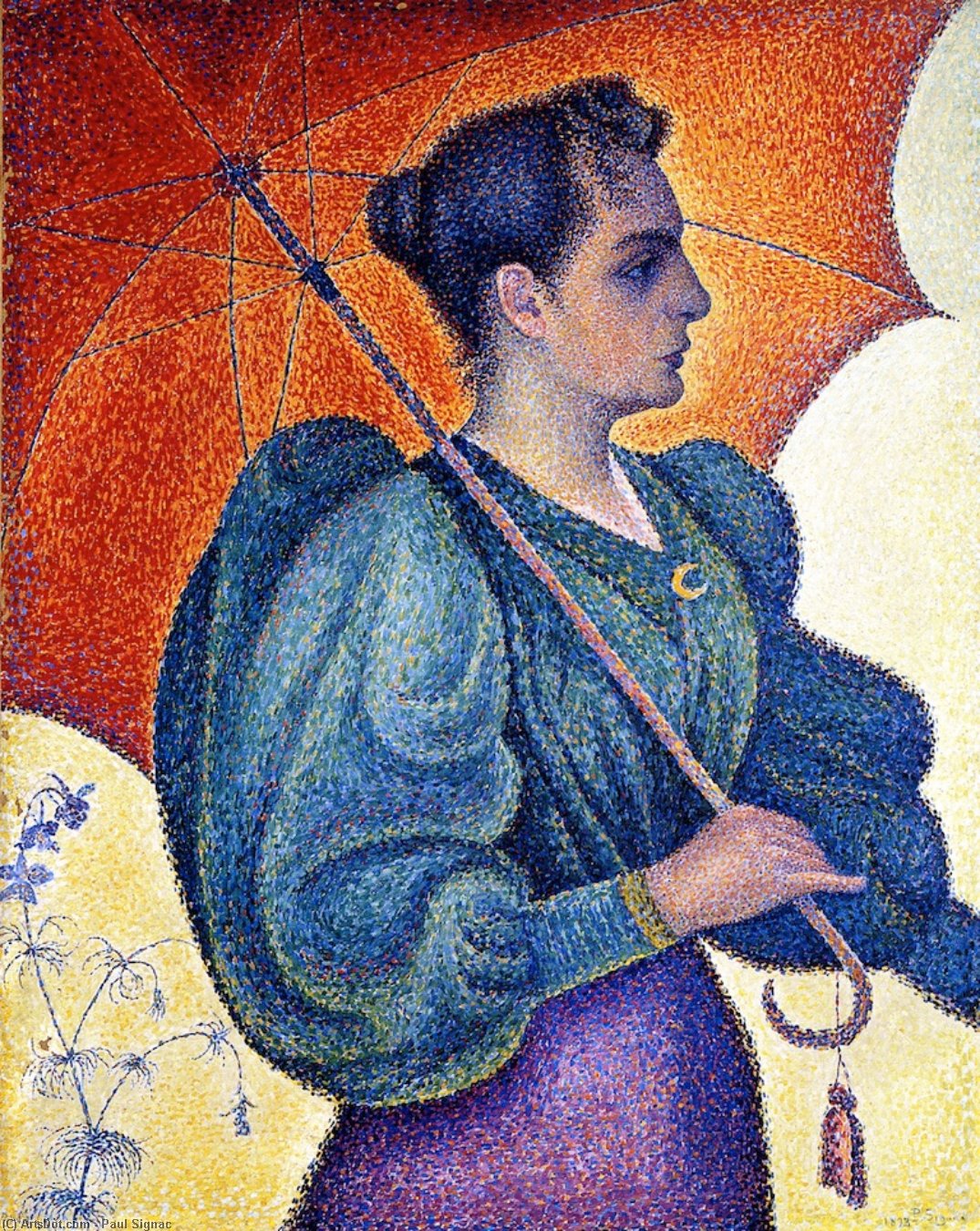
Inspired by Claude Monet and Georges Seurat, Signac pioneered Pointillism – a technique utilizing tiny dots of pure color to achieve optical blending.
Discover Paul Signac (1863-1935), a key Neo-Impressionist painter & master of Pointillism. Explore vibrant coastal scenes, harbor views & his influence on modern art at ArtsDot!
Discover the Musée d'Orsay in Paris! Housed in a stunning former railway station, explore an unparalleled collection of Impressionist & Post-Impressionist masterpieces by Monet, Van Gogh & more.
Paul Signac’s Woman with Parasol: A Symphony of Light and Color
The painting “Woman with Parasol,” formally known as “Portrait of Berthe Signac,” stands as a cornerstone of Neo-Impressionism, embodying the movement's radical departure from Impressionistic subjectivity toward a scientifically informed exploration of visual perception. Created in 1893, this artwork isn’t merely a depiction of a woman; it’s an embodiment of Signac’s unwavering belief that color itself possessed inherent energy and could be harnessed to convey emotion—a conviction deeply rooted in the burgeoning field of optics and championed by Georges Seurat, his collaborator.
A Technique Rooted in Science
Signac's groundbreaking approach – Pointillism – revolutionized painting technique. Rather than blending pigments on canvas, he meticulously applied tiny dots of pure color onto the surface, allowing the viewer’s eye to synthesize these dots optically, creating an illusion of luminosity and vibrancy unattainable by traditional methods. This method wasn’t simply a stylistic flourish; it was driven by scientific research into how the human retina perceives light and color. Signac painstakingly documented his experiments with complementary colors—red and green, blue and orange—demonstrating their ability to heighten visual sensation and achieve remarkable tonal effects. The artist meticulously calibrated each dot's hue and saturation, striving for absolute precision in replicating the subtleties of natural light.
Berthe Signac: Subject Matter and Symbolism
The portrait depicts Berthe Roblès, a distant cousin of Camille Pissarro and a woman who held a significant place in Signac’s life—a friendship forged amidst the bohemian circles of Paris during the Belle Époque. More than just a likeness, Berthe embodies Signac's idealized vision of feminine beauty and grace. Her gaze directs outwards, suggesting contemplation and an awareness of the surrounding environment – mirroring Signac’s own fascination with capturing fleeting moments of natural grandeur. The parasol itself serves as a powerful symbol—protection from the sun’s glare, but also a barrier separating Berthe from the world beyond, emphasizing her inner solitude and introspection.
The Atmosphere of Les Andelys
Painted in Les Andelys, Normandy, Signac sought to capture the essence of this picturesque landscape – a location that had captivated Impressionists like Monet and Sisley. The backdrop is rendered with shimmering patches of color—primarily blues and greens—reflecting the tranquil waters of the Seine and the verdant foliage of the surrounding hills. These hues aren’t blended; they are presented as discrete dots, mirroring Signac's meticulous technique and reinforcing the painting's overall impressionistic spirit. The diffused sunlight casts a warm glow upon Berthe’s face, subtly illuminating her features and conveying a sense of serenity—a testament to Signac’s masterful manipulation of color and light to evoke emotion.
A Legacy of Luminosity
“Woman with Parasol” remains an enduring emblem of Neo-Impressionism's triumph over Impressionistic subjectivity. Its luminous palette, its innovative technique, and its evocative portrayal of a woman immersed in contemplation solidify Signac’s place as one of the most influential artists of his era—a figure who irrevocably altered the course of modern art by prioritizing scientific observation alongside artistic expression. It continues to inspire collectors and interior designers alike, offering a glimpse into a world where color itself becomes a conduit for profound emotional resonance.