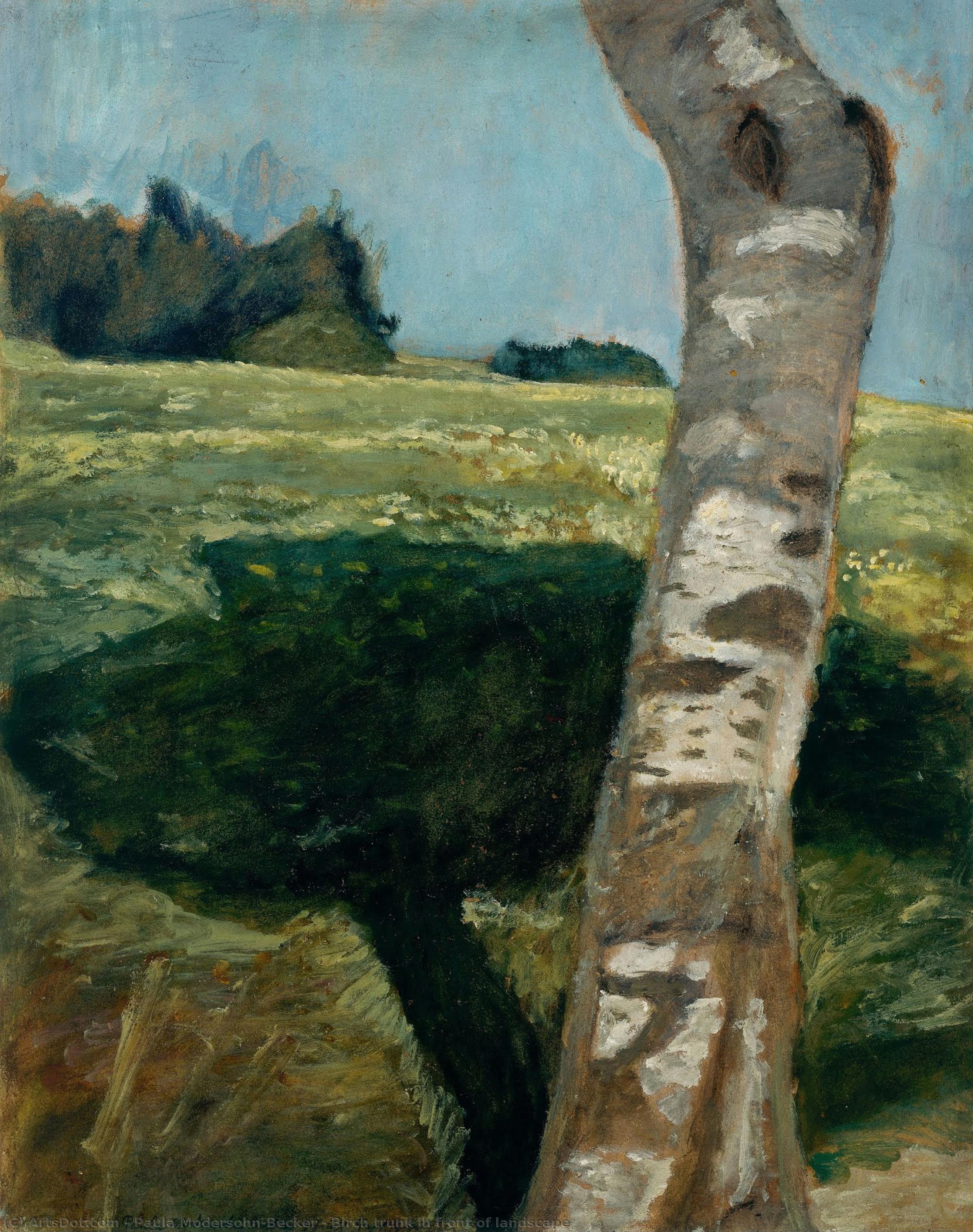
Paula Modersohn-Becker’s ‘Birch Trunk in Front of Landscape’: A Study in Quiet Intensity
This evocative painting, created in 1903 by Paula Modersohn-Becker, offers a poignant glimpse into the artist's evolving exploration of the human condition. Measuring 4 x 47 cm, it’s a deceptively simple composition – a solitary birch trunk dominating the foreground, set against a backdrop of a tranquil field and distant trees. Yet, within this apparent stillness lies a profound sense of introspection, characteristic of Modersohn-Becker's pioneering approach to portraiture and landscape.
- Subject Matter: The central focus is undeniably the birch tree, rendered with meticulous attention to detail – its textured bark, subtly decaying, speaks to themes of mortality and the passage of time.
- Composition: The placement of the two figures adds a layer of narrative complexity. Their presence suggests an observation of nature, perhaps a moment of quiet contemplation or a connection between humanity and the natural world.
- Color Palette: Modersohn-Becker employs a restrained palette dominated by earthy browns, greens, and greys, contributing to the painting’s serene and melancholic atmosphere.
The Artist's Vision: A Pioneer of Inner Portraiture
Paula Modersohn-Becker was a truly remarkable figure in the early days of modern art. Born in Dresden in 1876, she defied societal expectations for women artists and relentlessly pursued her own artistic vision. Working primarily in Worpswede, a thriving artist colony on the North Sea coast, she developed a unique style characterized by directness, emotional intensity, and an unflinching portrayal of the human form – particularly women. Her work anticipated many of the concerns of Expressionism, though she remained largely outside its formal movements.
This particular painting exemplifies her commitment to capturing not just external appearances but also the inner life of her subjects. The tree itself can be interpreted as a symbol of resilience and strength, rooted deeply in the earth despite its evident vulnerability.
Technique and Style: Impasto and Emotional Resonance
Modersohn-Becker’s technique is immediately recognizable – characterized by thick impasto brushstrokes that build up layers of paint, creating a tactile surface and intensifying the emotional impact of the work. The application of paint isn't merely descriptive; it’s expressive, conveying a sense of immediacy and raw feeling. This approach aligns with her desire to move beyond mere representation and engage directly with the viewer’s emotions.
- Impasto Technique: The thick layering of paint creates a rich texture that draws the eye and adds depth to the composition.
- Brushwork: Noticeable, deliberate brushstrokes contribute to the painting's overall sense of energy and movement.
Historical Context and Legacy
Created in 1903, this work reflects a pivotal moment in Modersohn-Becker’s career. It demonstrates her growing confidence as an artist and her increasing willingness to experiment with form and subject matter. Tragically, she died prematurely in 1907 at the age of thirty-one, but her legacy endures as one of the most important figures in early modern art. Her unflinching honesty and profound sensitivity continue to resonate with viewers today, making works like ‘Birch Trunk in Front of Landscape’ all the more compelling.