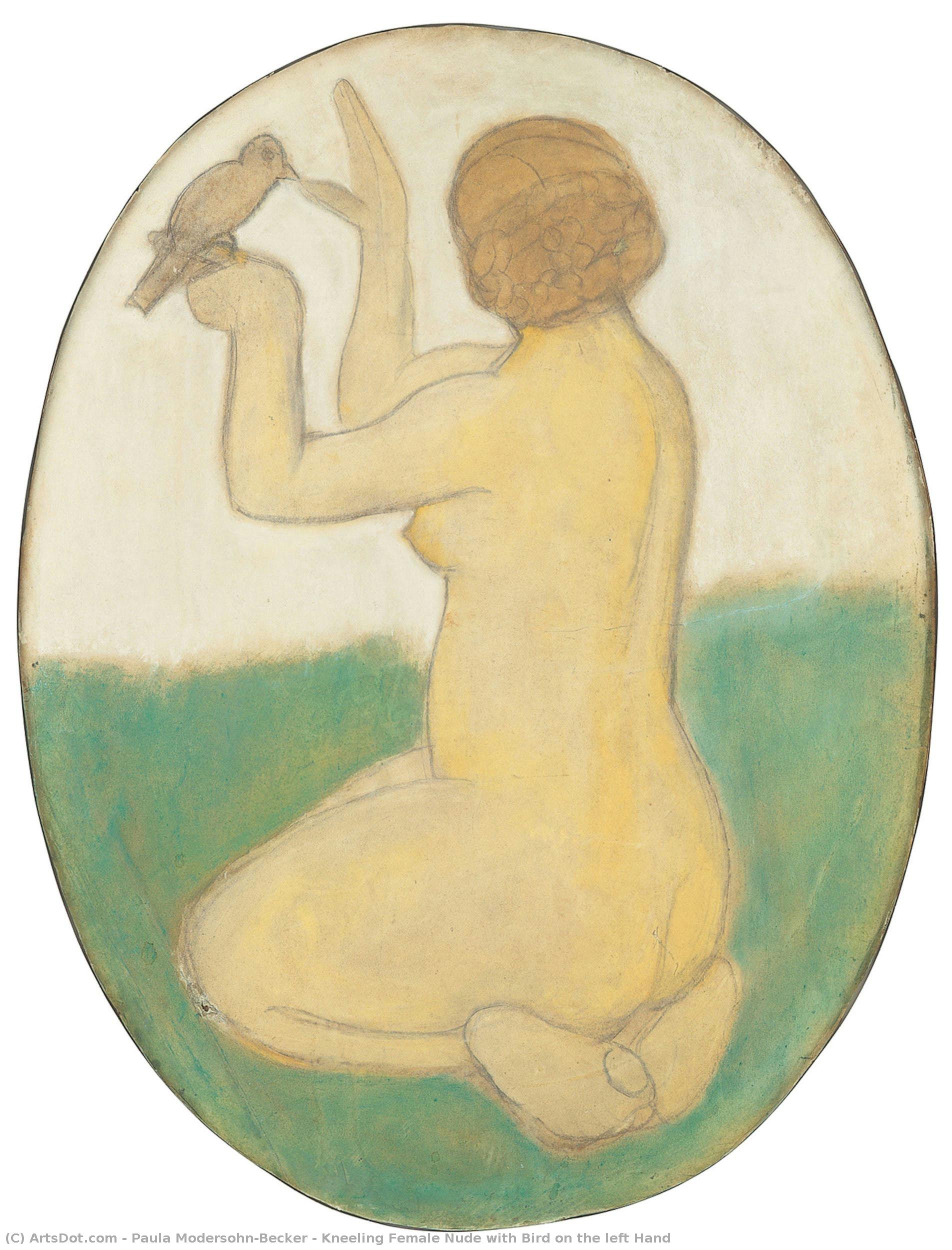
Delve into Paula Modersohn-Becker's poignant exploration of femininity and motherhood through 'Kneeling Female Nude with Bird,' a masterful Expressionist drawing capturing raw emotion and artistic innovation.
Discover Paula Modersohn-Becker (1876-1907), a pioneering Expressionist renowned for her daring self-portraits & intimate depictions of motherhood, shaping early 20th-century art with emotional depth and innovation.
Explore Bremen's Böttcherstraße Museums! Discover Expressionist art, the Paula Modersohn-Becker Museum & unique architecture. 3D tours available. A cultural gem!
A Whisper of Vulnerability: Exploring Paula Modersohn-Becker’s “Kneeling Female Nude with Bird on the Left Hand”
Paula Modersohn-Becker's "Kneeling Female Nude with Bird on the Left Hand," created in 1906, transcends mere representation; it embodies a profound exploration of femininity and inner contemplation within the burgeoning Expressionist movement. This deceptively simple composition—a woman seated upon the earth, her left hand cradling a bird—immediately draws the viewer into a realm of quiet intimacy and symbolic resonance. The painting’s starkness is countered by an astonishing delicacy of execution, achieved through meticulous lead pencil shading that captures subtle nuances of form and texture.
The Artist's Vision: Expressionism at Its Core
Born Minna Hermine Paula Becker in Dresden in 1876, Modersohn-Becker defied societal expectations for women artists of her time, forging a path marked by unwavering artistic conviction. Her early life was shaped by familial circumstances that instilled a certain resilience—her uncle’s audacious attempt to assassinate Kaiser Wilhelm II served as an unsettling reminder of the political tensions simmering beneath the surface of Wilhelmine Germany. Despite these challenges, Paula's passion for art blossomed, nurtured by encouragement from her family and fueled by a desire to express herself authentically. She embraced Expressionism, prioritizing emotional truth over photographic realism—a bold stance that positioned her amongst the vanguard of artistic innovation.
Technique and Material: Lead Pencil Mastery
The remarkable tonal range achieved in “Kneeling Female Nude” speaks volumes about Modersohn-Becker’s technical prowess. Employing lead pencil on paper, she skillfully manipulated graphite to create a velvety surface texture that conveys both fragility and strength simultaneously. The artist's meticulous layering of shading—particularly evident around the woman’s torso and limbs—reveals an astonishing level of detail, capturing the contours of the body with remarkable accuracy while simultaneously conveying a sense of vulnerability. This technique wasn’t merely about replicating visual appearance; it was about channeling emotion onto the canvas, mirroring the artist's own internal state.
Symbolism: Bird Imagery and Maternal Instinct
The inclusion of birds—one perched delicately on the woman’s left hand and another positioned high above—is laden with symbolic significance. Birds are universally associated with freedom, nurturing, and rebirth – concepts deeply intertwined with Modersohn-Becker's fascination with motherhood. The bird held in her hand represents protection and care, mirroring the artist’s own experience as a mother herself. Furthermore, its elevated position suggests aspiration and transcendence—a yearning for spiritual connection beyond the confines of earthly existence. This subtle yet powerful iconography elevates the painting beyond a straightforward depiction of nudity, transforming it into an emblem of feminine resilience and inner harmony.
Emotional Resonance: A Portrait of Quiet Contemplation
“Kneeling Female Nude with Bird on the Left Hand” isn’t designed to provoke shock or elicit grand gestures; rather, it invites viewers into a moment of profound contemplation. The woman's posture—kneeling upon the earth—suggests humility and receptiveness – qualities that underscore Modersohn-Becker’s artistic mission: to capture the essence of human experience with uncompromising honesty. The painting’s muted palette contributes to its emotional impact, fostering a sense of serenity and intimacy. It speaks to the quiet beauty found in solitude and introspection—a testament to Modersohn-Becker's ability to distill complex emotions into a deceptively simple visual form. This artwork remains an enduring symbol of artistic courage and a poignant reminder of the transformative power of inner vision.