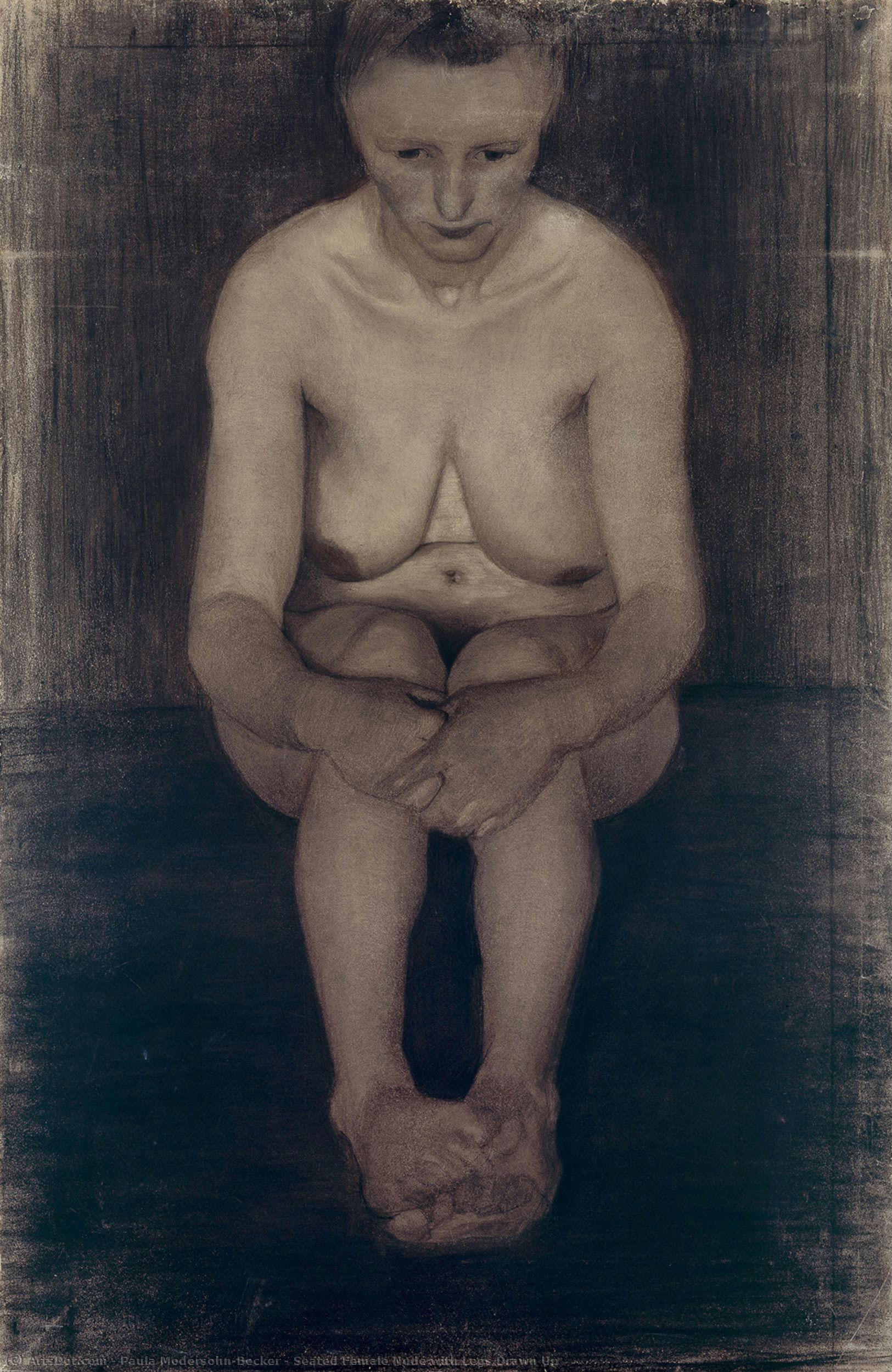
Explore Paula Modersohn-Becker's iconic 'Seated Female Nude,' a poignant self-portrait reflecting inner contemplation and pioneering Expressionist style—a masterpiece housed at Bremen’s Böttcherstraße Museums.
Discover Paula Modersohn-Becker (1876-1907), a pioneering Expressionist renowned for her daring self-portraits & intimate depictions of motherhood, shaping early 20th-century art with emotional depth and innovation.
Explore Bremen's Böttcherstraße Museums! Discover Expressionist art, the Paula Modersohn-Becker Museum & unique architecture. 3D tours available. A cultural gem!
A Quiet Revolution: Exploring Paula Modersohn-Becker’s “Seated Female Nude with Legs Drawn Up”
The artwork "Seated Female Nude with Legs Drawn Up" by Paula Modersohn-Becker stands as a cornerstone of Expressionist art, encapsulating not merely visual beauty but also a profound exploration of the female psyche and a rejection of academic conventions. Created in 1898 during a period of burgeoning artistic experimentation in Dresden and Munich—a movement striving to capture raw emotion and subjective experience—the painting transcends its formal simplicity to deliver a message of quiet defiance and introspective contemplation.
The Artist’s Vision: Flattened Forms and Simplified Lines
Modersohn-Becker's technique is remarkably innovative for her time. Abandoning the meticulous realism favored by earlier generations, she embraced a reductive approach—primarily utilizing charcoal—to achieve an astonishingly flattened form. This deliberate erasure of detail wasn’t merely stylistic; it represented a conscious effort to distill the essence of the human body, stripping away extraneous ornamentation and focusing solely on its fundamental structure. The artist skillfully blended the charcoal strokes, creating subtle gradations that convey texture without resorting to shading—a technique that anticipates later developments in Abstract Expressionism. Furthermore, Modersohn-Becker abbreviated the delineation of anatomical features like the feet and face, prioritizing emotional resonance over precise representation.
Historical Context: Challenging Victorian Ideals
The painting emerged from a cultural landscape grappling with shifting societal norms regarding femininity. Victorian ideals emphasized modesty and idealized beauty—a stark contrast to the burgeoning interest in portraying inner life and psychological complexity. Modersohn-Becker’s depiction of the nude female figure wasn't intended as an erotic gesture but rather as a courageous assertion of autonomy and selfhood. She sought to capture not just physical appearance but also the sitter’s gaze, directing it outwards—away from the viewer—suggesting a preoccupation with internal thoughts and feelings. This deliberate distancing reflects a broader trend within Expressionist art – a desire to confront uncomfortable truths about human existence.
Symbolism: Embodied Vulnerability and Inner Strength
The pose itself is laden with symbolic significance. The woman’s legs drawn up to her chest convey vulnerability—a posture indicative of introspection and emotional openness. Yet, simultaneously, it embodies resilience and determination. The seated position suggests stillness and contemplation, inviting the viewer to consider the complexities of human experience. Modersohn-Becker's masterful use of charcoal contributes to this symbolic weight; its muted tones evoke a sense of melancholy and quiet dignity—a visual embodiment of the artist’s own unwavering commitment to portraying authentic emotion.
Emotional Impact: A Moment Frozen in Time
“Seated Female Nude with Legs Drawn Up” resonates powerfully with viewers today because it speaks directly to universal themes of identity, vulnerability, and self-awareness. Unlike portraits that aim to capture a polished image of beauty—a preoccupation characteristic of Victorian art—this painting offers an unflinching glimpse into the inner world of its subject. It’s a testament to Modersohn-Becker's ability to transform simple materials—charcoal—into a vehicle for profound emotional expression. The artwork compels us to confront our own perceptions of femininity and beauty, prompting reflection on the importance of embracing vulnerability as a pathway to genuine understanding. Its enduring appeal lies in its quiet insistence on confronting uncomfortable truths about human experience with unwavering honesty – a legacy that continues to inspire artists and collectors alike.