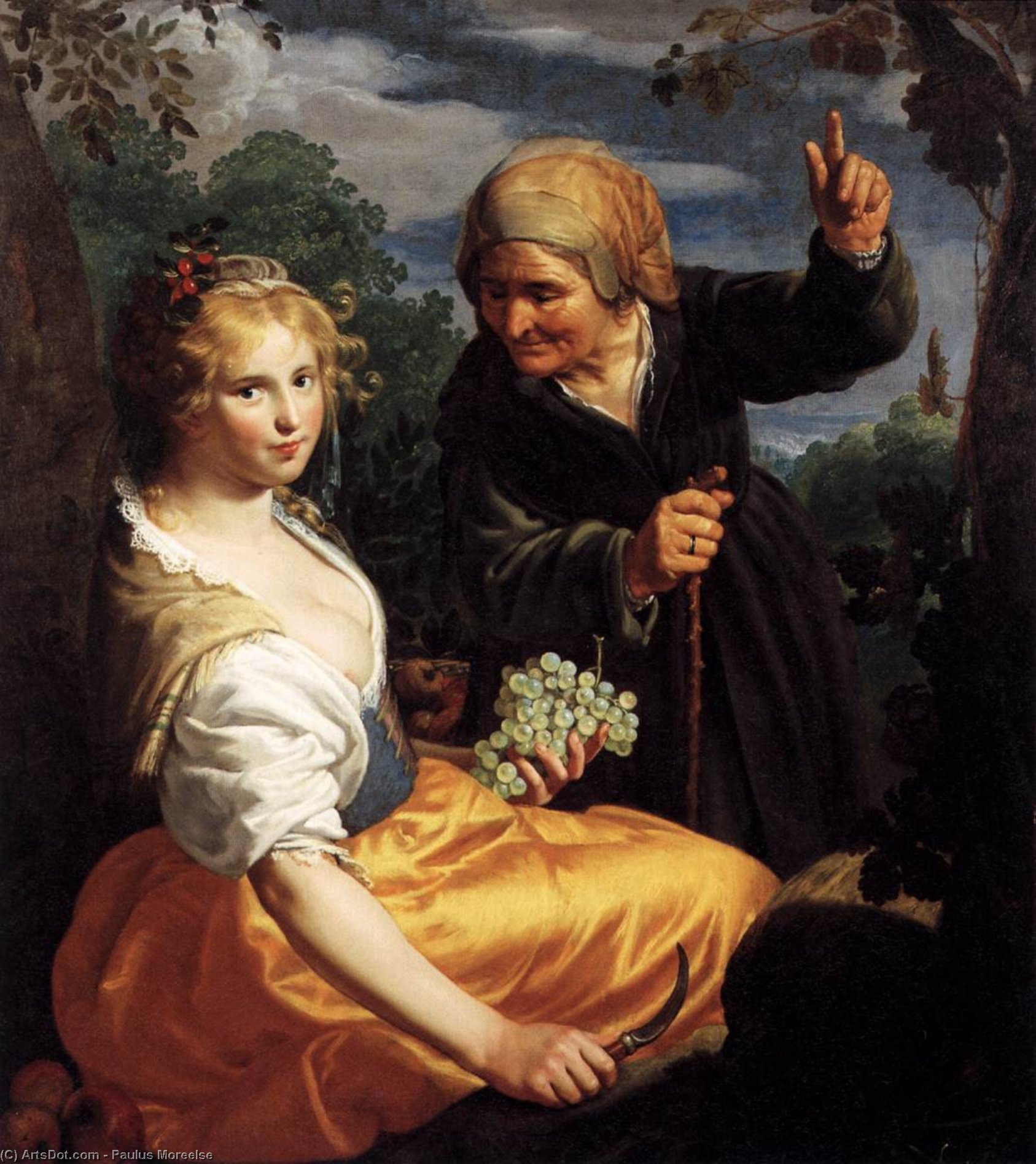
Pomona ( , Latin: [poːˈmoːna]) was a goddess of fruitful abundance and plenty in ancient Roman religion and myth. Her name comes from the Latin word pomum, "fruit", specifically orchard fruit.
Pomona was said to be a wood nymph. Pomona does not have a clear counterpart in Greek mythology, although the fruit goddess Opora can be seen as her equivalent.
== Etymology ==
The name Pōmōna is a derivat
A Portrait of Mythological Harmony: Paulus Moreelse’s Vertumnus and Pomona
Paulus Moreelse's “Vertumnus and Pomona,” completed around 1625-1630, stands as a captivating testament to the flourishing Mannerist style prevalent in Dutch art during its twilight years. Executed on canvas with meticulous oil paint application, this artwork transcends mere representation; it’s an invitation into a carefully crafted tableau of pastoral beauty interwoven with classical mythology.
The Mythological Narrative
Inspired by Ovid's Metamorphoses—specifically the tale of Pomona, goddess of fruit trees and orchards—Moreelse presents a scene depicting Pomona, youthful and radiant, engaged in conversation with Vertumnus, god of autumn and transformation. The figures are positioned amidst lush foliage, creating an atmosphere of serene contemplation. This juxtaposition isn’t accidental; it speaks to the Renaissance fascination with reconciling pagan myths and Christian theology – a characteristic hallmark of Moreelse's artistic vision.
Technical Brilliance: Caravaggio’s Legacy
Moreelse skillfully employs techniques reminiscent of Michelangelo Merisi da Caravaggio, his acknowledged mentor. Like Caravaggio, he utilizes dramatic chiaroscuro—the masterful interplay of light and shadow—to sculpt the forms of Pomona and Vertumnus, imbuing them with palpable presence. The artist’s meticulous brushwork captures the textures of bark, leaves, and fruit with remarkable accuracy, demonstrating a profound understanding of artistic observation.
Symbolism Rooted in Antiquity
The scattered grapes surrounding Pomona serve as potent symbols of fertility and abundance—a direct reference to Pomona’s divine role. The wine glass subtly reinforces the theme of celebration and conviviality, mirroring the idealized pastoral life depicted. Moreelse's deliberate choice of composition underscores the Renaissance humanist belief in observing and appreciating the natural world as a reflection of divine order.
A Moment Frozen in Time
"Vertumnus and Pomona" isn’t simply a depiction of mythological figures; it’s an exploration of beauty, contemplation, and harmony. Moreelse's masterful technique—combined with his erudition in classical mythology—creates an artwork that continues to resonate with viewers today. It exemplifies the Mannerist preoccupation with idealized forms and emotional intensity, securing its place as a cornerstone of Dutch Renaissance art.