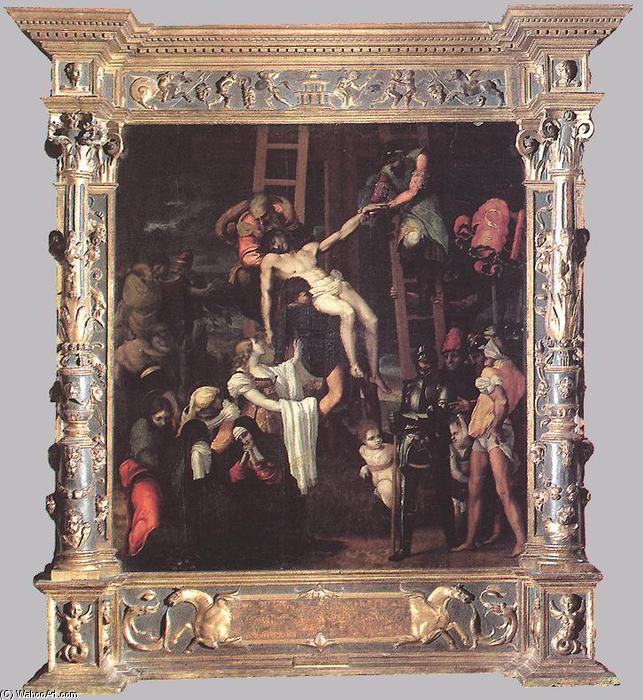
A Dramatic Lament: The Descent from the Cross by Pedro Machuca
Pedro Machuca’s “Descent from the Cross,” painted in 1547, is not merely a depiction of a biblical scene; it's a visceral embodiment of grief and faith rendered with the raw intensity characteristic of late Mannerism and early Baroque. This monumental oil painting, currently housed within its original frame – a testament to its historical significance – immediately commands attention with its scale and emotional depth. The composition isn’t simply about portraying Christ’s fall; it's about capturing the agonizing weight of loss felt by those gathered below, their faces etched with sorrow and disbelief. Machuca masterfully utilizes dramatic lighting, casting deep shadows that amplify the scene’s somber mood while simultaneously highlighting key figures – particularly Christ himself – drawing the viewer into the heart of this profound moment.
Baroque Drama and Spanish Renaissance Influence
Machuca's work resides at a fascinating intersection of artistic movements. While firmly rooted in the traditions of Spanish painting, it anticipates the dramatic flourishes of the Baroque style that would soon dominate European art. The influence of Italian Mannerism is palpable in the elongated figures, the subtly distorted perspective, and the heightened emotionality. Notably, Machuca’s work represents a significant step towards classicizing Renaissance architecture in Spain, as evidenced by the meticulously crafted frame surrounding the painting – a design likely influenced by his role as architect for Charles V's palace in Granada. This architectural element underscores the piece's broader cultural context, reflecting the ambition and artistic patronage of the Spanish court during this period.
Symbolism and Emotional Resonance
The painting is rich with symbolic meaning. Christ’s descent from the cross isn’t just a historical event; it's a potent metaphor for sacrifice, suffering, and redemption. The figures surrounding him – Mary, John the Evangelist, Nicodemus, and others – represent humanity grappling with loss and seeking solace in faith. The ladder, prominently featured diagonally across the composition, acts as a visual anchor, drawing the eye downwards to Christ’s body while simultaneously symbolizing the arduous path towards salvation. The use of color is deliberately restrained, dominated by deep browns, blues, and reds—colors traditionally associated with mourning and sacrifice – further intensifying the painting's emotional impact. The faces of the mourners are not idealized; they are rendered with a raw honesty that conveys genuine grief, making the scene profoundly relatable to viewers across centuries.
Technique and Artistic Mastery
Machuca’s technical skill is evident in every brushstroke. He employs a layered glazing technique, building up color and form through multiple thin applications of oil paint. This method creates a remarkable sense of depth and luminosity, particularly noticeable in the fabrics and skin tones. The artist demonstrates an exceptional understanding of anatomy and perspective, skillfully rendering the complex folds of drapery and the subtle nuances of human expression. The meticulous detail, combined with the dynamic composition and dramatic lighting, results in a painting that is both visually stunning and emotionally resonant. It’s a testament to Machuca's mastery of his craft and his ability to capture the essence of a deeply moving subject.
For those seeking a high-quality reproduction or an original artwork, this piece offers a rare opportunity to own a significant work of Spanish Renaissance art—a poignant reminder of faith, loss, and the enduring power of human emotion.