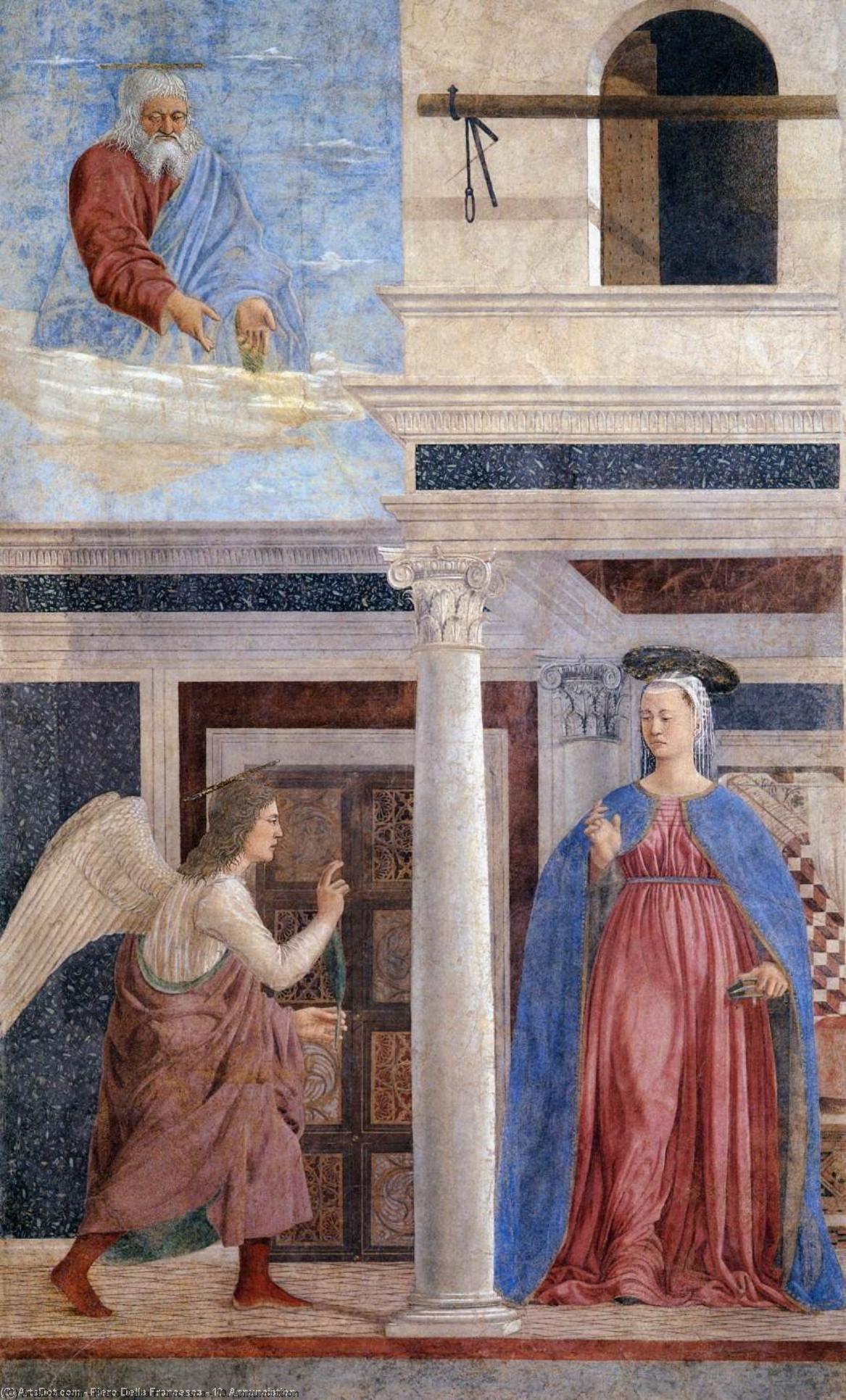
A Tuscan Masterpiece Illuminated: Piero della Francesca’s ‘The Annunciation’
Piero della Francesca, born around 1415 in San Sepolcro, Umbria – a region steeped in artistic tradition yet largely untouched by the flamboyant excesses of Florence – stands as one of the most intellectually stimulating figures of the Early Renaissance. Unlike many artists of his era whose biographies overflow with anecdotal detail, Piero’s life remains curiously elusive; biographical information concerning his family and formative years is sparse, leaving historians to reconstruct his path through artistic discovery primarily from surviving documentation. However, what *is* undeniable is that he possessed an extraordinary mind—a singular fascination for both the burgeoning aesthetic innovations of Florence and a profound understanding of mathematical precision and geometric harmony. His father’s occupation as a shoemaker and tanner provided Piero with a grounding in practical craft alongside a familial environment characterized by quiet dignity. Evidence suggests his initial artistic training occurred locally, absorbing the stylistic conventions of central Italian painting before Masaccio and Brunelleschi irrevocably altered the landscape of Renaissance art. This early exposure undoubtedly instilled within him a meticulous approach that would define his oeuvre.
- Subject Matter: The fresco depicts the pivotal biblical narrative of the Annunciation – Gabriel informing Mary of her divine conception by God—a scene laden with theological significance and representing one of Christianity’s foundational stories.
- Style: Piero della Francesca's style is characterized by an unparalleled stillness and clarity, reflecting a humanist preoccupation with rational observation and geometric order. He eschewed the dramatic gestures and emotional fervor favored by contemporaries like Masaccio, opting instead for a serene composure that prioritizes compositional balance and idealized beauty.
- Technique: Executed in tempera on plaster—a technique demanding exceptional skill and patience—the fresco demonstrates Piero’s mastery of perspective and shading. His use of linear perspective creates an illusionistic depth that transcends the limitations of its time, transporting viewers into a meticulously rendered architectural space. The subtle gradations of color contribute to a luminous effect, enhancing the sense of realism without sacrificing artistic elegance.
Historical Context: Umbria and the Renaissance Ideal
Umbria, during Piero della Francesca’s lifetime, represented a bastion of conservative artistic values—a deliberate counterpoint to the dynamism of Florence. While Florentine artists wrestled with stylistic experimentation and engaged in debates about humanist ideals, Piero’s vision remained firmly rooted in classical principles of proportion and harmony. The fresco's commission likely reflects this broader cultural ethos, aligning with the aspirations of ecclesiastical patrons seeking to express piety through aesthetically refined imagery. It speaks to a desire for transcendence achieved not through dramatic emotion but through intellectual contemplation—a hallmark of Renaissance humanism’s pursuit of virtue and knowledge.
Symbolism: Light, Geometry, and Divine Revelation
The fresco's pervasive use of light is paramount to its symbolic power. Piero employs chiaroscuro – the interplay between light and shadow – with breathtaking precision, guiding the viewer’s gaze towards Mary and Gabriel, highlighting their central role in the narrative. Furthermore, geometric forms—particularly squares and rectangles—are subtly integrated into the architectural setting, symbolizing stability and divine order. These elements underscore the fresco's theological message: God’s grace illuminates human understanding, fostering faith and illuminating the path to spiritual enlightenment.
Emotional Impact: Tranquility and Contemplation
Despite its profound religious subject matter, ‘The Annunciation’ avoids overt emotional expression. Instead, it invites viewers into a state of quiet contemplation—a deliberate choice that reflects Piero della Francesca's belief in the power of reason to apprehend divine truths. The serene beauty of the composition fosters a sense of reverence and inspires reflection on themes of faith, humility, and grace. It remains an enduring testament to Piero’s artistic genius – a masterpiece that transcends time and continues to captivate audiences with its unwavering commitment to intellectual rigor and aesthetic perfection.