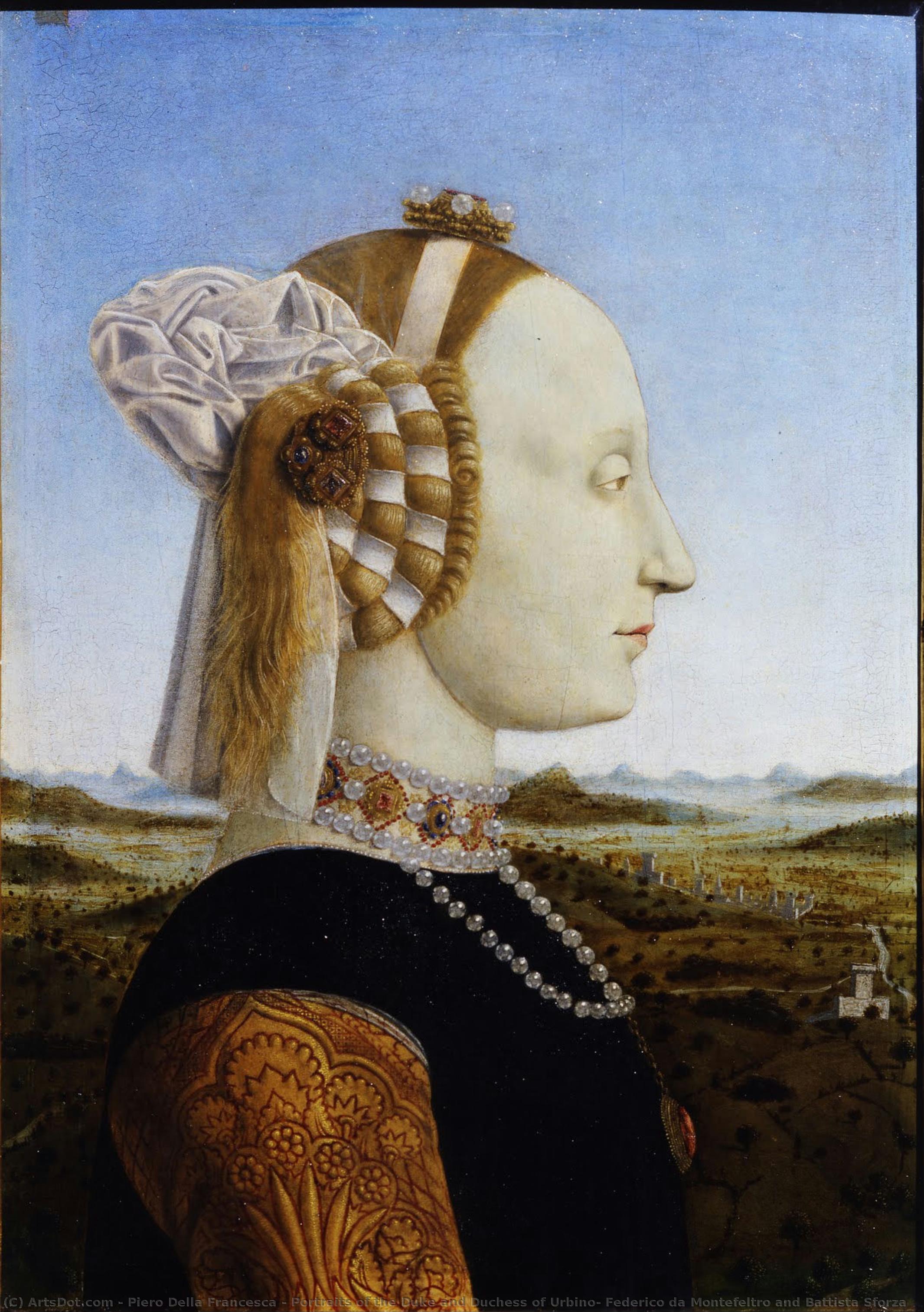
A Renaissance Masterpiece: Portraits of Federico da Montefeltro and Battista Sforza
Piero della Francesca’s Portraits of the Duke and Duchess of Urbino (1472) stand as iconic examples of Italian Renaissance portraiture, celebrated for their innovative composition, meticulous detail, and profound psychological insight. This diptych—two panels designed to be displayed together—offers a captivating glimpse into the lives of Federico da Montefeltro, Duke of Urbino, and his wife, Battista Sforza.
Subject & Historical Context
Federico da Montefeltro was a renowned military leader and humanist patron, transforming Urbino into a vibrant cultural center. Battista Sforza, from the powerful Sforza family of Milan, brought political acumen and prestige to the court. Commissioned during a period of relative peace and prosperity, these portraits weren’t merely likenesses; they were carefully constructed statements of power, status, and dynastic ambition. Interestingly, Battista passed away in 1472, shortly before or as the paintings were being completed, adding layers of meaning to her depiction.
Style & Technique
Della Francesca’s style is characterized by a harmonious blend of realism and idealism. The figures are presented in strict profile—a nod to ancient Roman coin portraits—emphasizing their noble features and dignified bearing. This compositional choice, while seemingly formal, allows for an exquisite rendering of detail, from the intricate embroidery on Battista's gown to the Duke’s meticulously depicted armor.
- Oil on Canvas: The use of oil paint allowed Della Francesca to achieve a remarkable level of luminosity and subtle gradations of tone.
- Linear Perspective: The backgrounds, depicting distant landscapes, demonstrate the artist’s mastery of linear perspective, creating a sense of depth and space.
- Geometric Precision: A hallmark of Della Francesca's work is his use of geometric forms to structure compositions. This lends a sense of order and harmony to the portraits.
Symbolism & Meaning
Beyond their aesthetic beauty, these portraits are rich in symbolism. The serene expressions of both figures convey composure and authority. Battista’s pale complexion has been interpreted as a subtle reference to her recent illness and untimely death. The elaborate clothing, jewelry (particularly the pearl necklace signifying purity and wealth), and headdresses all underscore the couple's high social standing.
Notably, the reverses of the panels feature allegorical scenes depicting triumphs—Federico’s military victories and Battista’s virtues—further reinforcing their power and prestige. These scenes, accompanied by Latin inscriptions, elevate the portraits beyond mere representations to complex statements about leadership and morality.
Emotional Impact & Legacy
Despite the formal presentation, these portraits evoke a sense of intimacy and psychological depth. The Duke and Duchess gaze outward with an air of quiet dignity, inviting viewers to contemplate their lives and legacies. The paintings’ enduring appeal lies in their ability to capture not just physical likenesses but also the essence of Renaissance ideals—humanism, reason, and artistic excellence.
These portraits continue to inspire artists, designers, and art enthusiasts alike, serving as a testament to Piero della Francesca's genius and the splendor of the Italian Renaissance. A reproduction of this work would bring an air of sophistication and historical significance to any interior space.