A Moment of Quietude: Renoir’s “After the Bath”
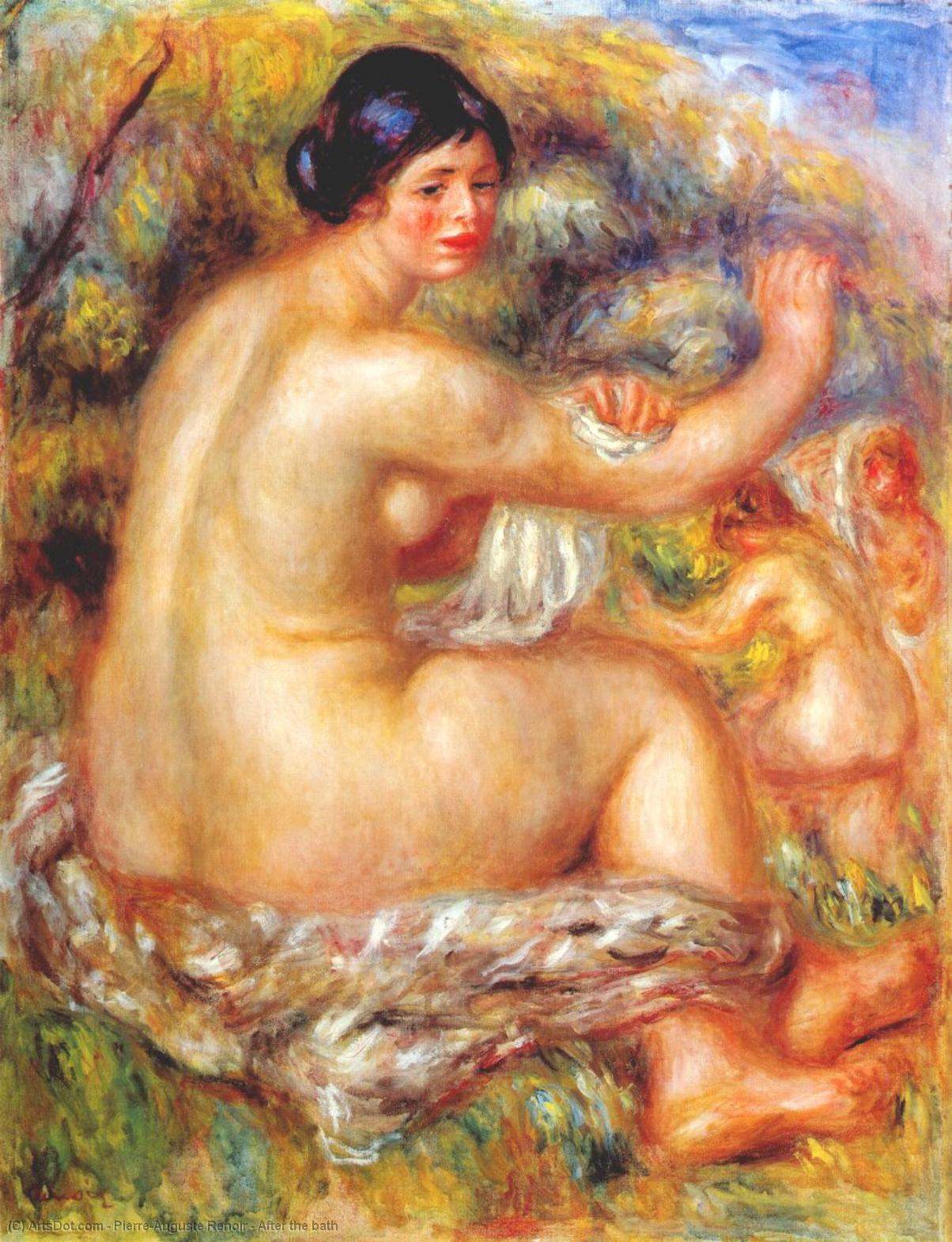
Pierre-Auguste Renoir's "After the Bath," painted in 1912, is more than just a depiction of a woman and child; it’s an exquisite distillation of Impressionistic serenity. This captivating work offers a glimpse into a private, intimate moment—a tender tableau of maternal care amidst the dappled light of a summer afternoon. The scene unfolds outdoors, likely in Renoir's beloved garden at Vétheuil, where he sought refuge and inspiration during his later years. The painting’s power lies not in dramatic action or grand narrative, but in its subtle details and the palpable sense of warmth and contentment radiating from the figures.
Subject and Composition – A Study in Domestic Harmony
At the heart of the composition is a woman, presumably the mother, gently nursing her child. Her posture is relaxed, almost languid, suggesting a profound sense of ease and trust. The baby, nestled securely against her, embodies innocence and vulnerability. Notice how Renoir masterfully uses the figures to frame the scene – their bodies create natural curves that guide the viewer’s eye through the painting. Several secondary figures are present—a man on the left, and two others towards the right—adding a layer of quiet observation without disrupting the central intimacy. A bird gracefully circles overhead, a fleeting symbol of freedom and joy, subtly enhancing the idyllic atmosphere.
Impressionistic Technique – Light, Color, and Texture
Renoir’s signature Impressionistic style is vividly evident in “After the Bath.” He employs loose, visible brushstrokes to capture the fleeting effects of light and shadow. The colors are rich and luminous—a palette dominated by soft greens, blues, and pinks, reflecting the natural hues of the outdoor setting. The artist skillfully uses broken color – applying small strokes of pure pigment alongside each other rather than blending them completely – creating a shimmering effect that mimics the play of sunlight on water and foliage. The texture is remarkably tactile; you can almost feel the warmth of the sun on skin, the softness of the fabric, and the dampness of the air.
Symbolism and Emotional Resonance – A Celebration of Motherhood
Beyond its technical brilliance, “After the Bath” is imbued with symbolic meaning. The act of nursing represents nourishment, protection, and the enduring bond between mother and child—themes deeply resonant throughout Renoir’s oeuvre. The relaxed posture of the woman suggests a state of blissful contentment, while the baby's vulnerability evokes feelings of tenderness and compassion. The painting isn’t merely a representation of a scene; it’s an evocation of a feeling – a quiet celebration of domesticity, love, and the simple pleasures of life. The dappled light filtering through the trees creates a sense of privacy and intimacy, reinforcing the emotional core of the work.
Reproductions – Bringing Renoir's Light into Your Space
ArtsDot offers meticulously hand-painted reproductions of “After the Bath,” capturing the essence of Renoir’s original masterpiece. Each reproduction is created by skilled artists using traditional oil painting techniques, ensuring that you receive a work of art that faithfully reflects the luminosity and emotional depth of the original. Whether you're seeking to adorn your home with a touch of Impressionistic elegance or desire a unique gift for an art lover, our reproductions provide an authentic and beautiful way to experience the enduring appeal of this iconic painting. Explore our range of sizes and canvas options to find the perfect addition to your collection – a timeless reminder of Renoir’s ability to capture the beauty of everyday life.