Explore Pierre-Auguste Renoir's (1841-1919) luminous Impressionist paintings! Discover portraits, Parisian life & feminine beauty in his iconic artworks.
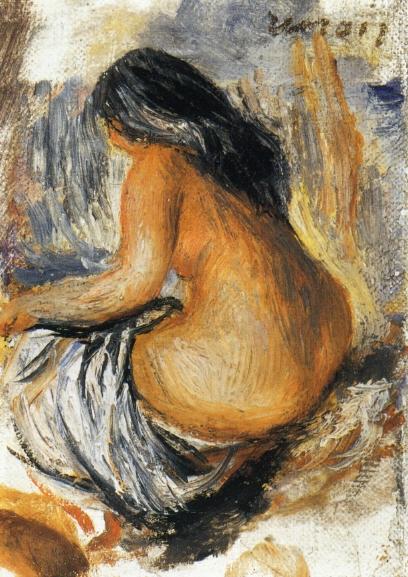
A Moment of Tranquility Captured in Light: Exploring Renoir’s “Bather from the Back”
Pierre-Auguste Renoir's "Bather from the Back," painted circa 1884, stands as a quintessential embodiment of Impressionism—a movement that revolutionized painting with its focus on capturing fleeting moments and atmospheric effects. More than just a depiction of a woman enjoying the seaside, this artwork delves into themes of beauty, sensuality, and the transformative power of natural light, offering viewers an intimate glimpse into Renoir’s artistic vision.
The Impressionist Style: Embracing Ephemeral Beauty
Renoir firmly established himself as one of Impressionism's foremost practitioners, alongside Claude Monet and Camille Pissarro. Rejecting the academic conventions of his time—characterized by meticulous detail and idealized forms—he championed a radically new approach. Instead of striving for photographic realism, Renoir sought to convey the sensation of seeing – how light dances across surfaces and transforms colors. This is brilliantly achieved in “Bather from the Back,” where brushstrokes are loose and visible, blending seamlessly to create an illusion of shimmering luminescence. The artist prioritized capturing the immediacy of experience over precise representation, prioritizing color and texture above all else.
Technique and Material: Mastering Color Harmony
Renoir’s masterful technique involved layering thin glazes of oil paint—a hallmark of Impressionist practice—onto a primed canvas. He meticulously observed the interplay of light and shadow on the woman's skin and drapery, painstakingly recreating these effects with delicate brushwork. The vibrant palette – dominated by hues of azure blue mirroring the ocean expanse, complemented by warm yellows and oranges radiating from the sun – exemplifies Renoir’s commitment to color harmony. These pigments weren’t mixed in advance but applied directly onto the canvas, allowing them to blend organically as they dried, resulting in a luminous surface that vibrates with life. The artist skillfully utilized impasto—thickly applied paint—to sculpt subtle contours and enhance textural richness, particularly around the woman's torso and arms.
Historical Context: Parisian Summer Idyllic
Painted during Renoir’s prolific period of artistic experimentation, “Bather from the Back” reflects the spirit of Belle Époque Paris – a time marked by optimism, leisure, and burgeoning artistic innovation. The Impressionists were responding to the societal shifts brought about by industrialization and urbanization, seeking refuge in the tranquility of nature and celebrating the pleasures of everyday life. This painting captures precisely that mood: a woman bathed in sunlight, seemingly lost in contemplation as she gazes towards an unseen horizon—a scene reminiscent of idyllic summer days spent along the Seine or at seaside resorts.
Symbolism and Emotional Resonance
Beyond its aesthetic beauty, “Bather from the Back” carries symbolic weight. The reclining figure represents repose and vulnerability, inviting viewers to contemplate themes of femininity and serenity. The woman’s posture conveys a sense of quiet contemplation—a deliberate departure from the dramatic narratives favored by academic painters—suggesting an inner life rich in emotion and imagination. Renoir's ability to evoke feelings of warmth, peace, and nostalgia speaks volumes about his artistic genius, cementing “Bather from the Back” as a timeless masterpiece that continues to captivate audiences today. Its luminous colors and expressive brushstrokes transport us back to a moment of blissful escape—a testament to Renoir’s enduring legacy as one of Impressionism's most beloved artists.