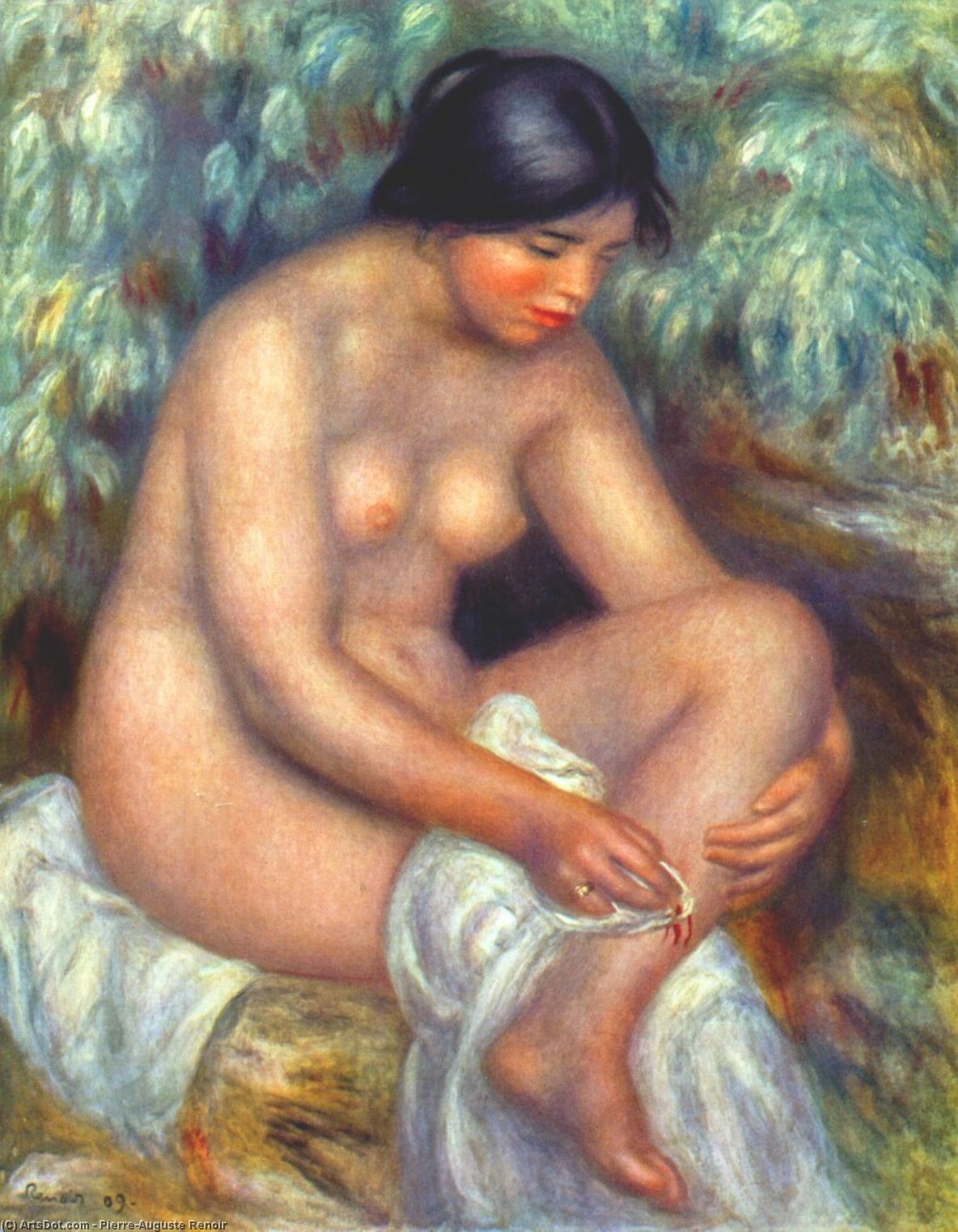
A Symphony of Light and Vulnerability
In the quiet intimacy of Pierre-Auguste Renoir’s 1909 masterpiece, "Bather Wiping a Wound," we are invited into a private moment that transcends mere observation. This evocative work serves as a profound meditation on the delicate balance between fragility and resilience. At first glance, the viewer encounters a solitary figure, a woman seated amidst the dappled shadows of a lush, natural setting, tending to a small injury. Yet, beneath this simple narrative lies the soul of Impressionism itself—a pursuit to capture not just the physical form, but the very atmosphere of existence. Renoir does not merely paint a subject; he paints the way light dances upon skin and how the weight of a moment can feel both heavy with pain and light with grace.
The technique employed in this late-period triumph is nothing short of breathtaking, showcasing the mastery that defined Renoir’s legendary career. Moving away from the rigid outlines of classical tradition, he utilizes broken brushstrokes—short, rhythmic applications of pigment that allow colors to vibrate against one another. This method creates a shimmering, ephemeral quality, as if the sunlight filtering through the canopy is actively moving across the canvas. By layering thin, translucent glazes of oil paint, Renoir achieves an extraordinary luminosity in the woman's flesh, capturing a pearlescent glow that suggests warmth and life. For the discerning collector, this texture offers a tactile depth that makes a high-quality reproduction feel alive with movement and light.
Symbolism and the Human Condition
Beyond its aesthetic splendor, "Bather Wiping a Wound" carries a poignant emotional resonance that speaks to the universal human experience. The act of tending to a wound is a powerful symbol of self-care and the quiet strength required to face life's inevitable abrasions. Created during a period when Renoir himself was grappling with physical ailments, the painting reflects a deeper historical anxiety regarding mortality and the fleeting nature of beauty. The surrounding landscape, with its scattered leaves and the subtle presence of a bird in the periphery, serves as a reminder of the cyclical nature of life—growth, decay, and rebirth.
For interior designers and art enthusiasts alike, this piece offers an unparalleled emotional anchor for a curated space. It possesses the rare ability to evoke a sense of calm introspection while commanding attention through its vibrant, harmonious palette. Whether placed in a sun-drenched morning room or a sophisticated, moody study, the painting brings with it a narrative of endurance and grace. To possess a reproduction of this work is to invite Renoir’s timeless vision of beauty—a beauty that does not shy away from vulnerability but finds its greatest strength within it.