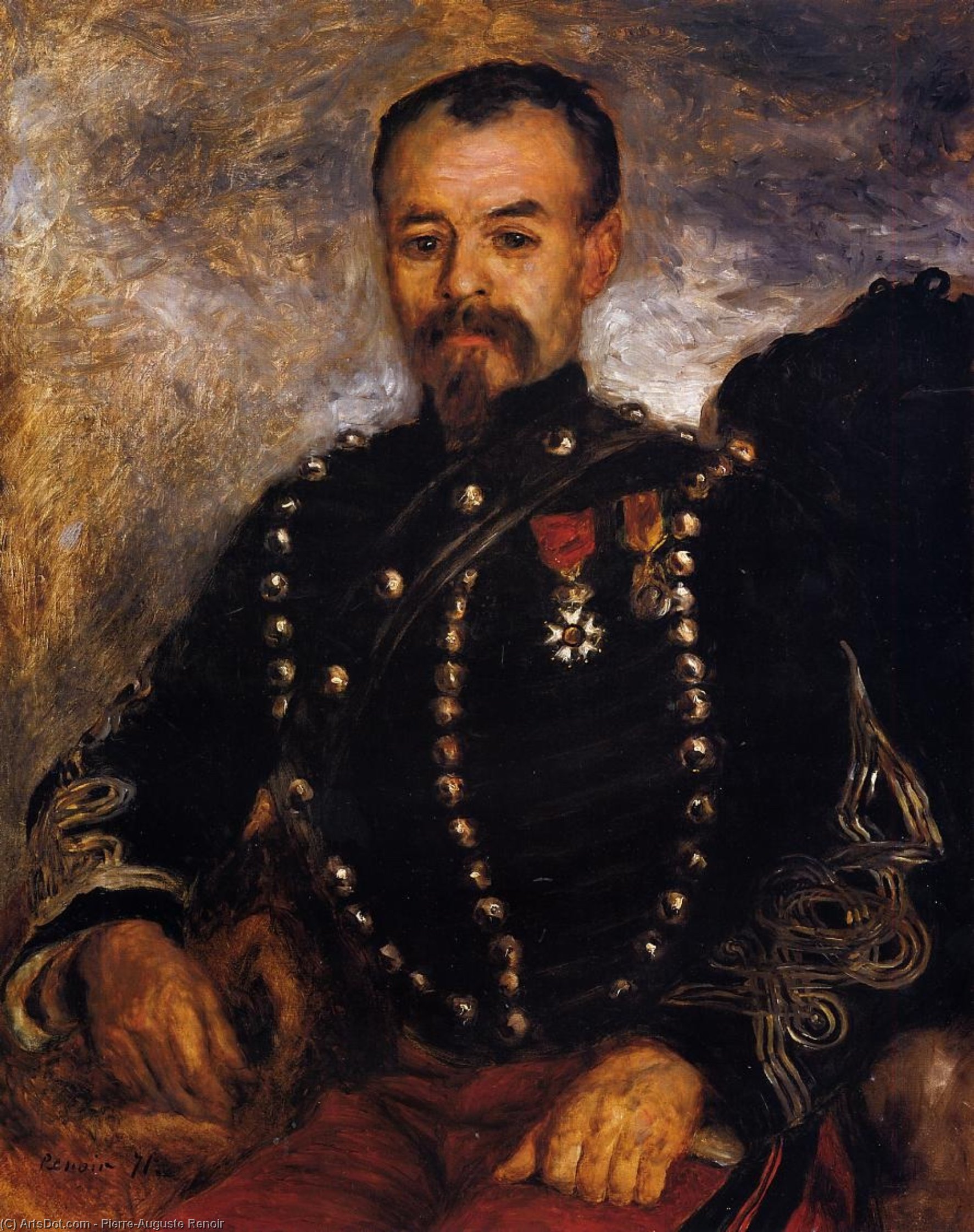
Pierre-Auguste Renoir’s “Captain Edouard Bernier” (1871) is an iconic Impressionist painting housed in Dresden, Germany. Created with soft brushstrokes and vibrant colors, it portrays Captain Bernier with remarkable realism and conveys a sense of authority. Explore Renoir's influence on modern art alongside Cézanne and discover other Impressionists like Pissarro.
Captain Edouard Bernier: A Portrait of Confidence Amidst Uncertainty
Pierre-Auguste Renoir’s “Captain Edouard Bernier” stands as a quintessential example of Impressionism, capturing not merely likeness but also the very essence of its subject—a man imbued with authority and serenity amidst the turbulent backdrop of the Franco-Prussian War. Created in 1871, this oil on canvas masterpiece resides at the Staatliche Kunstsammlungen Dresden, Germany, offering viewers a glimpse into a pivotal moment in artistic history and French culture. The painting’s quiet dignity contrasts sharply with the anxieties gripping Europe at that time, reflecting Renoir's masterful ability to distill emotion from observation.
- Subject Matter: The portrait depicts Captain Edouard Bernier, a military officer distinguished by his commanding posture and gaze. He wears a black coat adorned with gold buttons—a symbol of status and prestige—and possesses a neatly groomed beard, conveying an air of refined composure.
- Composition: Renoir skillfully employs visual layering to create depth. Two figures flank Bernier on either side, adding intrigue and subtly hinting at narrative possibilities. Notably, a bird or decorative element graces the upper-right corner, introducing an element of whimsy and perhaps representing freedom or aspiration.
Impressionistic Technique: Soft Brushstrokes and Vibrant Color
Renoir’s signature Impressionist technique is immediately apparent in “Captain Edouard Bernier.” He eschews meticulous detail in favor of loose, expressive brushstrokes—a deliberate rejection of academic conventions—that prioritize capturing the fleeting effects of light and atmosphere. The artist utilizes a palette rich in warm hues—primarily yellows and reds—to illuminate Bernier’s face and clothing, creating an illusion of radiant warmth against the muted tones of the background. This technique isn't merely stylistic; it embodies Renoir’s belief that painting should strive to reproduce what the eye perceives rather than what the mind imagines.
Color Palette: The dominant colors are warm yellows and reds, skillfully blended to create a luminous glow on Bernier’s skin and coat. Subtle shades of green and brown contribute to the background's depth and realism.
Brushwork: Renoir employs short, broken brushstrokes—characteristic of Impressionism—to build up texture and capture the nuances of light. These strokes are particularly noticeable in Bernier’s face and beard, conveying a sense of movement and vitality.
Historical Context and Artistic Significance
“Captain Edouard Bernier” emerged during a period of profound social and political upheaval—the Franco-Prussian War (1870–71). Renoir's decision to portray Bernier amidst this conflict speaks to the Impressionists’ fascination with capturing everyday life and emotion, rather than grand historical narratives. The painting exemplifies the movement’s commitment to portraying subjects as they appear in natural light, prioritizing psychological insight over formal accuracy. Furthermore, it anticipates the stylistic developments of Cézanne and other artists who would explore abstraction and simplification—demonstrating Renoir's enduring influence on subsequent generations of painters.
Franco-Prussian War Influence: The painting reflects the anxieties and uncertainties of the era, capturing a moment of quiet dignity amidst the broader context of war.
Legacy: Renoir’s Impressionistic style paved the way for future artistic explorations into abstraction and simplification—a testament to his pioneering role in modern art.
A Window Into Beauty and Emotion
Ultimately, “Captain Edouard Bernier” transcends mere representation; it communicates a profound sense of serenity and confidence. Renoir's masterful use of color and brushwork evokes feelings of warmth, tranquility, and contemplation—inviting viewers to appreciate the beauty of human presence and the power of observation. For art enthusiasts seeking inspiration or collectors desiring a stunning reproduction, this painting remains an enduring emblem of Impressionism’s artistic vision.