Explore Pierre-Auguste Renoir's (1841-1919) luminous Impressionist paintings! Discover portraits, Parisian life & feminine beauty in his iconic artworks.
A Moment of Childhood Joy Captured in Light and Color
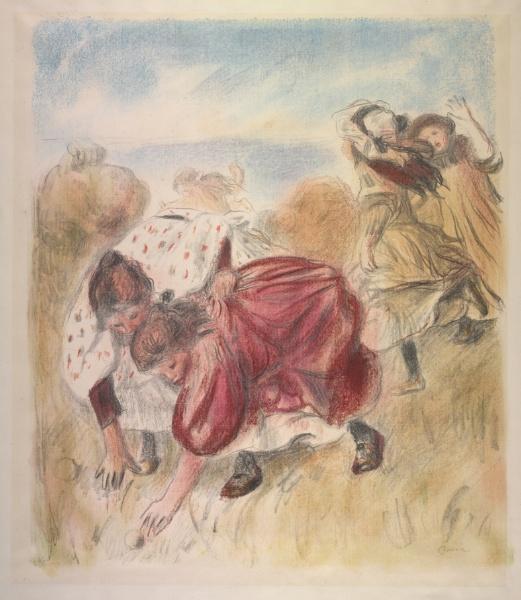
Children Playing Ball by Pierre-Auguste Renoir is more than just a depiction of children engaged in a simple pastime; it’s an embodiment of Impressionism's core philosophy – capturing fleeting moments of beauty and emotion through vibrant color palettes and loose brushstrokes. Painted around 1900, this canvas transports us back to a sunlit meadow where carefree youngsters revel in the joy of a game of croquet, accompanied by their loyal canine companion. The scene unfolds with remarkable immediacy, mirroring Renoir’s dedication to portraying sensory experience as it exists at that precise instant.
The Impressionistic Technique: Light and Atmosphere
Renoir's masterful technique exemplifies the principles of Impressionism. Rather than striving for meticulous realism—a hallmark of academic painting—he prioritized capturing the effects of light on color and surface texture. Notice how Renoir utilizes broken brushstrokes, layering pigments to create shimmering surfaces that refract sunlight. The dominant hues are warm yellows and greens, reflecting the verdant grass and dappled shade beneath the trees. These colors aren’t blended smoothly; instead, they coexist side by side, allowing the viewer's eye to blend them together subconsciously—a deliberate tactic designed to evoke a feeling of warmth and spontaneity.
Historical Context: Parisian Belle Époque
The painting resides firmly within the Belle Époque ("Beautiful Era"), a period of unprecedented optimism and artistic innovation in Paris following the Franco-Prussian War. Renoir, like many artists of his time, embraced the burgeoning interest in plein air painting—working outdoors directly from nature—a revolutionary departure from the studio tradition. This embrace of natural light aligns perfectly with the broader cultural movement celebrating leisure, pleasure, and the celebration of everyday life. The inclusion of a dog adds to this sense of domestic tranquility and reinforces the idyllic portrayal of childhood innocence.
Symbolism: Innocence and Playful Connection
Beyond its technical brilliance, Children Playing Ball carries subtle symbolic weight. The children themselves represent purity and unburdened joy—themes frequently explored by Impressionists seeking to express humanist ideals. Their laughter and animated movements convey a sense of carefree abandon, capturing the essence of childhood experience. Furthermore, the dog symbolizes companionship and loyalty, highlighting the importance of human-animal bonds within this idyllic setting. It’s a visual reminder that beauty can be found in the simplest pleasures—a sentiment deeply resonant with Renoir's artistic vision.
Emotional Impact: A Window into Happiness
Looking at Children Playing Ball is akin to stepping back into a sunlit memory – one filled with warmth, laughter, and uncomplicated delight. Renoir’s skillful rendering of light and color succeeds in transporting the viewer to this idyllic meadow, eliciting feelings of nostalgia and contentment. It serves as an enduring testament to Impressionism's ability to capture not just what we see but also how it feels—a celebration of beauty that continues to inspire admiration centuries later.