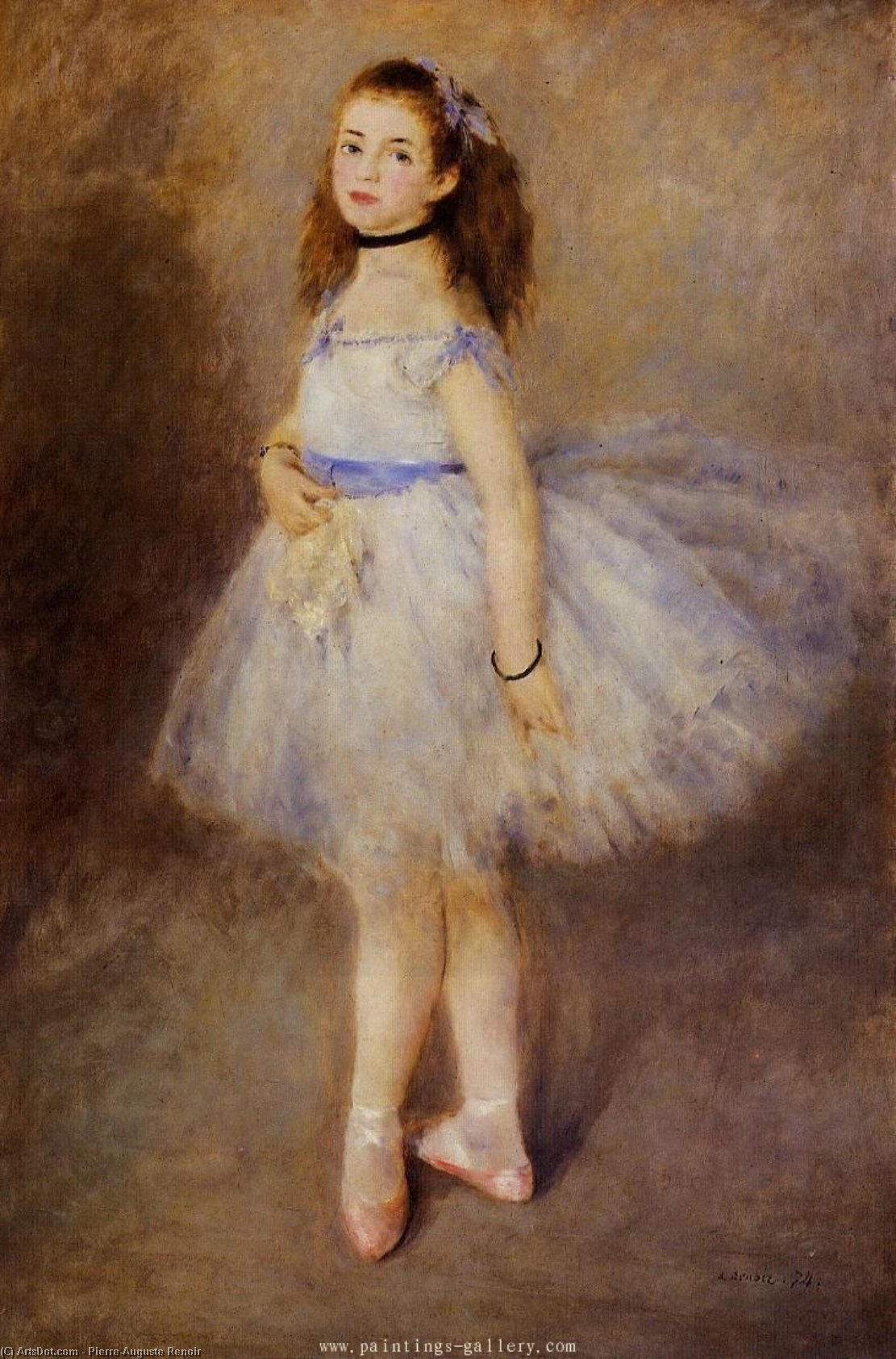
A Moment Frozen in Light and Grace: Exploring Renoir’s ‘The Dancer’
Pierre-Auguste Renoir's “The Dancer,” completed in 1874, stands as a quintessential emblem of Impressionism—a movement that irrevocably altered the course of art history. Currently residing within the hallowed halls of the National Gallery of Art in Washington D.C., this oil on canvas masterpiece transcends mere visual representation; it captures an ephemeral essence of beauty and movement, reflecting Renoir’s profound fascination with capturing fleeting moments of light and color.
Composition and Observation
The painting depicts Gabrielle Renard, a young ballerina performing at the Paris Opera Ballet, poised elegantly on one leg while her other foot remains elevated—a position known as fifth position—demonstrating remarkable balance and grace. Renoir’s masterful composition directs the viewer's gaze directly to the dancer, emphasizing her centrality within the frame. Surrounding her is a subtle backdrop of muted tones – predominantly greens and browns – allowing the vibrant hues of her costume and the luminosity of the studio light to dominate the visual experience. This deliberate choice underscores Impressionism’s core principle: prioritizing sensory perception over meticulous detail.
Impressionist Techniques: Brushstrokes as Emotion
Renoir's signature Impressionist technique is immediately apparent in the visible brushstrokes that animate the canvas. Rather than blending colors seamlessly, he applied paint in short, broken strokes—a revolutionary departure from academic painting’s smooth surfaces—creating a textured surface that vibrates with color and light. These energetic brushstrokes aren’t merely descriptive; they convey emotion and dynamism, mirroring the movement of the dancer herself. The artist skillfully utilizes complementary hues – particularly orange and blue – to heighten visual impact and create an illusion of depth.
Historical Context: Challenging Artistic Conventions
“The Dancer” emerged during a period of significant artistic upheaval—the birth of Impressionism—challenging the established conventions of the Salon system, which favored idealized depictions and polished finishes. Artists like Renoir, Monet, Sisley, and Bazille sought to depict everyday life with unprecedented honesty and spontaneity, rejecting academic dogma in favor of capturing the immediacy of experience. This bold stance reflected a broader cultural shift toward valuing sensory perception and embracing artistic innovation.
Symbolism and Emotional Resonance
Beyond its technical brilliance, “The Dancer” resonates deeply with viewers on an emotional level. The ballerina’s posture embodies poise, strength, and vulnerability—qualities that transcend the specific subject matter and speak to universal themes of beauty and grace. Renoir's masterful use of color contributes to this emotive impact, conveying a sense of warmth and luminosity that evokes feelings of serenity and admiration. The inclusion of flowers in her hand symbolizes purity and devotion, further enriching the painting’s symbolic significance.
Legacy: Influence on Modern Art Movements
“The Dancer” served as an inspiration for subsequent artistic movements—including Fauvism and Cubism—demonstrating Impressionism's enduring influence on the trajectory of modern art. Artists like Henri Matisse and Pablo Picasso embraced Renoir’s innovative approach to color and brushstroke, pushing boundaries and redefining aesthetic standards. Today, reproductions of “The Dancer” continue to captivate audiences worldwide, cementing its place as a cornerstone of Impressionist art and a testament to Renoir's artistic genius.
Experience the beauty of Impressionist art with handmade oil painting reproductions from ArtsDot.