A Delicate Bloom of Impressionism: Exploring Renoir’s “Woman with a Rose”
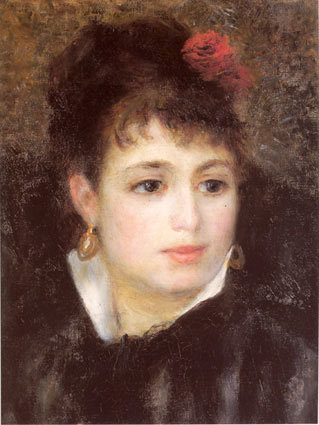
Pierre-Auguste Renoir's "Donna con la rosa," painted in 1876, stands as a quintessential example of Impressionist art—a movement that sought to capture fleeting moments of light and color rather than meticulously rendering detail. This portrait transcends mere representation; it embodies the very spirit of Parisian life during its Belle Époque era, offering viewers an intimate glimpse into beauty and contemplation. The painting’s serene composition and masterful use of tonal harmony contribute significantly to its enduring appeal.
- Subject Matter: The artwork depicts a young woman—Catherine Hessling—whose youthful complexion is rendered in soft pastel shades, primarily reds and pinks—a deliberate choice reflecting Renoir's fascination with capturing the luminosity of skin tones.
- Style & Technique: Renoir employed loose brushstrokes characteristic of Impressionism, prioritizing visual sensation over precise realism. He skillfully blended pigments to create an ethereal effect, mimicking the way light dances across surfaces. The artist’s technique is notable for its subtle gradations of color and texture, resulting in a luminous surface that seems to shimmer with life.
- Historical Context: Created during Renoir's formative years as an Impressionist, “Donna con la rosa” aligns perfectly with the movement’s core tenets—a rejection of academic conventions and an embrace of subjective experience. It reflects the burgeoning interest in portraying everyday scenes and capturing the emotional resonance of human interaction.
Symbolism: The Rose – A Testament to Beauty
The inclusion of a single rose within the woman's hair is not accidental; it serves as a powerful symbol—a visual shorthand for beauty, innocence, and fleeting moments of grace. Renoir’s penchant for incorporating floral motifs into his portraits speaks to the Impressionists’ preoccupation with capturing idealized visions of femininity. The rose embodies the ephemeral nature of beauty itself, mirroring the artist's desire to preserve these transient sensations on canvas.
- Color Palette: Renoir’s masterful color palette—dominated by reds and pinks—enhances the painting’s emotional impact. These hues evoke feelings of warmth, passion, and tenderness, aligning with the Impressionists’ aim to convey mood and atmosphere rather than simply depicting visual reality.
- Composition: The portrait's balanced composition contributes to its sense of tranquility and elegance. Renoir carefully positioned the woman in relation to the rose, creating a harmonious interplay between form and color that draws the viewer's eye inward.
A Legacy of Light and Emotion
“Donna con la rosa” remains one of Renoir’s most celebrated works—a testament to his artistic vision and his ability to distill complex emotions into deceptively simple visual forms. Its enduring popularity stems from its capacity to transport viewers back to a bygone era, capturing the essence of Parisian culture during its golden age. Today, high-quality reproductions allow enthusiasts worldwide to experience the beauty and subtlety of this iconic Impressionist masterpiece—a timeless reminder of Renoir’s profound understanding of human psychology and his unwavering devotion to portraying the luminous world around him.
- Provenance: The painting was initially acquired by Jean Charles Cazin, a prominent landscape painter who championed Renoir's style. Subsequently, it passed into the hands of art dealer Paul Guillaume before finding its current home in the Barnes Collection, where it continues to inspire admiration and scholarly study.