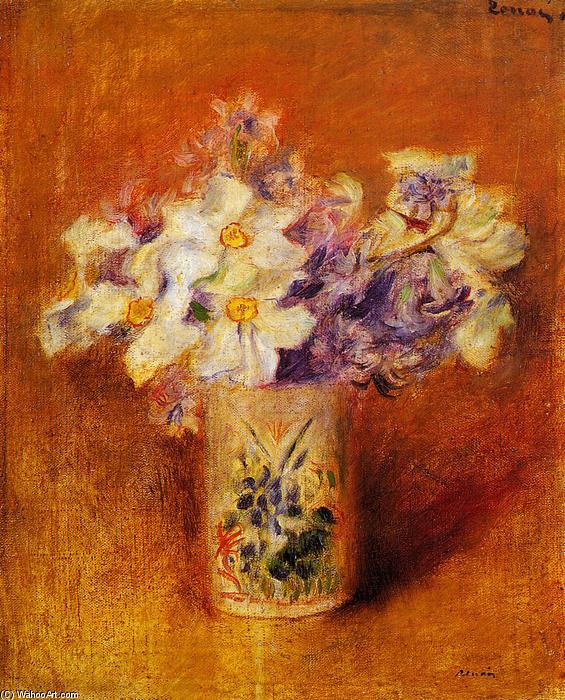
A Glimpse of Spring: Unveiling Renoir’s ‘Flowers in a Vase’
Pierre-Auguste Renoir, a master of Impressionism, possessed an extraordinary ability to capture the fleeting beauty of everyday life. Among his many celebrated works,
Flowers in a Vase (1866) stands as a testament to this skill – a delicate and luminous still life that continues to enchant viewers over 150 years after its creation. Currently housed at the National Gallery of Art in Washington, D.C., this painting offers a captivating window into Renoir’s early artistic development and the burgeoning Impressionist movement.
Subject & Composition: A Celebration of Ephemeral Beauty
The artwork depicts a modest bouquet of daffodils arranged within a cylindrical vase. The composition is vertically oriented, drawing the eye upwards along the graceful stems and blossoming flowers. Renoir doesn’t present a rigidly formal arrangement; instead, the blooms appear naturally clustered, as if freshly gathered from a garden. This sense of spontaneity contributes to the painting's overall freshness and vitality. The shallow depth of field focuses attention on the immediate foreground, immersing the viewer in the intimate world of these delicate blossoms.
Style & Technique: Impressionistic Brushwork and Light
Flowers in a Vase exemplifies Renoir’s signature Impressionistic style. Characterized by loose, visible brushstrokes, the painting prioritizes capturing the *impression* of light and color rather than precise representational detail. The artist masterfully layers oil paints, employing short, broken strokes that allow colors to blend optically – creating a shimmering, vibrant surface. Warm tones dominate the palette, evoking a sense of sunlight and springtime warmth. This technique imbues the painting with a palpable energy and immediacy, as if the flowers are bathed in fleeting light.
Historical Context: The Dawn of Impressionism
Painted during the early stages of Renoir’s career, this work reflects the shift away from traditional academic painting that defined the Impressionist movement. Artists like Renoir rejected the rigid conventions and historical or mythological subjects favored by the established art world. Instead, they turned their attention to everyday life – landscapes, portraits, and, as in this case, simple still lifes. This embrace of modern subject matter, combined with innovative techniques focused on light and color, marked a radical departure from artistic norms.
Symbolism & Emotional Impact: Joy, Renewal, and the Passage of Time
Daffodils themselves carry symbolic weight, representing springtime, rebirth, and new beginnings. Within the context of the painting, they evoke feelings of joy, hope, and optimism. However, the fleeting nature of flowers also subtly hints at the transience of beauty and the passage of time – a theme often explored by Impressionist artists. The overall emotional impact is one of gentle serenity and quiet contemplation.
Renoir’s Legacy & Collecting Considerations
Pierre-Auguste Renoir's influence on modern art is undeniable, paving the way for subsequent generations of artists like Paul Cézanne who further explored innovative modes of representation.
Flowers in a Vase, while perhaps less famous than some of his larger works, embodies the core principles that define his artistic genius.
For collectors and interior designers seeking to infuse a space with warmth, elegance, and a touch of Impressionistic charm, a high-quality reproduction of this painting offers an accessible way to experience Renoir’s artistry. Its delicate palette and uplifting subject matter make it suitable for a variety of settings – from traditional living rooms to contemporary bedrooms.
- Style: Impressionism
- Medium: Oil on Canvas
- Current Location: National Gallery of Art, Washington D.C.
- Year Painted: 1866
- Key Characteristics: Loose brushwork, vibrant color palette, focus on light and atmosphere, celebration of everyday beauty.