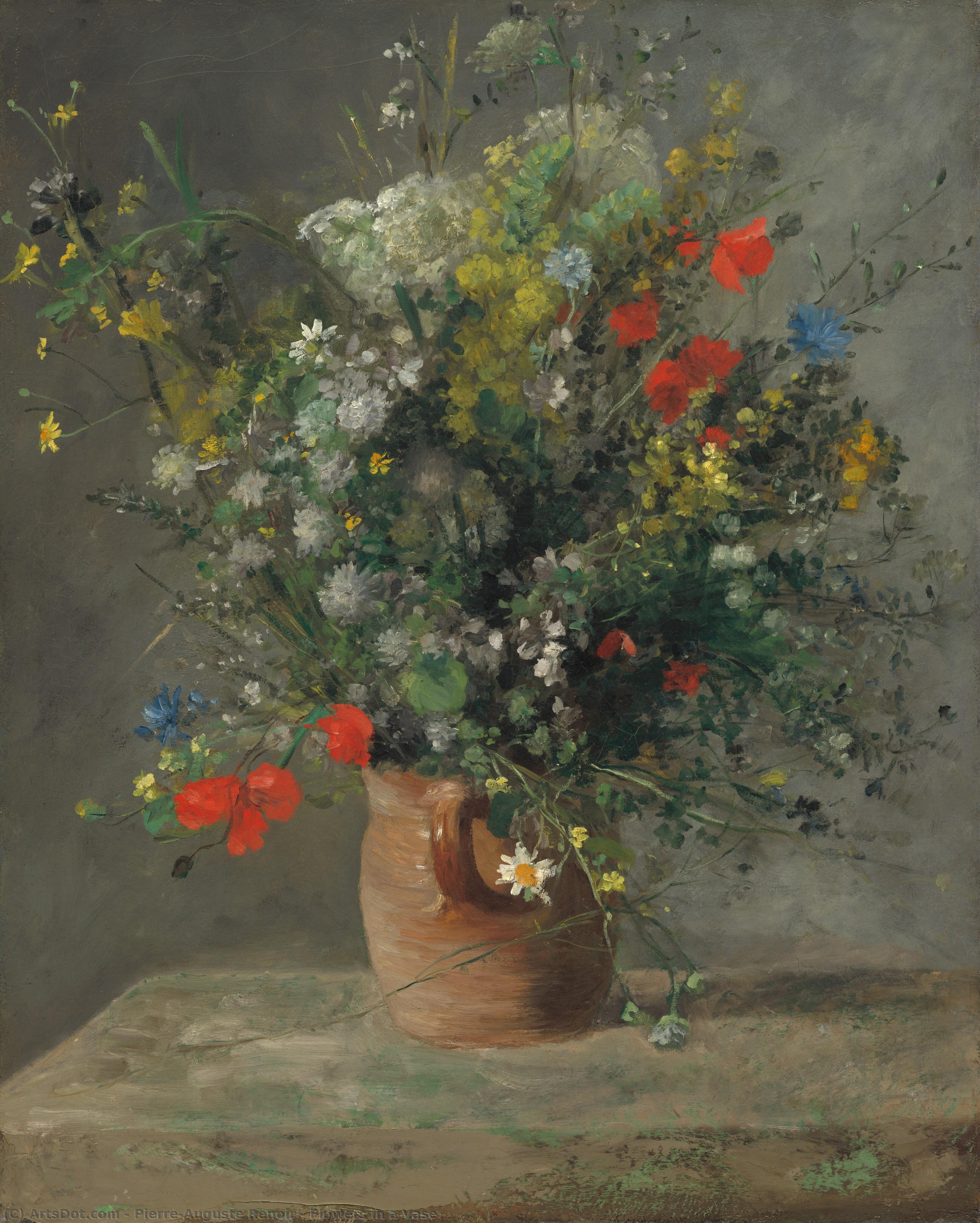
A Symphony of Wildflowers: Exploring Renoir’s “Flowers in a Vase”
Painted in 1866, during a pivotal moment in his artistic development, Pierre-Auguste Renoir's "Flowers in a Vase" is more than just a still life; it’s an embodiment of the burgeoning Impressionist aesthetic. This captivating work invites us into a world brimming with color and light, showcasing Renoir’s masterful ability to capture the fleeting beauty of nature.
Subject & Composition
- The painting centers around a vibrant bouquet of wildflowers exuberantly spilling from a rustic red clay jug. The arrangement dominates the canvas, occupying the top two-thirds and creating a sense of abundant life.
- Renoir employs an asymmetrical composition, with the floral display leaning slightly to the left, lending a naturalistic and dynamic feel. This deliberate imbalance prevents the scene from feeling static or overly formal.
- The placement on a loosely painted tabletop against a muted background focuses our attention entirely on the bouquet’s radiant energy.
Style & Technique: The Dawn of Impressionism
- “Flowers in a Vase” exemplifies Renoir's transition towards Impressionism. While still rooted in traditional techniques, we see his increasing interest in capturing the *effects* of light and atmosphere rather than precise detail.
- The artist utilizes visible brushstrokes – loose and expressive – building up layers of color to create form and texture. This technique imbues the painting with a sense of spontaneity and freshness.
- Oil paint is applied in short, deliberate daubs, particularly noticeable in the lower right corner, adding depth and visual interest. The layering creates a tactile quality, almost inviting the viewer to reach out and touch the petals.
Color & Light: A Celebration of Vibrancy
- A rich palette of yellows, reds, whites, blues, and greens animates the canvas. The contrast between these vibrant hues and the subdued background intensifies their impact.
- Soft, diffused light illuminates the arrangement from the lower left, creating subtle shadows and highlighting the delicate forms of the blossoms. This gentle illumination enhances the painting’s overall sense of tranquility.
- The interplay of warm and cool tones – the fiery poppies against the silvery-gray blooms – adds depth and complexity to the composition.
Historical Context & Renoir's Artistic Journey
- 1866 was a formative year for Renoir, as he experimented with new techniques and sought acceptance at the prestigious Salon. While initially facing rejection, his work began to garner attention.
- This painting reflects the influence of earlier masters like Rubens and Watteau, whose celebration of beauty and sensuality resonated with Renoir’s artistic sensibilities.
- The Musée d'Orsay in Paris, a treasure trove of Impressionist art, provides context for understanding Renoir’s place within this revolutionary movement. His floral still lifes are often found alongside works by Monet, Manet, and Degas.
Symbolism & Emotional Impact
- While not overtly symbolic, the abundance of flowers speaks to themes of life, beauty, and the ephemeral nature of time. The wildflowers themselves represent a natural, untamed elegance.
- The painting evokes feelings of joy, serenity, and appreciation for the simple pleasures of life. It’s an invitation to pause and savor the fleeting moments of beauty that surround us.
- Renoir's ability to capture the essence of these blooms – their delicate textures, vibrant colors, and inherent vitality – creates a deeply moving and emotionally resonant experience for the viewer.
“Flowers in a Vase” is not merely a depiction of botanical beauty; it’s a testament to Renoir's artistic genius and his enduring legacy as one of the masters of Impressionism. A stunning addition to any collection, or an inspiring piece for interior design, this artwork continues to captivate audiences with its timeless charm.