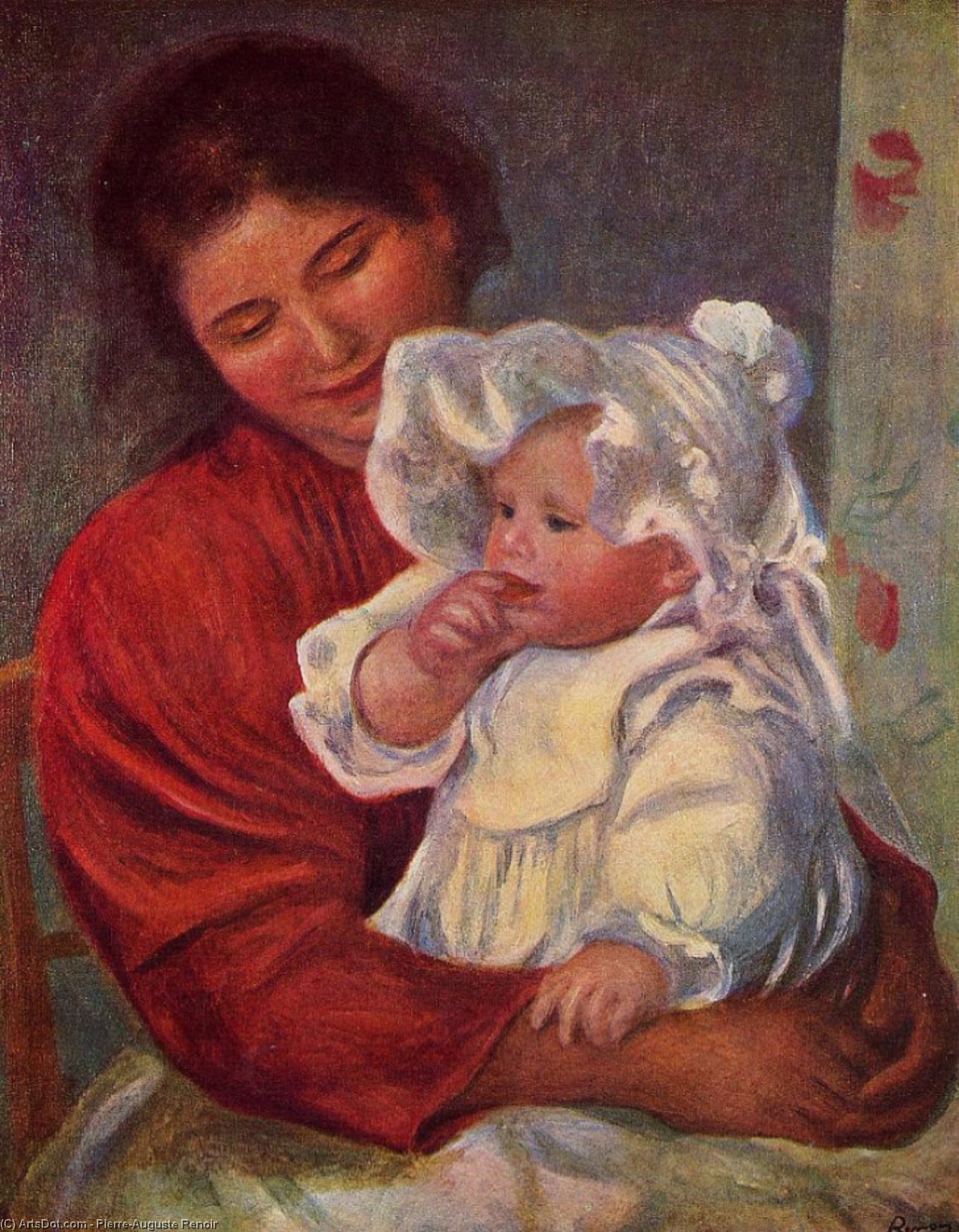
Gabrielle and Jean: A Moment Frozen in Impressionist Warmth
“Gabrielle and Jean” by Pierre-Auguste Renoir isn’t merely a depiction of motherhood; it's an encapsulation of tenderness, vulnerability, and the profound connection between woman and child—themes that resonate deeply within the core tenets of Impressionism. Painted in 1895 during Renoir’s prolific period, this canvas resides prominently in the Musée de l'Orangerie in Paris, a testament to its enduring beauty and artistic significance. The painting captures a serene tableau of Gabrielle Renard cradling her infant son Jean, creating an image that transcends time and speaks directly to our appreciation for simple human emotion.
A Symphony of Light and Color: Renoir’s Technique
Renoir's mastery lies in his ability to translate fleeting impressions into tangible form through masterful oil painting technique. He employs a dappled brushstroke style—characteristic of Impressionism—that prioritizes capturing the effects of light on surfaces rather than striving for photographic realism. Observe how Renoir skillfully blends shades of peach, pink, and cream to illuminate Gabrielle’s skin tone, conveying warmth and softness. The subtle variations in color create an illusion of depth and texture, mirroring the natural world that Impressionists sought to portray with unparalleled accuracy. Furthermore, Renoir utilizes a muted palette for the background, emphasizing the intimacy of the scene and directing the viewer's gaze toward the central figures—a deliberate choice reflecting the movement’s focus on capturing atmosphere and emotion.
Symbolism Within Simplicity: The Narrative Landscape
Beyond its technical brilliance, “Gabrielle and Jean” is rich in symbolic meaning. The pose of Gabrielle—supporting her son with gentle care—represents nurturing, protection, and unconditional love—values deeply ingrained within Impressionist ideals. The child’s open mouth, seemingly expressing curiosity or delight, symbolizes innocence and wonder. The inclusion of two additional figures – a chair positioned near the bottom left corner and a man in the background – adds to the painting's narrative complexity without distracting from the primary subjects. These elements contribute to the overall sense of domestic tranquility and reinforce the idea that beauty can be found in everyday life—a central preoccupation for Renoir and his fellow Impressionists.
Renoir’s Legacy: A Bridge Between Rubens and Watteau
Pierre-Auguste Renoir stands as a pivotal figure in art history, marking the final chapter in a lineage stretching back to Rubens and Watteau. His artistic vision championed beauty and sensuality, particularly in his portrayals of women—a stylistic hallmark that distinguishes him from many of his contemporaries. As noted by art historians, “Renoir is the final representative of a tradition which runs directly from Rubens to Watteau.” Renoir’s influence extends far beyond his paintings; he was the father of notable figures such as actor Pierre Renoir, filmmaker Jean Renoir, and ceramic artist Claude Renoir—a family legacy that embodies artistic creativity and cultural heritage.
Experiencing Gabrielle and Jean Through ArtsDot Reproductions
For those seeking to immerse themselves in the captivating beauty of “Gabrielle and Jean” or explore other Impressionist masterpieces,
ArtsDot offers exceptional reproductions crafted with meticulous attention to detail. These handmade oil paintings faithfully recreate Renoir’s original vision, preserving the luminosity and textural richness of his artwork—allowing you to bring a piece of Parisian Impressionism into your home. Explore related works by Cézanne and Lerolle at ArtsDot for a deeper appreciation of artistic expression.