A Moment Captured in Light: Exploring Renoir’s ‘Girl with a Mandolin’
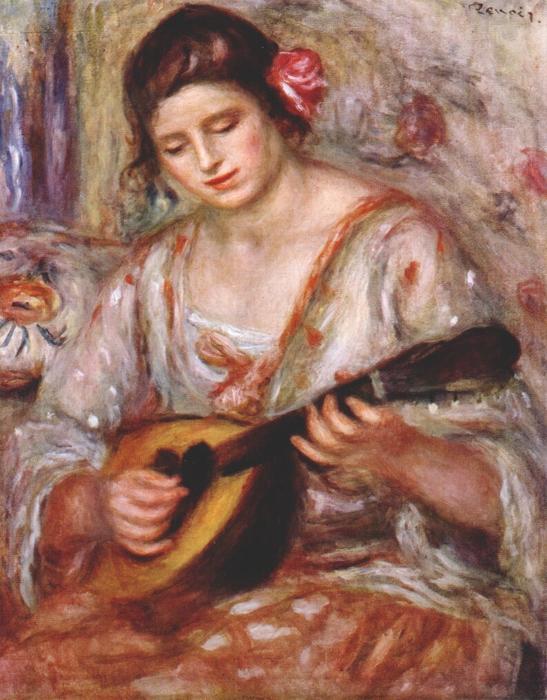
Pierre-Auguste Renoir's “Girl with a Mandolin,” painted in 1892, stands as an emblem of Impressionism’s pursuit of fleeting beauty and sensory experience. More than just a portrait, it embodies the spirit of Parisian life at the turn of the century—a vibrant tableau brimming with color and atmosphere that continues to resonate with viewers today. The painting depicts a young woman seated gracefully on a chair, her gaze directed slightly off-camera as she delicately holds a mandolin, preparing to play. This seemingly simple composition is imbued with profound artistic intention, reflecting Renoir’s masterful command of light and color—elements central to the Impressionist movement's rejection of academic conventions.
- Style: Impressionism – Renoir championed this style, prioritizing capturing the immediate sensation of a scene rather than meticulous detail. He eschewed traditional shading techniques in favor of broken brushstrokes that blend together optically, creating shimmering surfaces and conveying the ephemeral quality of light.
- Technique: Renoir employed a loose, alla prima technique—painting directly onto the canvas without underpainting—allowing him to achieve unparalleled luminosity and spontaneity. He meticulously observed how sunlight diffused through the air, translating these observations into vibrant hues that dance across the woman’s skin and the surrounding foliage.
- Historical Context: The painting emerged during a period of significant social and artistic change in France. Impressionism challenged the dominance of Salon art—the official exhibitions of the Académie Royale de Peinture et de Sculpture—and championed a new aesthetic rooted in observation and emotion. Paris was experiencing an unprecedented surge of creativity, fueled by advancements in science, technology, and urbanization.
Symbolism & Atmosphere: The mandolin itself serves as a powerful symbol – representing musicality, joy, and perhaps even nostalgia for simpler times. Renoir’s careful placement within the composition—alongside the chair and potted plant—creates a harmonious visual balance that reinforces the painting's tranquil mood. The dappled sunlight filtering through the leaves contributes to an overall sense of warmth and serenity, inviting contemplation on themes of femininity, beauty, and artistic inspiration.
Emotional Impact: “Girl with a Mandolin” transcends mere representation; it evokes a feeling of quiet contentment and wistful reflection. Renoir’s masterful use of color—particularly the warm yellows and oranges—captures the essence of summer afternoons in Paris—a scene that embodies the Impressionists' desire to convey not just what they saw, but how they felt. It is a painting that speaks to our innate appreciation for beauty and invites us to savor the fleeting moments of life.
- Interior Design Inspiration: Consider incorporating similar pastel hues and textured brushstrokes into your own interior design projects to achieve a similarly luminous and inviting ambiance.
- Collector’s Perspective: This artwork exemplifies Renoir's signature Impressionist style—a testament to his ability to capture the beauty of everyday life with unparalleled sensitivity and artistic skill.