A Moment Frozen in Light: The Enigmatic Girl with a Pink Feather
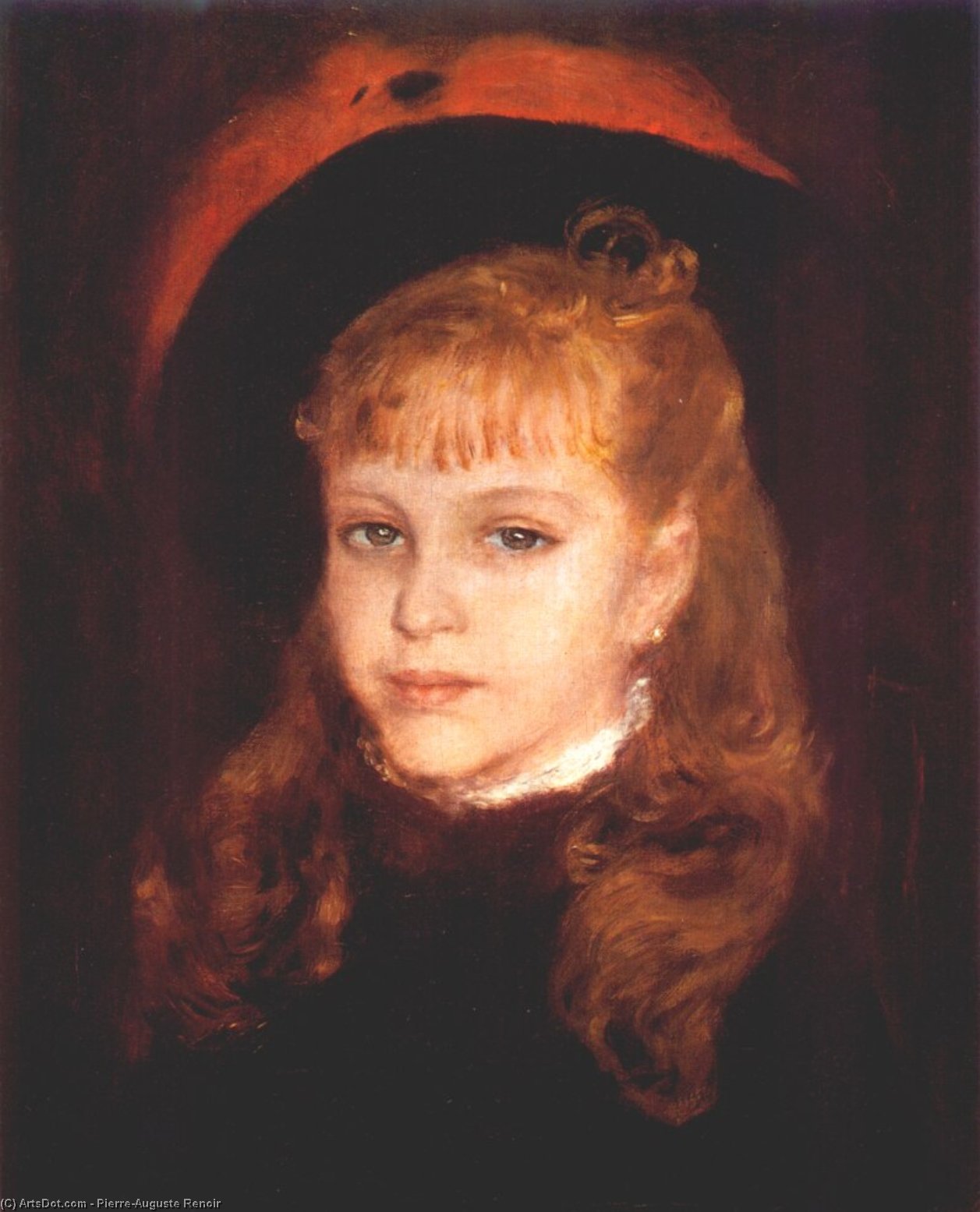
Pierre-Auguste Renoir’s “Girl with a Pink Feather,” painted in 1876, isn't merely a portrait; it’s a fleeting capture of youthful joy and the delicate dance between innocence and observation. This Impressionistic masterpiece immediately draws the viewer into its sun-drenched world, inviting us to share in the girl’s quiet contemplation. The painting possesses an almost dreamlike quality, achieved through Renoir's signature broken brushstrokes and his masterful manipulation of light – a technique he honed during his early years studying at the Louvre, absorbing the lessons of the Old Masters while simultaneously forging his own distinctive style.
The subject herself is presented with remarkable sensitivity. Her long hair cascades around her face, framing a gentle expression that suggests both curiosity and a hint of wistfulness. The pink feather, strategically placed in her hair, isn’t simply an accessory; it's a vibrant symbol – perhaps representing youthful exuberance, a touch of playful rebellion against the formality of the era, or even a fleeting memory of beauty. Renoir’s use of color is particularly noteworthy: the rich black of her dress provides a striking contrast to the delicate pink, intensifying the visual impact and drawing attention to the focal point of the composition.
Impressionism's Embrace: Technique and Style
“Girl with a Pink Feather” exemplifies the core tenets of Impressionism. Renoir eschews precise detail in favor of capturing the *impression* of light and atmosphere. Notice how he uses short, broken brushstrokes to create a sense of movement and vibrancy – particularly evident in her hair and dress. The background is deliberately blurred, suggesting an outdoor setting bathed in dappled sunlight. This deliberate lack of sharp definition allows the viewer’s eye to linger on the girl herself, emphasizing her presence and inviting us to lose ourselves in her gaze.
- Brushwork: Characterized by short, broken strokes creating a shimmering effect.
- Color Palette: Dominated by warm tones – pinks, yellows, and browns – evoking the warmth of sunlight.
- Light & Shadow: Renoir masterfully utilizes light to sculpt the girl’s features and create a sense of depth.
Historical Context: Paris in the 1870s
To understand “Girl with a Pink Feather,” it's crucial to consider the social and artistic landscape of 1876 Paris. The city was undergoing rapid transformation, fueled by industrialization and urbanization. Impressionism emerged as a direct response to these changes, rejecting the rigid conventions of academic art and embracing a more subjective and immediate approach to representation. Renoir, like many other artists of his generation, found inspiration in the bustling street life of Paris – the cafes, the parks, and the diverse cast of characters that populated its vibrant streets.
The painting reflects this atmosphere of urban dynamism while simultaneously offering a moment of quiet intimacy. It’s a snapshot of Parisian youth, capturing a fleeting glimpse of beauty amidst the energy of the city. Further research into Renoir's other works, such as “Girls in Black,” reveals a consistent interest in portraying the lives and emotions of ordinary people – particularly women – with empathy and grace.
A Timeless Portrait: Symbolism and Emotional Resonance
Beyond its technical brilliance, "Girl with a Pink Feather" resonates deeply on an emotional level. The girl’s direct gaze invites us to connect with her, prompting questions about her thoughts and feelings. Is she lost in contemplation? Is she observing the viewer with playful curiosity? Or perhaps she is simply enjoying a moment of quiet beauty. The painting's ambiguity contributes to its enduring appeal, allowing each viewer to project their own interpretations onto the scene.
Owning a hand-painted reproduction of this iconic artwork offers a unique opportunity to bring a touch of Renoir’s luminous vision into your home or office. ArtsDot.com provides meticulously crafted reproductions that faithfully capture the painting's delicate details and vibrant colors, ensuring that you can appreciate its beauty for years to come.