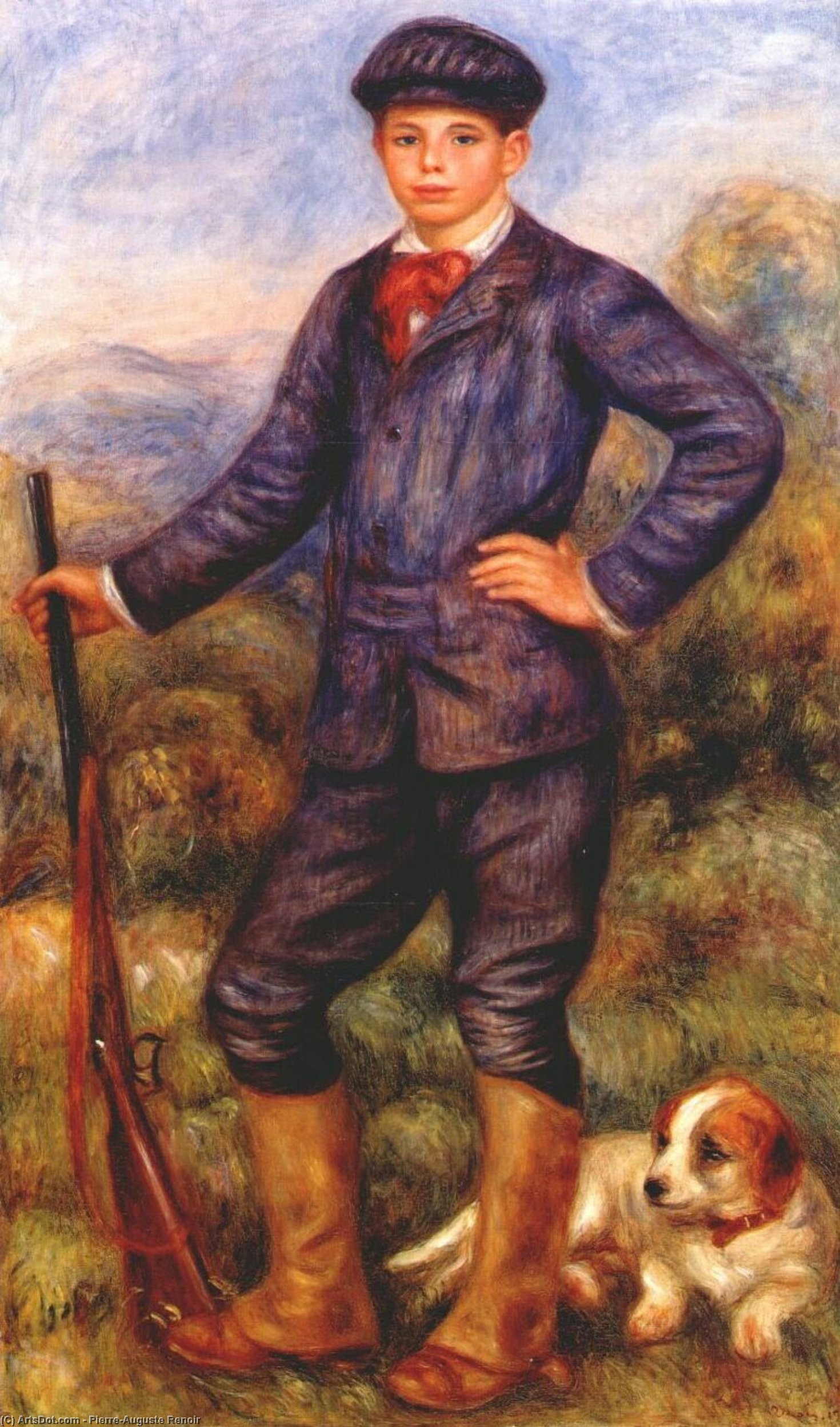
Jean Renoir as a Hunter: An Impressionistic Portrait of Familial Bonds
Pierre-Auguste Renoir’s “Jean Renoir as a Hunter” (1910) stands as a quintessential example of Impressionism, capturing not merely a likeness but also the essence of human connection amidst the serene beauty of the French countryside. Currently residing in the Los Angeles County Museum of Art, this oil on canvas painting transcends its formal subject matter to offer a glimpse into Renoir’s artistic vision and the broader cultural landscape of early 20th-century France.
Subject Matter: Beyond Formal Portraiture
The portrait depicts Jean Renoir, Pierre-Auguste's son, engaged in a leisurely pursuit of game—a seemingly simple activity elevated by Renoir’s masterful technique. Jean Renoir is dressed impeccably in a suit and tie, holding a rifle with practiced ease, suggesting he might be participating in a social gathering or enjoying the outdoors. Notably positioned beside him is a loyal dog, symbolizing companionship and reinforcing the familial bond at the heart of the scene. This deliberate inclusion isn’t merely decorative; it speaks to Renoir's fascination with capturing everyday life and portraying individuals within their natural surroundings—a core tenet of Impressionist philosophy.
Impressionistic Style: Light and Atmosphere
Renoir’s signature Impressionistic style is immediately apparent in every brushstroke. He eschews meticulous detail, prioritizing instead the conveyance of light and color as they shift across the landscape. Short, broken brushstrokes dance across the canvas, creating a shimmering surface that mimics the dappled sunlight filtering through the trees—a technique honed by Renoir’s unwavering observation of nature. The palette is rich with muted greens and browns, punctuated by vibrant splashes of color – likely intended to represent foliage or perhaps even Jean Renoir's attire – contributing to an overall feeling of tranquility and warmth.
Historical Context: Modern Art Movements & Artistic Influences
“Jean Renoir as a Hunter” emerged during a period of significant artistic experimentation in Europe, coinciding with the burgeoning Fauvist movement and Proto-Cubism. While Renoir himself wasn’t directly involved in these avant-garde movements, he absorbed their spirit of innovation and challenged traditional academic conventions. The painting reflects the broader shift away from idealized representations toward capturing subjective experience—a hallmark of Impressionism's reaction against Romantic melodrama. Furthermore, Renoir’s meticulous study of Rembrandt and Velázquez undoubtedly informed his approach to portraiture, demonstrating a deep appreciation for artistic heritage alongside a desire to forge new paths.
Symbolism: Domestic Tranquility & Artistic Legacy
The inclusion of the dog serves as more than just a visual element; it embodies themes of loyalty, companionship, and familial affection—values central to Renoir’s personal life and reflected in his art. The hunter's posture conveys confidence and control, yet simultaneously hints at vulnerability beneath the surface – mirroring the complexities inherent in human relationships. Ultimately, “Jean Renoir as a Hunter” is an enduring testament to Renoir’s ability to transform ordinary subjects into evocative expressions of beauty and emotion, securing his place among the most influential artists of the Impressionist era.
- Artist: Pierre-Auguste Renoir
- Year Created: 1910
- Location: Los Angeles County Museum of Art