A Moment Frozen in Light: Exploring Renoir’s “Woman’s Head”
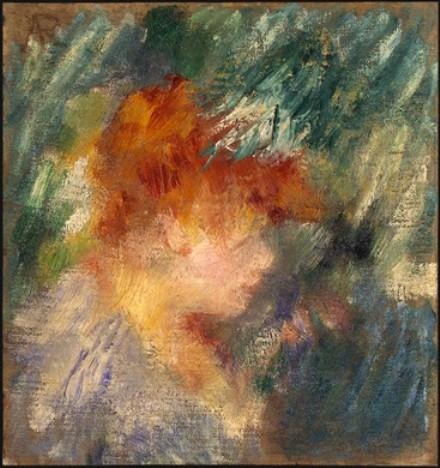
Pierre-Auguste Renoir's "Woman's Head," painted in 1878, stands as a quintessential example of Impressionism—a movement that revolutionized painting with its focus on capturing fleeting impressions of light and color. This portrait of Jeanne Samary, the celebrated French actress, isn’t merely a likeness; it’s an embodiment of Renoir's artistic philosophy and a window into the intellectual climate of Belle Époque Paris. The painting resides within the prestigious Hermitage Museum collection, ensuring its enduring legacy as one of Impressionism’s most cherished treasures.
- Subject Matter & Context: Samary herself was a prominent figure in Parisian theater circles during Renoir's time, representing glamour and sophistication. The artist skillfully portrays her gaze downward—a gesture that invites contemplation and suggests an inner world unseen by the viewer—reflecting the broader preoccupation with psychological realism prevalent within Impressionist circles.
- Style & Technique: Renoir’s signature technique is characterized by loose, visible brushstrokes—a deliberate departure from academic conventions. He employs a pastel palette dominated by muted blues and pinks, skillfully blending colors to create an ethereal luminescence that mimics the diffused light of a Parisian afternoon. The artist's meticulous attention to detail isn’t about precise representation but rather about conveying atmosphere and emotion.
Symbolism Beyond Appearance
Beyond its visual beauty, “Woman’s Head” carries symbolic weight. The closed eyes of Samary symbolize introspection and solitude—a poignant contrast to the bustling city outside. Renoir uses color psychology to subtly enhance this mood; the pale pink skin tone evokes feelings of tenderness and vulnerability, while the blue sky reinforces a sense of serenity and contemplation. These choices demonstrate Renoir’s understanding that art could communicate deeper meanings than mere visual observation.
- Color Palette & Light: Renoir's masterful manipulation of color is paramount to conveying emotion. The soft blues and pinks create a harmonious blend, mirroring the diffused sunlight filtering through Parisian windows—a common motif in Impressionist paintings. This technique captures not just what Samary looks like but also how she *feels*, immersing the viewer in the artist’s vision.
- Composition & Gesture: The slightly turned head and downward gaze contribute to a dynamic composition that draws the eye inward, encouraging viewers to engage with Samary's inner thoughts. Renoir’s careful positioning of Samary within the frame emphasizes her vulnerability and invites empathy—a hallmark of Impressionist portraiture.
Emotional Resonance & Legacy
“Woman’s Head” transcends its formal qualities to evoke a profound emotional response. It captures a moment of quiet contemplation, conveying a sense of intimacy and melancholy that resonates across time. Renoir's ability to distill complex psychological states into a single image exemplifies the movement’s ambition—to depict not just what is seen but also how it is felt. Today, reproductions of this masterpiece continue to inspire artists and collectors alike, cementing its place as an icon of Impressionist art.