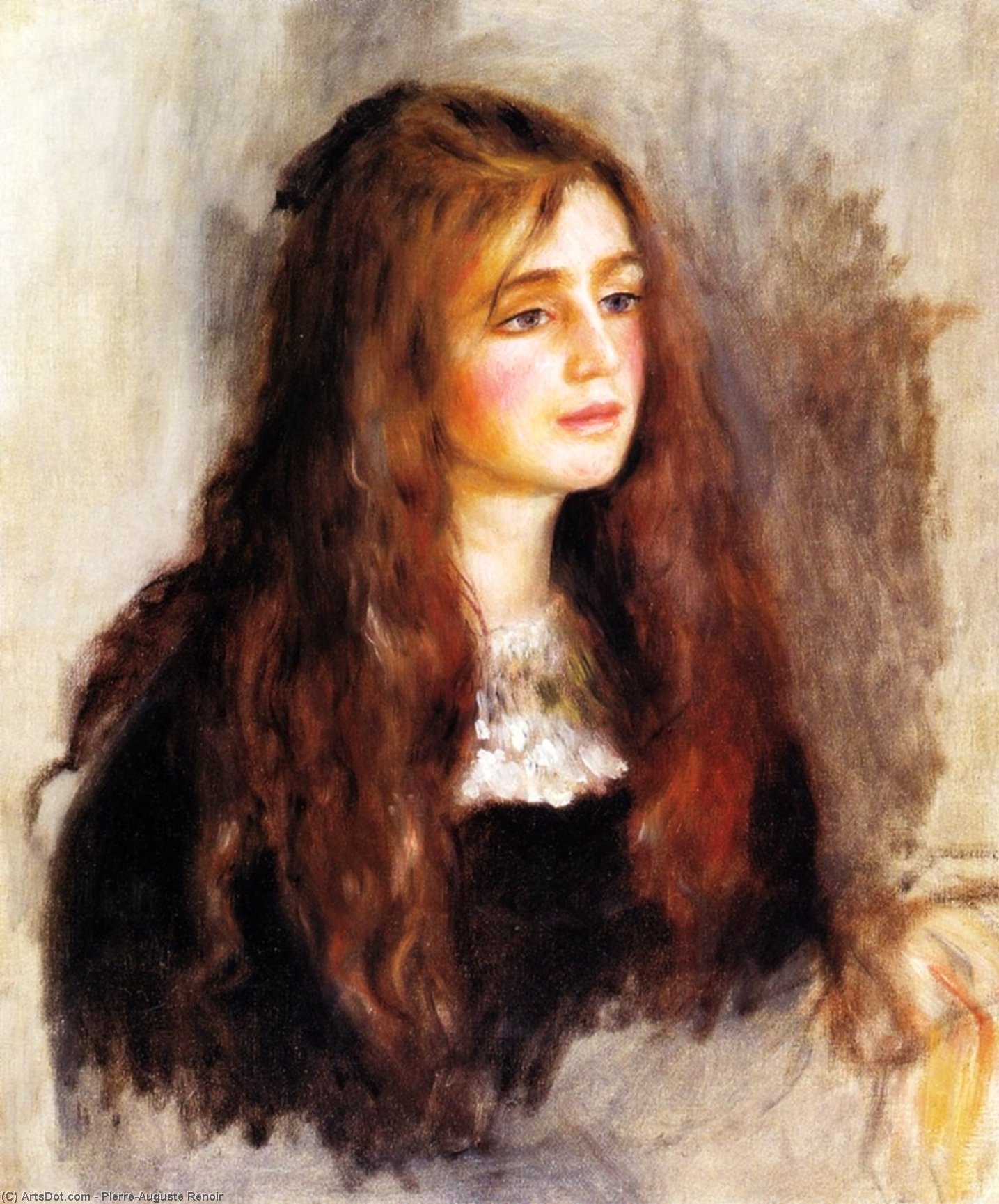
A Glimpse into Intimacy: Pierre-Auguste Renoir’s *Julie Manet*
This captivating portrait by Pierre-Auguste Renoir offers a tender and insightful glimpse into the world of Impressionism, moving beyond grand landscapes to focus on the quiet beauty of an individual. Painted in 1894, *Julie Manet* is more than just a likeness; it’s a study in character, light, and the fleeting moments of contemplation.
The Subject: A Portrait of Youthful Reflection
The painting depicts Julie Manet, the daughter of Berthe Morisot and Eugène Manet, and niece to Édouard Manet. She is portrayed as a young woman on the cusp of adulthood, her long, flowing red hair elegantly braided down her back. Her direct gaze engages the viewer with an air of thoughtful introspection. The slight parting of her lips suggests a moment suspended – perhaps a half-formed thought or a quiet observation. The simplicity of her pose and attire directs all attention to her face and expression, emphasizing Renoir’s skill in capturing psychological depth.
Impressionist Technique & Artistic Style
Renoir masterfully employs the hallmarks of Impressionism in *Julie Manet*.
Soft brushstrokes and a vibrant yet delicate palette create a sense of luminosity and atmosphere. He doesn’t strive for photographic realism, but rather seeks to capture the *impression* of light and form. The subtle blending of colors and the loose application of paint contribute to a feeling of movement and life. The background, though simple with its decorative wall elements – a clock and vase – is not merely a backdrop; it’s integrated into the overall composition through similar tonal qualities, creating a harmonious whole. This technique exemplifies Renoir's dedication to capturing the ephemeral quality of light and its effect on perception.
Historical Context & The Manet Circle
To understand *Julie Manet* fully, it’s crucial to consider its context within the Parisian art scene of the late 19th century. Renoir was a leading figure in the Impressionist movement, which challenged traditional academic painting by embracing modern life and focusing on subjective experience. The Manet family were central figures in this artistic revolution. Berthe Morisot herself was a prominent Impressionist painter, and Édouard Manet paved the way for many of the stylistic innovations that defined the movement. Julie Manet grew up surrounded by these influential artists, and her portrait reflects the intimate relationships and shared aesthetic values within their circle. The painting also comes after a period of personal loss for Julie, having lost both parents in quick succession, adding another layer to the contemplative mood.
Symbolism & Emotional Resonance
While not overtly symbolic, *Julie Manet* resonates with subtle emotional undertones. The clock on the wall could be interpreted as a memento mori – a reminder of the passage of time and the fleeting nature of youth. However, the overall impression is one of quiet dignity and resilience. The painting evokes a sense of
intimacy, inviting viewers to connect with Julie Manet on a personal level. It’s a portrait that speaks not only to her physical appearance but also to her inner life and emotional state.
A Timeless Masterpiece for Modern Interiors
*Julie Manet* is more than just a historical artifact; it's a work of art with enduring appeal. Its soft colors, delicate brushwork, and contemplative mood make it an ideal addition to a variety of interior design schemes. It would complement both traditional and contemporary spaces, adding a touch of elegance and sophistication. The painting’s relatively small size (55 x 46 cm) makes it versatile for placement in bedrooms, studies, or living areas.
- Color Palette: Soft reds, creams, and muted greens create a calming atmosphere.
- Style Compatibility: Suits Impressionist, Romantic, Traditional, and Eclectic interiors.
- Emotional Impact: Evokes feelings of peace, contemplation, and quiet beauty.
Currently housed at the Musée Marmottan Monet in Paris, *Julie Manet* continues to captivate audiences with its timeless beauty and profound emotional depth. A reproduction of this masterpiece offers a chance to bring a piece of Impressionist history into your home or collection.