La Famille: A Window Into Impressionistic Domesticity
Pierre-Auguste Renoir’s
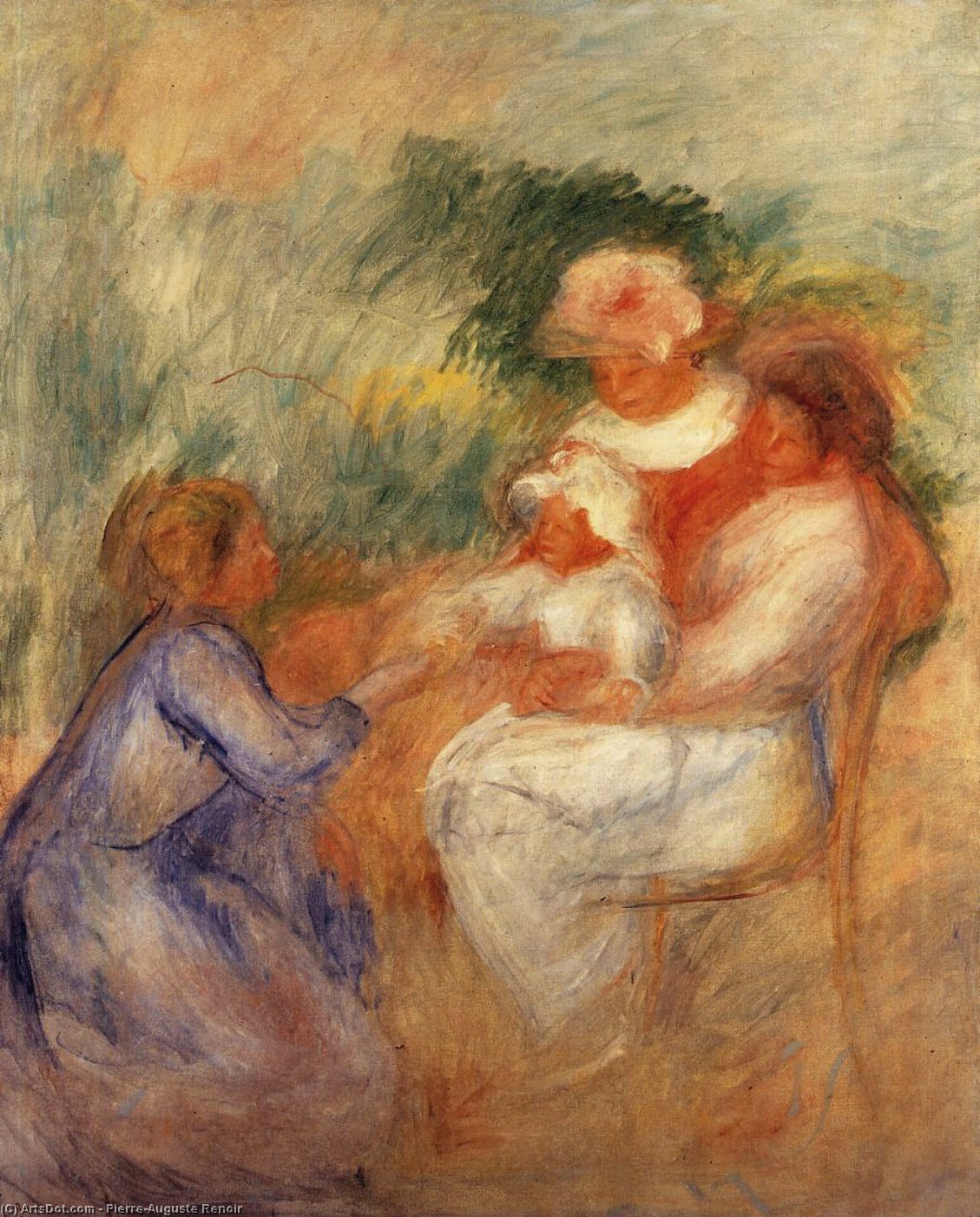
La Famille, painted in 1896, transcends mere portraiture—it's a masterful distillation of Impressionist ideals: capturing fleeting moments of everyday life with luminous color and delicate brushstrokes. More than just depicting a family gathering, Renoir’s canvas speaks to the broader anxieties and aspirations of late nineteenth-century France as it wrestled with rapid urbanization and industrial progress. It stands as a poignant reminder that beauty could be found not in grand narratives but in the quiet intimacy of domestic scenes.
- Composition & Observation: The painting’s genius lies in its deceptively simple arrangement. Two women, Aline Charigot Renoir and Gabrielle Renard, seated comfortably on chairs cradle their infants—Jean, Renoir's youngest son, and a neighbor’s child—creating a tableau of maternal tenderness. Three additional figures populate the background, subtly anchoring the scene within a social milieu marked by evolving familial roles. Renoir meticulously observed light and color, employing soft brushstrokes to render surfaces with remarkable subtlety, mirroring the Impressionist preoccupation with capturing atmospheric conditions.
- Artistic Style: Renoir’s signature Impressionist technique—characterized by rapid layering of paint—is evident throughout La Famille. The palette is rich and harmonious, dominated by warm reds, yellows, and greens that bathe the figures in a diffused glow. This deliberate avoidance of sharp outlines contributes to the painting’s ethereal quality, prioritizing sensory experience over precise representation.
- Historical Context: Painted during a period of significant societal transformation—the rise of industrialization and the burgeoning middle class—La Famille reflects the importance placed on familial bonds amidst these changes. Renoir’s depiction aligns with broader artistic trends of the time, mirroring Cézanne's exploration of form and space—a precursor to Cubism—and signaling a move away from academic conventions toward a more subjective engagement with reality.
- Symbolic Resonance: Beyond its visual beauty, La Famille embodies the Impressionist fascination with capturing emotion and atmosphere. The serene expressions of the women convey a sense of contentment and familial harmony—a counterpoint to the anxieties surrounding modernity. Renoir’s masterful use of color and light elevates the commonplace into something extraordinary, reminding us that art can illuminate the human condition.
- Legacy & Relevance: Renoir's influence extends far beyond Impressionism, shaping subsequent movements like Cubism, where artists sought to dismantle traditional perspective and represent subjects from multiple viewpoints. Consider Pablo Picasso’s groundbreaking work—influenced by Cézanne—as a testament to Renoir’s enduring legacy. Today, La Famille continues to inspire artists and collectors alike, serving as an emblem of Impressionist elegance and the profound beauty inherent in capturing fleeting moments of domestic life.
For those seeking similar artistic explorations, delve into Portrait of a Gentleman of the Herrick Family by William Artaud or Portrait of a Gentleman of the Herrick Family on ArtsDot.com.