Explore Pierre-Auguste Renoir's (1841-1919) luminous Impressionist paintings! Discover portraits, Parisian life & feminine beauty in his iconic artworks.
Landscape with Horses – A Symphony of Light and Pastoral Tranquility
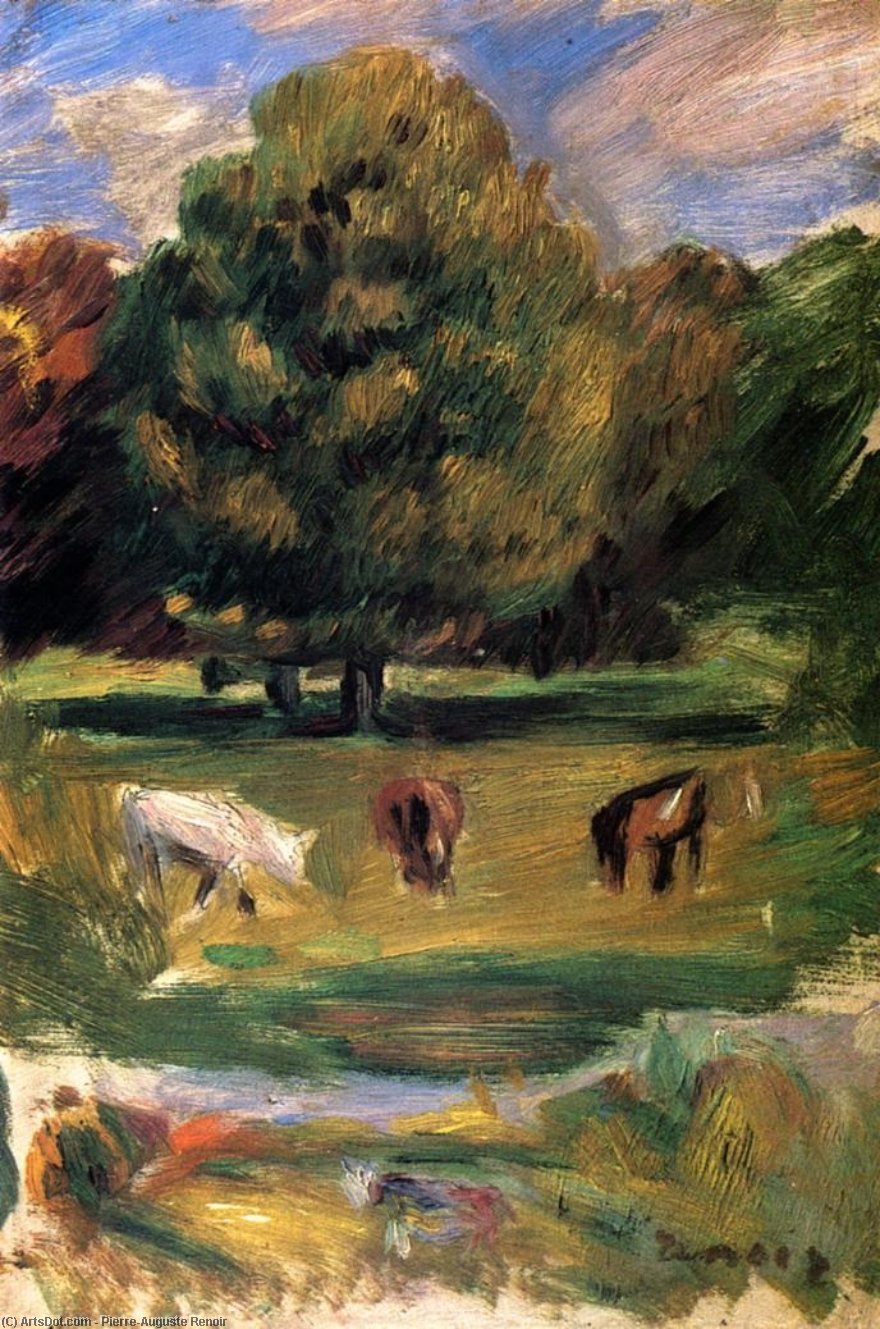
Pierre-Auguste Renoir’s “Landscape with Horses” stands as a quintessential embodiment of Impressionism, capturing not merely a visual depiction but an emotional resonance that speaks to the very soul of the era. Painted circa 1887, this serene canvas transports viewers back to a time when artists sought to convey fleeting moments of beauty and sensation rather than striving for photographic realism—a deliberate rejection of academic conventions championed by earlier generations. The painting’s unassuming subject matter – a simple meadow populated by horses and cows – belies its profound artistic significance. Renoir skillfully employs loose brushstrokes and vibrant color palettes, characteristic of Impressionist technique, to illuminate the scene with dappled sunlight filtering through leafy trees. This masterful manipulation of light is paramount to conveying the atmosphere of tranquility and contentment that pervades the composition.
Style and Technique: Embracing Ephemeral Beauty
Renoir’s approach aligns perfectly with the core tenets of Impressionism, prioritizing observation and capturing the immediacy of experience. Unlike traditional painters who meticulously blended pigments on a palette to achieve tonal accuracy, Renoir applied paint directly onto the canvas in visible strokes—a technique that allowed him to record the shifting qualities of light as it interacted with surfaces. The artist’s brushwork is particularly noteworthy; he utilizes short, broken dashes and swirls to build up color gradually, creating an illusion of shimmering luminescence. This deliberate disregard for precise detail isn't a deficiency but rather a conscious decision to prioritize feeling over factual representation—a cornerstone of Impressionist philosophy. Furthermore, Renoir’s use of complementary colors – blues and oranges – enhances the vibrancy of the landscape, intensifying the visual impact and reinforcing the painting’s optimistic mood.
Historical Context: The Belle Époque and Artistic Innovation
“Landscape with Horses” emerged during France's Belle Époque ("Beautiful Era"), a period marked by unprecedented economic prosperity and cultural flourishing following the Franco-Prussian War. This era witnessed an explosion of artistic experimentation, fueled by advancements in scientific understanding—particularly color theory—and influenced by Japanese prints (Japonisme). Impressionists like Renoir actively sought inspiration from these sources, rejecting academic formalism in favor of capturing subjective perception. The painting reflects the broader cultural preoccupation with nature and leisure during this time, portraying a scene that embodies the ideals of pastoral harmony and idealized beauty – values deeply ingrained in French Romanticism but reimagined through an Impressionist lens.
Symbolism: Tranquility and Harmony Amidst Nature’s Embrace
Beyond its aesthetic qualities, “Landscape with Horses” carries symbolic weight. The horses themselves represent strength, nobility, and freedom—themes frequently explored by Romantic artists. However, Renoir presents them not as symbols of heroic grandeur but rather as creatures experiencing peaceful contentment within their environment. Similarly, the cows symbolize fertility and abundance, reinforcing the painting’s association with pastoral prosperity. The dappled sunlight symbolizes enlightenment and optimism, illuminating the meadow and suggesting a sense of divine grace. Collectively, these elements contribute to an overarching message of harmony between humanity and nature—a sentiment that resonated deeply with audiences of Renoir's time and continues to inspire viewers today.
Emotional Impact: A Moment Frozen in Time
Ultimately, “Landscape with Horses” succeeds in evoking a profound emotional response. The painting’s soft colors, luminous brushstrokes, and tranquil composition create an atmosphere of serenity and contemplation—inviting the viewer to escape from the pressures of urban life and reconnect with the beauty of the natural world. Renoir's masterful depiction captures not just what he saw but also how he felt—a testament to his artistic genius and a timeless reminder that art can transcend mere visual representation to communicate enduring human emotions. It’s a piece designed to linger in memory, transporting us back to a moment of idyllic beauty and fostering a sense of peaceful contemplation.