A Window into Impressionist Domestic Life
Pierre-Auguste Renoir’s
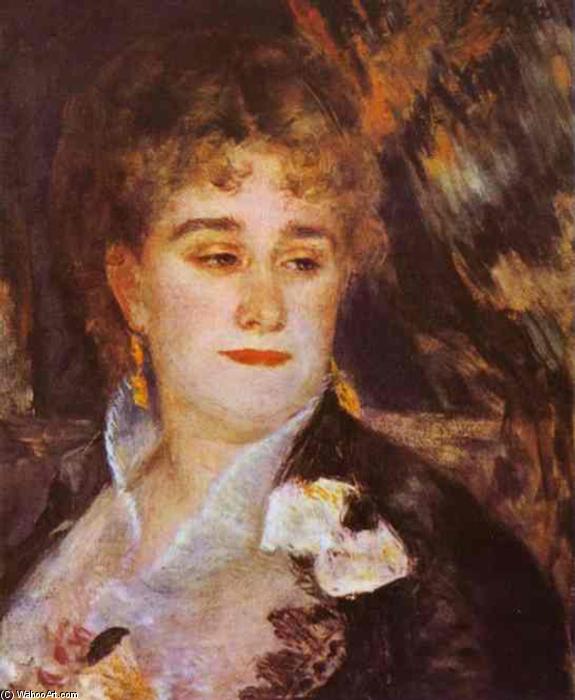
Madame Charpentier transcends mere representation; it embodies the spirit of Impressionism itself—a fascination with capturing fleeting moments and conveying emotion through subtle color palettes and delicate brushstrokes. Painted in 1878, this portrait offers a glimpse into the refined world of Parisian salon culture during Renoir’s burgeoning artistic career, marking him as one of the foremost figures of Parisian artistic circles. The painting depicts Madame Georges Charpentier—Marguerite-Louise Lemonnier—seated beside her son Paul within their elegantly decorated townhouse, creating an intimate tableau that speaks volumes about social status and domestic tranquility.
- Subject Matter: Renoir skillfully portrays Madame Charpentier, a woman of considerable influence in Parisian society, alongside her two children. The composition prioritizes capturing the essence of familial warmth and portraying the beauty of everyday life—a hallmark of Impressionist artistic vision.
- Style & Technique: Renoir’s masterful technique exemplifies the Impressionist style's commitment to immediacy and sensory experience. Soft brushstrokes blend seamlessly, creating a luminous surface that captures the diffused light filtering through the windows of the salon. The muted color palette—dominated by pastel hues—evokes serenity and enhances the painting’s emotional resonance.
Symbolism and Contextual Significance
The setting itself—a Japanese-inspired room adorned with luxurious fabrics and decorative objects—reflects Madame Charpentier's taste for sophistication and her engagement with artistic trends of the time. The inclusion of a Newfoundland dog symbolizes domestic comfort and loyalty, reinforcing the idealized portrayal of family life prevalent in Impressionist art. Furthermore, Renoir’s decision to depict the children dressed identically underscores the societal norms surrounding gender roles during this period—a deliberate choice that contributes to the painting's broader commentary on social conventions. Georges Charpentier, a publisher known for championing avant-garde writers and artists, commissioned the portrait as part of his ambitious effort to cultivate Renoir’s reputation and secure patronage from influential figures within Parisian intellectual circles.
- Historical Context: The painting emerged during a pivotal moment in Impressionist history—the Second Impressionist Exhibition of 1879—where Renoir showcased alongside fellow artists like Monet and Sisley, establishing himself as one of the most celebrated painters of his generation.
- Social Commentary: Through meticulous observation and artistic sensitivity, Renoir captures not only Madame Charpentier’s physical likeness but also her inner life—her contemplative gaze conveying a profound awareness of beauty and emotion. This portrayal aligns with Impressionist ideals of portraying human experience in its most authentic form.
A Legacy of Light and Emotion
Keith Wheldon, noted Renoir’s dedication to portraiture during this period, emphasizing that “Renoir’s career as a portraitist had been developing well, bringing him more commissions and giving him an introduction to some influential patrons.” The Charpentier salon—where Renoir hosted gatherings attended by prominent writers and artists—became a crucible for artistic innovation. Georges Charpentier's patronage played a crucial role in securing Renoir’s financial stability and propelling his artistic ascent. As Wheldon eloquently summarized, “The *Pêcheur à la Ligne* had impressed Mme Charpentier who now considered making Renoir her ‘discovery,' thereby improving her reputation as a hostess and patroness of the arts.”
Georges Charpentier’s wife Marguerite Lemonnier was instrumental in promoting Renoir's work at the Salon, solidifying his position as one of the most influential artists of his time. The painting stands as a testament to Renoir’s enduring legacy—a masterpiece that continues to inspire art lovers and collectors alike. For those seeking to experience the beauty and tranquility of Impressionist elegance, ArtsDot offers meticulously crafted oil painting reproductions of
Madame Charpentier—allowing you to bring a timeless piece of art history into your home.