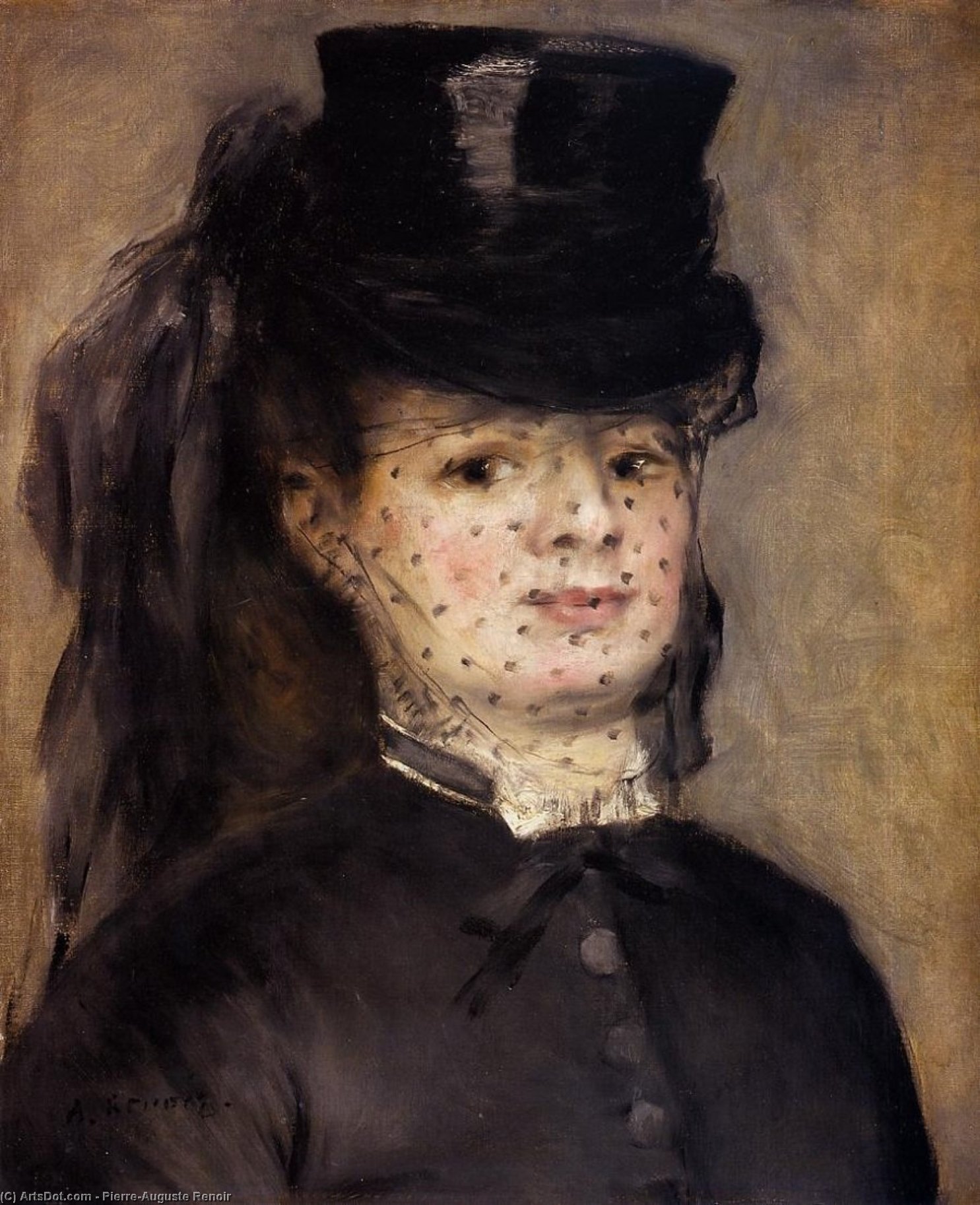
Madame Darras as an Horsewoman: A Portrait of Grace and Power
Pierre-Auguste Renoir’s “Madame Darras as an Horsewoman,” completed in 1873, stands as a quintessential example of Impressionist art—a celebration of fleeting beauty captured with remarkable precision. Housed within the Musée d'Orsay in Paris, this painting transcends mere representation; it embodies a spirit of optimism and dynamism that reflects the burgeoning social freedoms of its era. Renoir skillfully employs oil on canvas to convey not just what he sees but how he *feels* about what he observes.
- Style & Technique: Impressionism, characterized by short, broken brushstrokes—a deliberate rejection of academic realism—allows Renoir to depict light and movement with unparalleled immediacy. The artist’s layering technique creates a shimmering surface that captures the subtle nuances of color and texture.
- Composition: Notice how Renoir places Madame Darras centrally within the frame, dominating the visual space. Her posture exudes confidence and grace as she commands her horse—a symbol of nobility and control—emphasizing both physical strength and feminine elegance.
- Color Palette: Renoir’s masterful use of color is particularly striking. The dominant hues—warm yellows and reds—evoke a sense of warmth and vitality, mirroring the energy of the equestrian scene. However, cooler tones subtly temper the vibrancy, adding depth and complexity to the composition.
The subject matter itself speaks volumes about the social context of 1873 France. Madame Darras embodies the emerging ideal of the independent woman—a figure who actively participates in public life and pursues personal fulfillment beyond traditional roles. The horsewoman motif harkens back to classical symbolism, representing triumph over adversity and dominion over nature—themes that resonated deeply with Impressionist artists seeking to express their vision of modernity.
- Symbolism: Renoir’s choice of attire—the top hat and black dress adorned with polka dots—reflects the fashionable sensibilities of the time, signaling status and sophistication. The horse itself symbolizes power and nobility, but also represents freedom and movement—qualities that align perfectly with Madame Darras's assertive gaze and posture.
- Emotional Impact: Renoir’s portrait succeeds in capturing a moment of serene contemplation amidst activity. Madame Darras’s smile conveys warmth and intelligence, inviting the viewer into her inner world. The painting evokes feelings of admiration for beauty and confidence—qualities that are timelessly appealing.
Beyond its aesthetic merits, “Madame Darras as an Horsewoman” serves as a testament to Renoir's artistic legacy. Alongside masterpieces like "Dance at Le Moulin de la Galette" and "The Luncheon of the Boating Party," this painting exemplifies Impressionism’s enduring fascination with capturing the ephemeral beauty of everyday life—a pursuit that continues to inspire artists and collectors alike. For those seeking a stunning reproduction, ArtsDot.com offers exceptional quality prints from original canvases. Explore the captivating world of Impressionist art today!