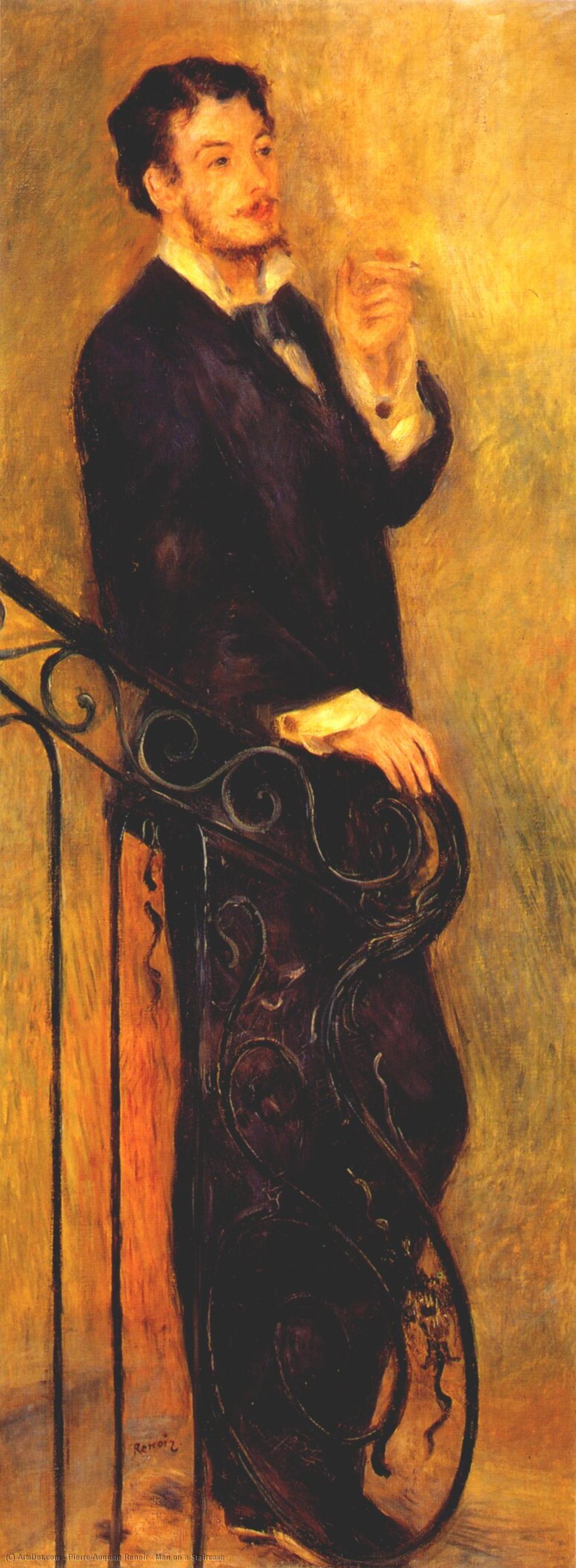
A Moment of Contemplation: Exploring Renoir’s “Man on a Staircase”
Painted in 1876, during the height of the Impressionist movement, Pierre-Auguste Renoir's "Man on a Staircase" offers a captivating glimpse into modern life and the burgeoning artistic sensibilities of the era. This vertical composition isn’t merely a portrait; it’s an exploration of mood, light, and the fleeting nature of human experience.
Subject & Composition
- The artwork centers on a solitary man dressed in a dark suit, positioned on a staircase. His posture – leaning slightly against the railing – suggests a moment of pause, introspection, or perhaps even weariness.
- Renoir deliberately blurs the background, minimizing detail and creating a sense of depth while simultaneously focusing our attention entirely on the figure. This compositional choice emphasizes the man’s isolation and internal state.
- The staircase itself isn't grand or ornate; it feels commonplace, grounding the scene in everyday reality – a hallmark of Impressionist subject matter.
Style & Technique: Embracing Impressionism
- Impressionistic Brushwork: Renoir masterfully employs loose, flowing brushstrokes that define the form without rigid lines. This technique is central to Impressionism, prioritizing the *impression* of light and color over precise representation.
- Plein Air Influence: While likely finished in the studio, the painting carries the spirit of “en plein air” (outdoor) painting – a key tenet of Impressionism. The soft, diffused lighting suggests an attempt to capture natural illumination.
- Color Palette & Texture: A rich palette dominated by dark browns, blacks, and deep reds is beautifully contrasted with lighter yellows and golds in the background. Layered paint creates a palpable texture, adding depth and visual interest.
Historical Context: Paris in the 1870s
- The 1870s were a period of significant social and artistic change in Paris. The city was undergoing massive reconstruction under Napoleon III, and artists began to reject the rigid conventions of the Académie des Beaux-Arts.
- Renoir, along with Monet, Degas, and others, formed an independent group that held their own exhibitions – most notably, the First Impressionist Exhibition in 1874. This act of defiance paved the way for modern art.
- Montmartre, a vibrant artistic hub at the time, provided inspiration and community for these revolutionary painters. The area’s bohemian atmosphere fostered experimentation and innovation.
Symbolism & Emotional Impact
- While not overtly symbolic, the painting evokes a sense of melancholy and contemplation. The man's downward gaze and solitary pose suggest inner turmoil or quiet reflection.
- The Staircase as Metaphor: A staircase can symbolize transition, ascent, or descent – perhaps representing a turning point in the man’s life or a journey inward.
- A Universal Theme: The painting's emotional resonance lies in its depiction of a universal human experience: moments of solitude and introspection. It invites viewers to project their own feelings onto the figure, creating a personal connection with the artwork.
For Collectors & Designers
"Man on a Staircase" is an exceptional example of Renoir’s Impressionistic style. Its subdued color palette and contemplative mood make it a versatile piece for various interior settings, from traditional libraries to modern living spaces. A high-quality reproduction captures the nuanced brushwork and atmospheric depth, bringing a touch of Parisian elegance and artistic sophistication to any collection or design project.