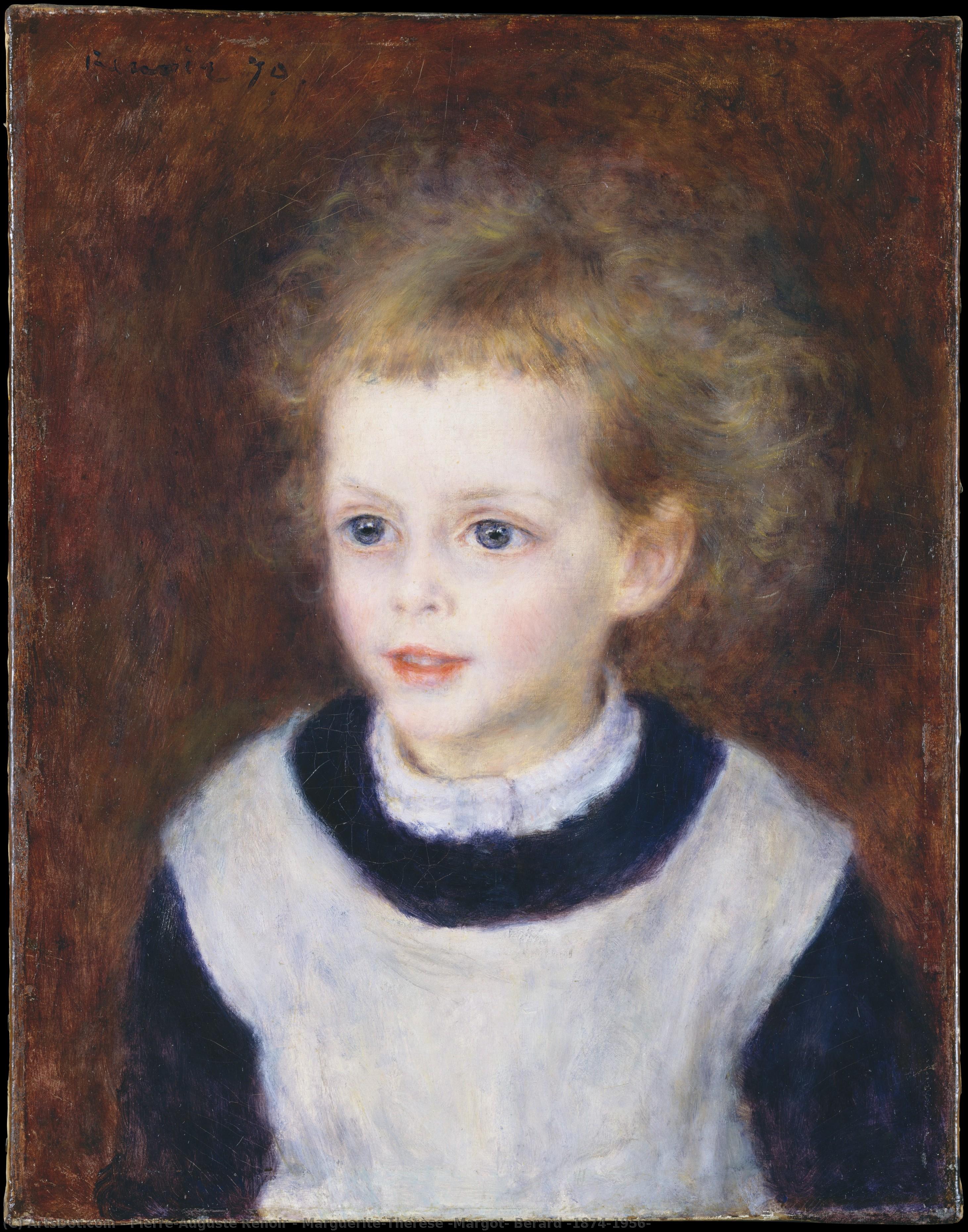
A Glimpse into Childhood: Pierre-Auguste Renoir’s “Marguerite-Thérèse (Margot) Berard”
This captivating portrait by
Pierre-Auguste Renoir, painted in 1879, is more than just a depiction of a young girl; it's an embodiment of the fleeting joy and innocent wonder of childhood. “Marguerite-Thérèse (Margot) Berard” radiates warmth and charm, showcasing Renoir’s mastery of Impressionist techniques and his profound ability to capture the essence of his subjects.
The Story Behind the Smile: Meeting Margot Berard
The subject of this enchanting work is Marguerite-Thérèse (Margot) Berard, the five-year-old daughter of Paul Berard, a prominent diplomat and banker who generously supported Renoir’s artistic endeavors. The artist frequently visited the Berards' country estate in Wargemont, near Dieppe on the Normandy coast, finding inspiration in both the picturesque surroundings and the delightful company of their children. This painting wasn’t merely a commission; it was born from a genuine affection for Margot, even created to lift her spirits after a frustrating tutoring session – a testament to Renoir's sensitivity and connection with his models.
Impressionist Brilliance: Style & Technique
“Marguerite-Thérèse (Margot) Berard” is a quintessential example of Impressionism. Renoir employs vibrant, luminous colors and delicate brushstrokes to create a sense of immediacy and atmosphere. The painting’s surface shimmers with light, achieved through the layering of thin glazes of oil paint. Notice how the artist doesn't strive for photographic realism but instead focuses on capturing the *impression* of light and form. The soft focus and blurred edges contribute to the overall feeling of dreamlike innocence. Measuring 41 x 32 cm, its intimate scale draws the viewer into a close encounter with young Margot.
A Moment in Time: Historical Context
Created during a pivotal period for Impressionism, this portrait reflects the movement’s shift away from academic traditions and towards a more subjective and personal style of representation. Renoir, along with his contemporaries like Monet and Degas, sought to capture the fleeting moments of modern life, emphasizing light, color, and atmosphere over precise detail. The late 19th century saw a growing interest in portraying children not as miniature adults but as individuals with their own unique personalities and experiences – a sentiment beautifully reflected in this work.
Symbolism & Emotional Resonance
While seemingly straightforward, the painting carries subtle symbolic weight. Margot’s white dress symbolizes purity and innocence, while her direct gaze engages the viewer on an emotional level. The gentle smile isn't merely a pose; it conveys a genuine sense of joy and contentment. The overall composition evokes feelings of nostalgia, warmth, and tenderness – reminding us of the preciousness of childhood memories.
Where to Experience the Masterpiece
Currently housed at
The Metropolitan Museum of Art in New York City, “Marguerite-Thérèse (Margot) Berard” continues to captivate audiences with its timeless beauty and emotional depth.
- Artist: Pierre-Auguste Renoir
- Title: Marguerite-Thérèse (Margot) Berard
- Year: 1879
- Medium: Oil on Canvas
- Dimensions: 41 x 32 cm
- Location: The Metropolitan Museum of Art, New York, USA
For those seeking to bring a touch of Impressionist elegance into their homes, high-quality reproductions are available, allowing art enthusiasts to experience the beauty and charm of this masterpiece firsthand.