A Portrait of Quiet Confidence: Maurice Gangnat by Pierre-Auguste Renoir
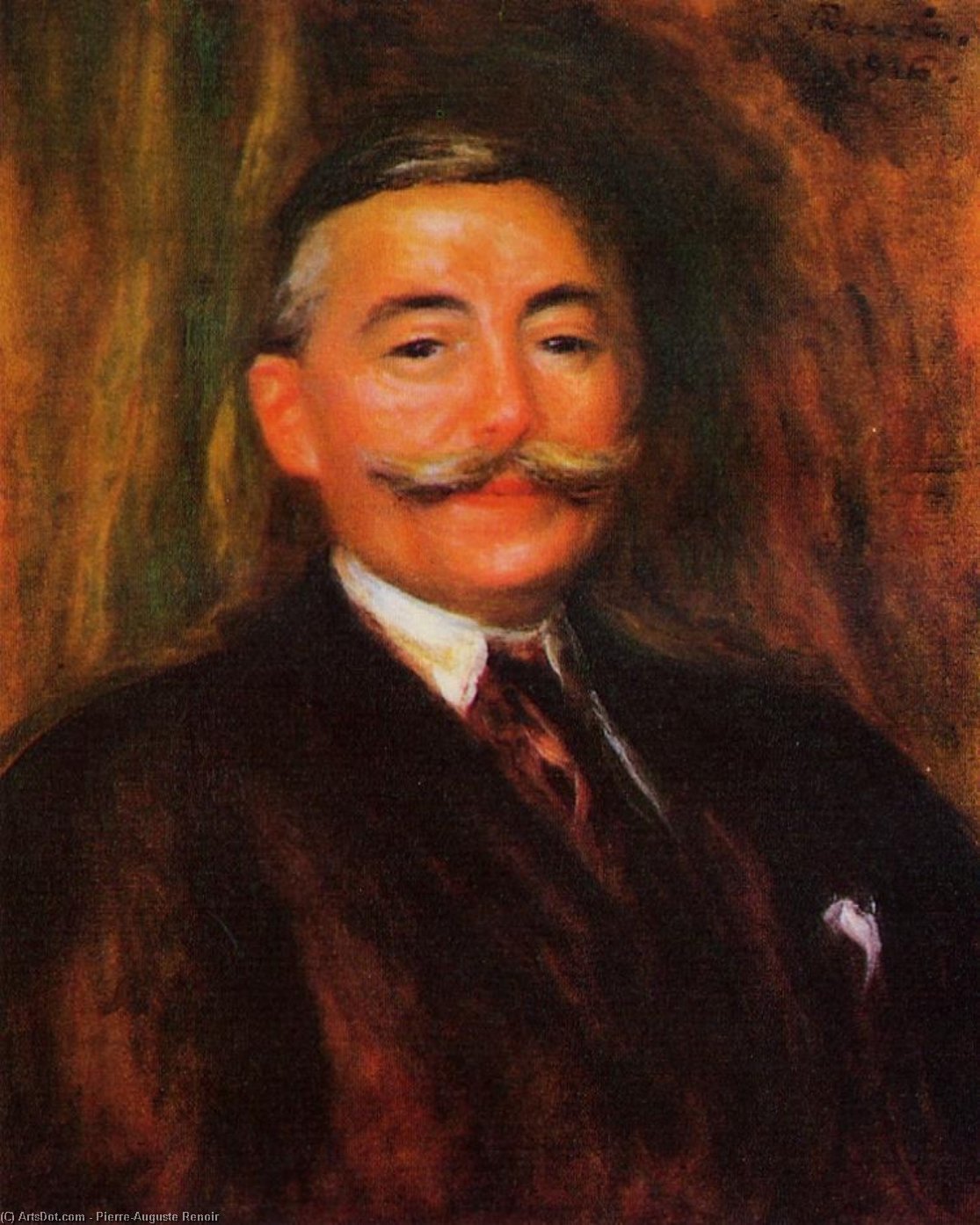
Pierre-Auguste Renoir’s “Maurice Gangnat,” painted in 1916, isn't merely a likeness; it’s a carefully constructed tableau of early 20th-century elegance and understated power. Captured with the Impressionist master’s signature dappled brushstrokes and luminous palette, the painting offers a glimpse into a world of tailored suits, quiet sophistication, and the subtle nuances of human character. It's a work that speaks volumes through its restraint, inviting viewers to contemplate the man beneath the surface.
The subject himself, Maurice Gangnat, is presented in a manner both formal and approachable. Dressed impeccably in a dark suit, a crisp white shirt, and a subtly patterned tie – a testament to the era’s fashion – he exudes an air of self-assuredness. His posture is upright, his gaze direct, suggesting a man comfortable in his own skin. Renoir skillfully employs light and shadow to sculpt Gangnat's features, highlighting the strong lines of his face and emphasizing the warmth of his eyes. The inclusion of two ties – one worn, one casually draped – adds a touch of visual interest and hints at a life lived with both formality and ease.
Impressionist Techniques and a Dance of Light
Renoir’s mastery lies not just in capturing a subject but in conveying the *feeling* of a moment. “Maurice Gangnat” exemplifies this approach through his characteristic use of broken color and loose brushwork. The canvas is alive with subtle shifts in tone, as light dances across Gangnat's attire and reflects off the dark curtain backdrop. Notice how Renoir doesn’t meticulously render every detail; instead, he allows the eye to fill in the gaps, creating a sense of atmosphere and immediacy. This technique, central to Impressionism, emphasizes the subjective experience of seeing – capturing not just what is there, but *how* it appears.
The painting's composition further contributes to its visual richness. The placement of Gangnat within the frame, slightly off-center, draws the viewer’s eye and creates a sense of dynamic balance. Renoir expertly utilizes color theory, employing complementary hues – such as the blues and oranges – to create depth and vibrancy. The careful layering of paint allows for a remarkable luminosity, imbuing the portrait with an almost ethereal quality.
A Window into 1916 Paris
“Maurice Gangnat” is firmly rooted in its historical context—Paris in 1916, a city brimming with artistic energy and social change. The painting reflects the prevailing fashion of the time, where tailored suits were symbols of status and sophistication. The inclusion of the curtain suggests a setting within a private salon or drawing-room, a space reserved for refined conversation and leisure. It’s a snapshot of a world on the cusp of momentous events – a world poised between tradition and modernity.
Beyond its aesthetic qualities, the painting offers insights into the social dynamics of the era. Gangnat's confident demeanor speaks to a sense of self-assurance and perhaps even privilege. The portrait invites us to consider the role of men in society during this period – their expectations, their aspirations, and their place within the broader cultural landscape.
A Timeless Portrait for Today
“Maurice Gangnat” transcends its historical context, offering a timeless meditation on human character. Renoir’s ability to capture not just a physical likeness but also an underlying sense of personality is what makes this portrait so compelling. It's a reminder that true beauty lies not only in outward appearance but also in the quiet dignity and inner strength of the individual.
Today, reproductions of “Maurice Gangnat” are available through ArtsDot, allowing art enthusiasts to bring this exquisite piece into their homes and offices. A handmade oil painting reproduction faithfully recreates Renoir’s masterful technique and luminous palette, ensuring that the beauty and essence of the original work can be enjoyed for generations to come.
Further Exploration: Related Works by Renoir
Museums & Exhibitions Featuring Renoir’s Work