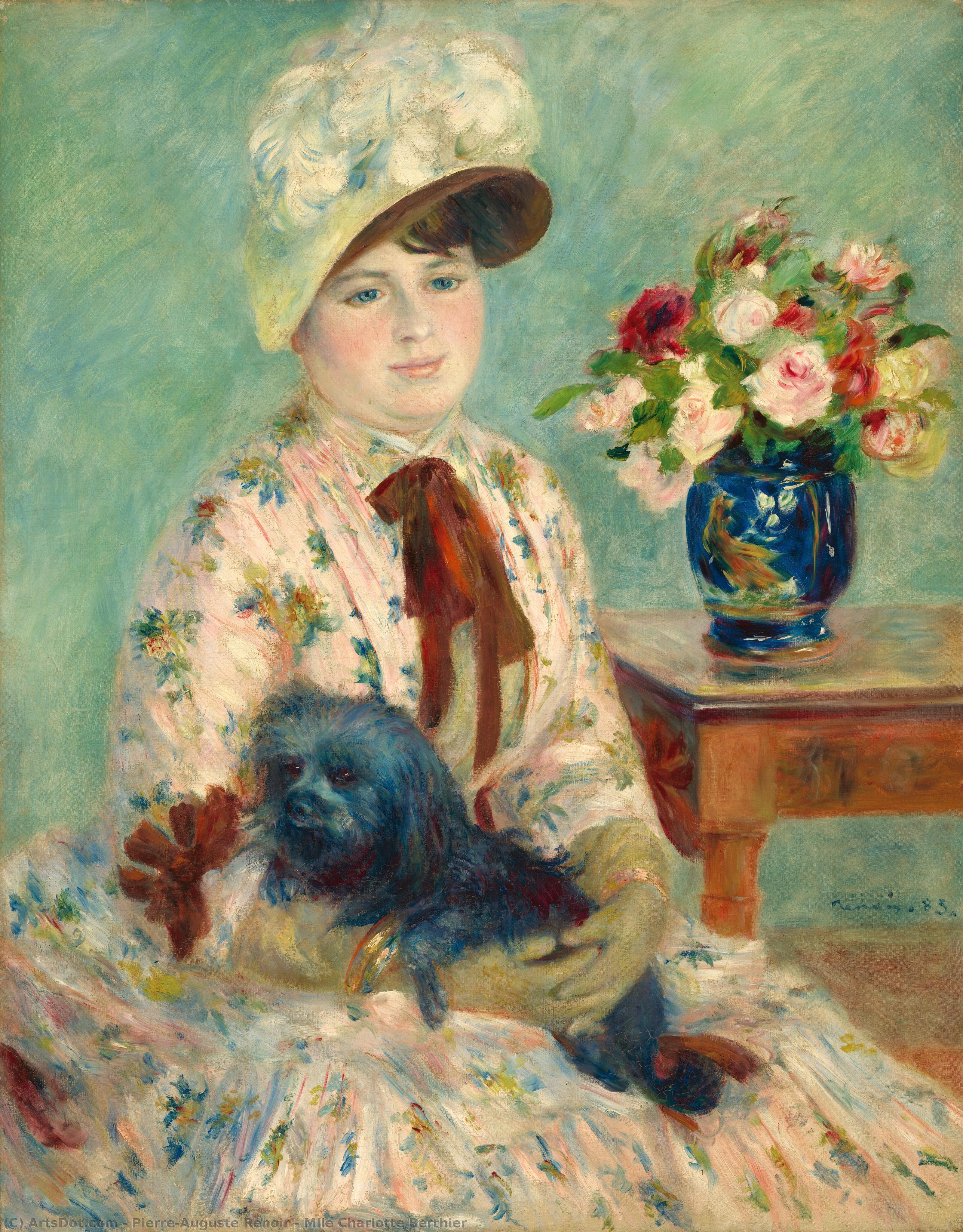
Discover 'Mlle Charlotte Berthier' by Renoir! A luminous Impressionist portrait of a woman & her dog. Explore this 1883 masterpiece’s beauty & artistic significance.
Explore Pierre-Auguste Renoir's (1841-1919) luminous Impressionist paintings! Discover portraits, Parisian life & feminine beauty in his iconic artworks.
A Portrait of Intimate Domesticity: Renoir’s *Mlle Charlotte Berthier*
Pierre-Auguste Renoir's 1883 masterpiece, *Mlle Charlotte Berthier*, is more than just a portrait; it’s a window into the burgeoning Impressionist fascination with capturing fleeting moments of everyday life and genuine emotion. Measuring 98 x 118 cm, this oil on canvas exemplifies Renoir’s skill in portraying not merely likeness, but the *essence* of his subject within a comfortably refined setting.
Subject & Composition: A Moment Shared
The painting centers around Mlle Charlotte Berthier, elegantly seated and cradling a small black dog in her lap. This simple act immediately establishes an atmosphere of intimacy and affection. Renoir masterfully arranges the composition with subtle supporting elements – a vase brimming with roses to the right, a potted plant on the left, and two books hinting at intellectual pursuits in the background. These details aren’t merely decorative; they contribute to a sense of lived-in comfort and suggest aspects of Charlotte's personality and interests. The focus remains firmly on the connection between woman and animal, a bond rendered with tender sensitivity.
Impressionist Technique & Artistic Style
Renoir’s signature Impressionistic style is beautifully showcased here. He employs loose, flowing brushstrokes and a warm, luminous color palette to create a sense of soft focus and atmospheric depth. Rather than sharply defined lines, forms are suggested through delicate gradations of tone and color. This technique isn't about photographic realism; it’s about capturing the *impression* of light and form as perceived by the eye – a hallmark of the Impressionist movement. The diffused lighting further enhances this effect, bathing the scene in a gentle glow that evokes tranquility and warmth.
Historical Context & Artistic Influences
Painted during a pivotal period for Impressionism, *Mlle Charlotte Berthier* reflects the shift away from academic traditions towards a more modern approach to portraiture. While influenced by earlier masters like Rubens and Watteau – artists who also celebrated beauty and sensuality – Renoir forged his own path, embracing contemporary life as subject matter. He was deeply connected with fellow Impressionists such as Claude Monet, whose exploration of light and color profoundly impacted Renoir’s artistic development. Comparing this work to Monet's *White Poppy* reveals a shared interest in capturing the ephemeral qualities of light and atmosphere.
Symbolism & Emotional Resonance
Beyond its aesthetic appeal, the painting carries subtle symbolic weight. The roses, traditionally associated with love and beauty, reinforce the overall sense of grace and refinement. The dog symbolizes loyalty, companionship, and unconditional affection – further emphasizing the emotional core of the portrait. *Mlle Charlotte Berthier* isn’t simply a depiction of a woman; it's an exploration of human connection and the quiet joys of domestic life. The painting evokes feelings of peace, contentment, and gentle warmth, inviting viewers to share in this intimate moment.
Renoir’s Legacy & Collecting Today
Pierre-Auguste Renoir left behind a remarkable artistic legacy, extending even into his family with sons Jean and Claude following creative paths. *Mlle Charlotte Berthier* stands as a testament to his enduring talent and continues to captivate audiences worldwide. For those seeking to bring the beauty of Impressionism into their homes, high-quality canvas prints and oil-painted replicas are available, offering an opportunity to own a piece of art history. Consider pairing this work with pieces from Renoir’s contemporaries like Edouard Manet's *Rue Mosnier with Flags* for a cohesive collection that celebrates the spirit of 19th-century Parisian life.