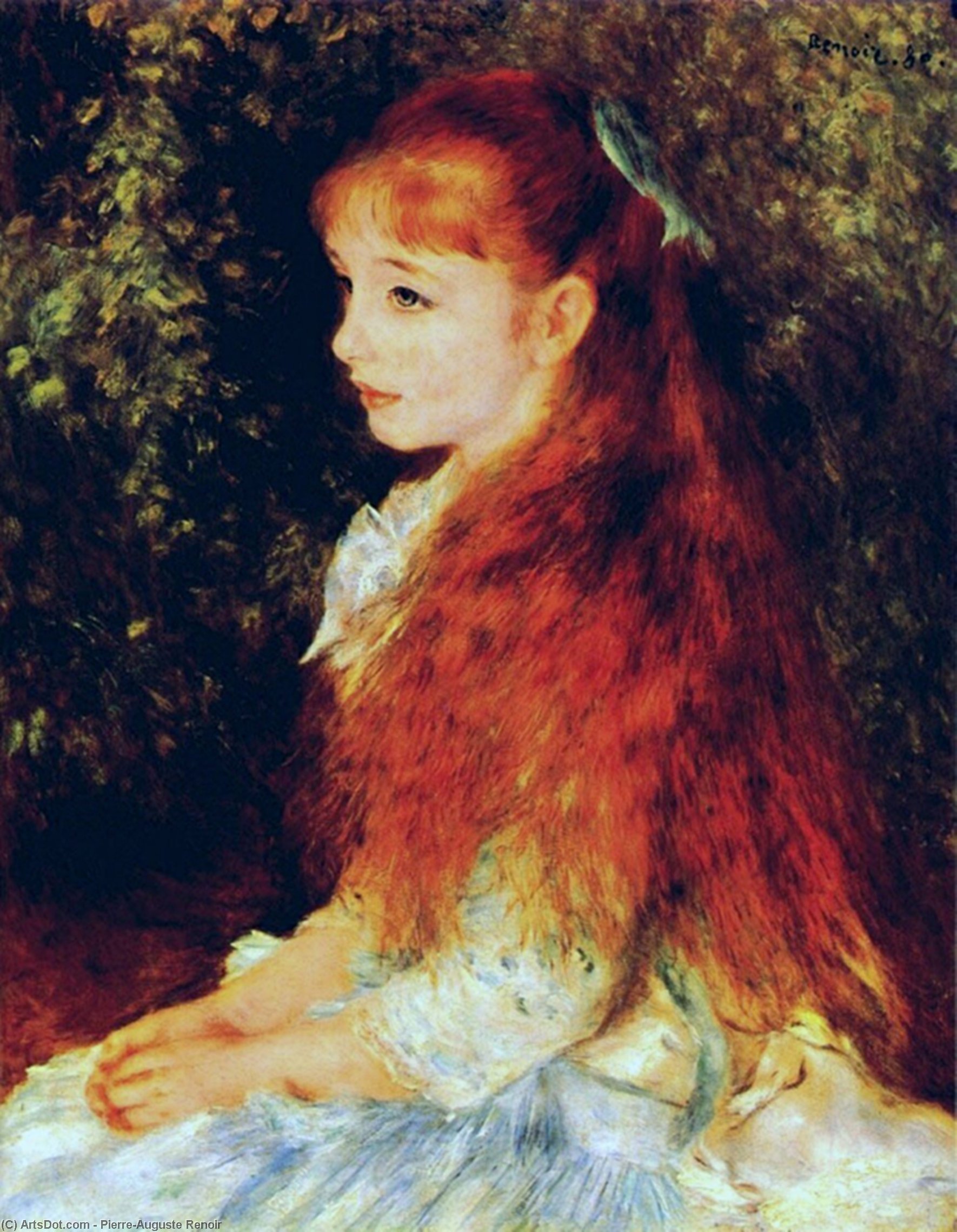
A Glimpse into Childhood: Renoir’s *Mlle Irene Cahen d'Anvers*
This captivating portrait by
Pierre-Auguste Renoir, painted in 1880, offers a tender and intimate portrayal of young Irene Cahen d'Anvers. More than just a likeness, the painting is a celebration of youth, innocence, and the fleeting beauty of childhood – themes central to Renoir’s artistic vision. Commissioned by her father, Louis Cahen d'Anvers, a prominent French banker, this work stands as one of Renoir’s most beloved and recognizable depictions of a child.
Impressionistic Mastery: Style & Technique
*Mlle Irene Cahen d'Anvers* is a quintessential example of Impressionism. Renoir masterfully employs loose, fluid brushstrokes to capture the ephemeral effects of light and atmosphere. The painting isn’t about precise detail; instead, it focuses on
impression – how light dances across surfaces, creating a sense of vibrancy and movement.
- The soft, warm color palette, dominated by earth tones and delicate pastels, contributes to the overall feeling of serenity.
- Notice the way Renoir renders Irene’s red hair – not with solid blocks of color, but with broken brushstrokes that suggest its texture and luminosity.
- The blurred background, filled with foliage, further emphasizes the subject and creates a sense of depth without sacrificing the painting's overall atmospheric quality.
Historical Context & Patronage
The late 19th century saw a growing interest in portraying everyday life, particularly among the burgeoning middle class. Louis Cahen d’Anvers represented this new wealth and commissioned several portraits of his family from leading artists, including Renoir. This commission allowed Renoir to further explore his fascination with capturing fleeting moments and intimate scenes. The painting reflects not only artistic innovation but also a shift in societal values – a celebration of domesticity and familial affection.
Symbolism & Emotional Resonance
While seemingly straightforward, the portrait contains subtle symbolic elements. Irene’s bird companion is often interpreted as representing freedom and innocence. Her direct gaze engages the viewer, creating an immediate connection and inviting us into her world. The white dress she wears symbolizes purity and youth.
- The overall composition evokes a sense of tranquility and contemplation.
- Renoir’s ability to capture Irene's personality – her quiet confidence and gentle spirit – is particularly striking.
- The painting transcends mere representation; it conveys a profound emotional resonance, reminding us of the preciousness of childhood and the beauty of simple moments.
A Timeless Appeal for Modern Interiors
*Mlle Irene Cahen d'Anvers* is more than just a historical masterpiece; it’s a work that continues to inspire and captivate audiences today. Its soft colors, delicate brushwork, and evocative subject matter make it an ideal addition to a variety of interior design schemes.
- It complements both traditional and contemporary settings.
- The painting’s serene atmosphere can bring a sense of calm and sophistication to any room.
- As a reproduction, it offers an accessible way to introduce a touch of Impressionist elegance into your home or office.
This artwork is a testament to Renoir's skill in capturing not just the likeness but also the very essence of his subject. It remains a poignant and enduring symbol of childhood’s beauty and grace.