A Moment of Tender Reverie: Renoir’s “Mother and Child”
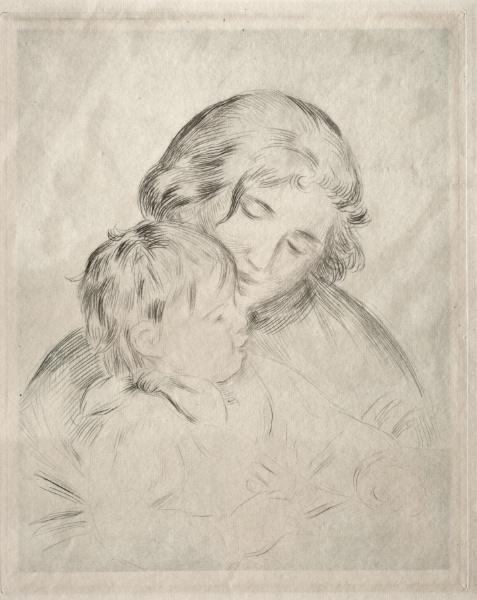
Pierre-Auguste Renoir's "Mother and Child" is more than just a depiction of familial affection; it’s an exquisitely rendered distillation of Impressionist ideals, capturing a fleeting moment of profound connection with breathtaking sensitivity. Painted during the height of Renoir’s career – a period marked by his exploration of light, color, and the human figure – this artwork embodies the artist's signature style: a luminous celebration of beauty and emotion. The scene unfolds with an almost dreamlike quality, inviting the viewer to step into the intimate world of mother and child.
- Subject Matter: The painting focuses on a tender interaction between a woman and her young child. The composition emphasizes their closeness, highlighting the fundamental bond between them – a theme frequently explored by Renoir throughout his oeuvre.
- Style & Technique: As an Impressionist master, Renoir employs loose, visible brushstrokes to capture the play of light on the figures’ skin and clothing. He utilizes broken color—a hallmark of the movement—to create a shimmering effect, particularly noticeable in the dappled sunlight filtering through the scene. The painting's surface is built up with countless layers of thin paint, resulting in a remarkable depth and vibrancy.
Historical Context: Impressionism and the Parisian Scene
“Mother and Child” was created within the vibrant context of late 19th-century Paris, a city undergoing rapid transformation and brimming with artistic innovation. The rise of Impressionism challenged traditional academic painting styles, advocating for direct observation of nature and the fleeting effects of light. Renoir, along with artists like Monet and Degas, embraced this new approach, seeking to capture the immediacy of experience rather than meticulously recreating reality. This period saw a growing interest in depicting everyday life – scenes from Parisian cafes, parks, and domestic interiors – reflecting the changing social landscape of the time.
- Influence of the Salon: Renoir’s work initially faced criticism from the established art establishment, who favored more classical subjects. However, his dedication to Impressionist principles eventually gained widespread recognition, solidifying his place as one of the movement's leading figures.
- The Role of Light: The careful manipulation of light and shadow is central to Renoir’s artistic vision, reflecting the Impressionists’ fascination with capturing transient atmospheric effects.
Symbolism and Emotional Resonance
Beyond its technical brilliance, “Mother and Child” resonates deeply on an emotional level. The mother's gentle gaze and tender posture convey a profound sense of love and protection, while the child’s innocent curiosity evokes feelings of warmth and nostalgia. Renoir masterfully captures the unspoken connection between these two figures, suggesting a timeless narrative of maternal devotion. The painting speaks to universal themes of family, vulnerability, and the enduring power of human relationships.
- Color Palette: Renoir’s use of warm earth tones – ochres, browns, and pinks – contributes to the painting's overall feeling of serenity and comfort.
- Compositional Balance: The balanced composition further enhances the sense of harmony and tranquility, drawing the viewer’s eye towards the central figures.
A Timeless Masterpiece – Recreated for Today
ArtsDot offers meticulously crafted hand-painted reproductions of Renoir's “Mother and Child,” allowing you to experience the beauty and emotional depth of this iconic artwork in your own space. Each reproduction is created using traditional techniques, ensuring exceptional detail and color accuracy. Whether you are an art collector, interior designer, or simply someone seeking a touch of timeless elegance, our hand-painted reproductions provide a unique opportunity to own a piece of art history.