Explore Pierre-Auguste Renoir's (1841-1919) luminous Impressionist paintings! Discover portraits, Parisian life & feminine beauty in his iconic artworks.
Explore the Baltimore Museum of Art's diverse collection, including Matisse masterpieces & ancient mosaics. Enjoy free admission, stunning gardens & engaging exhibitions – a cultural gem!
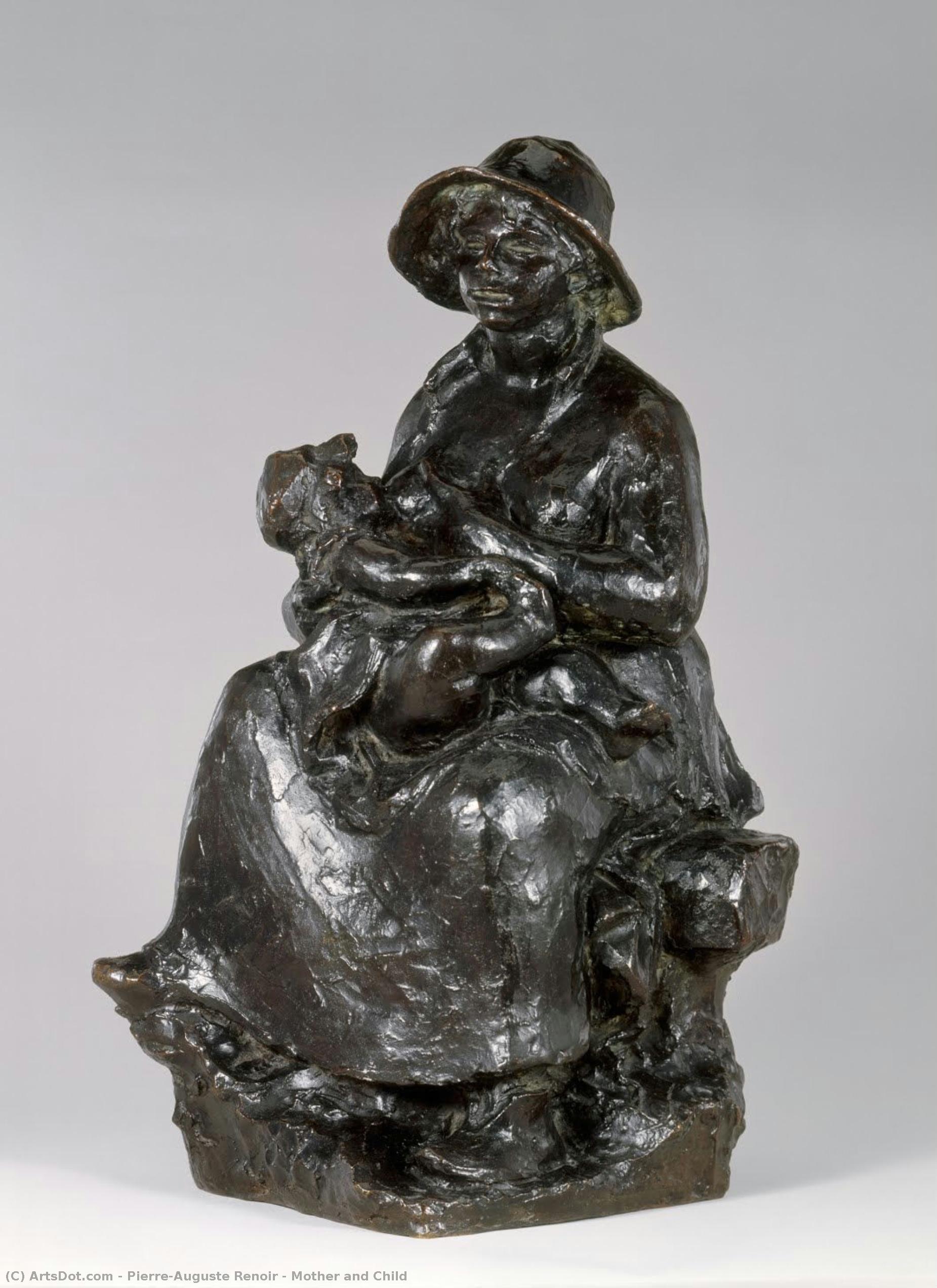
A Moment of Maternal Grace: Analyzing Renoir’s “Mother and Child” Sculpture
Pierre-Auguste Renoir's "Mother and Child," a bronze sculpture created around 1883, stands as an enduring emblem of Impressionistic tenderness and artistic innovation. Captured in a photograph against a muted backdrop—likely from the Frick Collection—the artwork invites contemplation on themes of familial love, serenity, and the artist’s masterful manipulation of form and texture. This piece exemplifies Renoir's signature style, prioritizing emotional resonance over meticulous detail, mirroring Rodin’s sculptural approach while firmly rooted in the Impressionist movement.
Composition & Visual Harmony
The sculpture’s vertical orientation immediately establishes a sense of grandeur, emphasizing the stature of the mother figure. Despite slight asymmetry—the woman occupying more visual space on the right—Renoir achieves remarkable balance through curving lines that permeate both the human forms and drapery. These graceful arcs contribute to an overall feeling of softness and movement, mirroring the natural world Renoir so passionately sought to depict. The subtle positioning of the child leans slightly towards the left, creating a dynamic counterbalance that prevents rigidity and enhances visual interest.
Material & Technique: Bronze Casting’s Legacy
The sculpture is crafted from bronze—a material chosen for its durability and ability to capture nuanced tonal variations—using the lost-wax casting method, a technique perfected during antiquity and embraced by sculptors throughout history. This process ensures exceptional precision in replicating the artist's vision, resulting in a surface texture that blends smoothness with subtle roughness, hinting at the transformative effects of oxidation over time. The patina applied to the bronze further enhances its color palette—primarily browns and bronzes—creating depth and luminosity that elevates the artwork’s aesthetic quality.
Impressionistic Style & Emotional Resonance
Renoir's artistic vision aligns perfectly with Impressionism’s core tenets: prioritizing fleeting impressions of light and color, rather than striving for photographic realism. Like Rodin, he eschews detailed anatomical rendering in favor of conveying emotion through expressive forms—the gentle curve of the mother’s torso, the comforting embrace of her arms around the child—creating a palpable sense of warmth and protection. The sculpture embodies the movement's preoccupation with capturing the essence of human experience, inviting viewers to contemplate the profound beauty inherent in simple familial bonds.
Symbolism & Contextual Significance
“Mother and Child” transcends mere representation; it speaks to universal ideals of maternal devotion and nurturing—themes recurrent throughout Renoir’s oeuvre. The pose itself is deliberately intimate, conveying a sense of vulnerability and reassurance. Considering its creation during the Belle Époque—a period marked by optimism and artistic experimentation—the sculpture reflects the broader cultural fascination with portraying idealized human relationships. Its presence in institutions like the Frick Collection underscores its enduring legacy as a masterpiece of Impressionistic art.