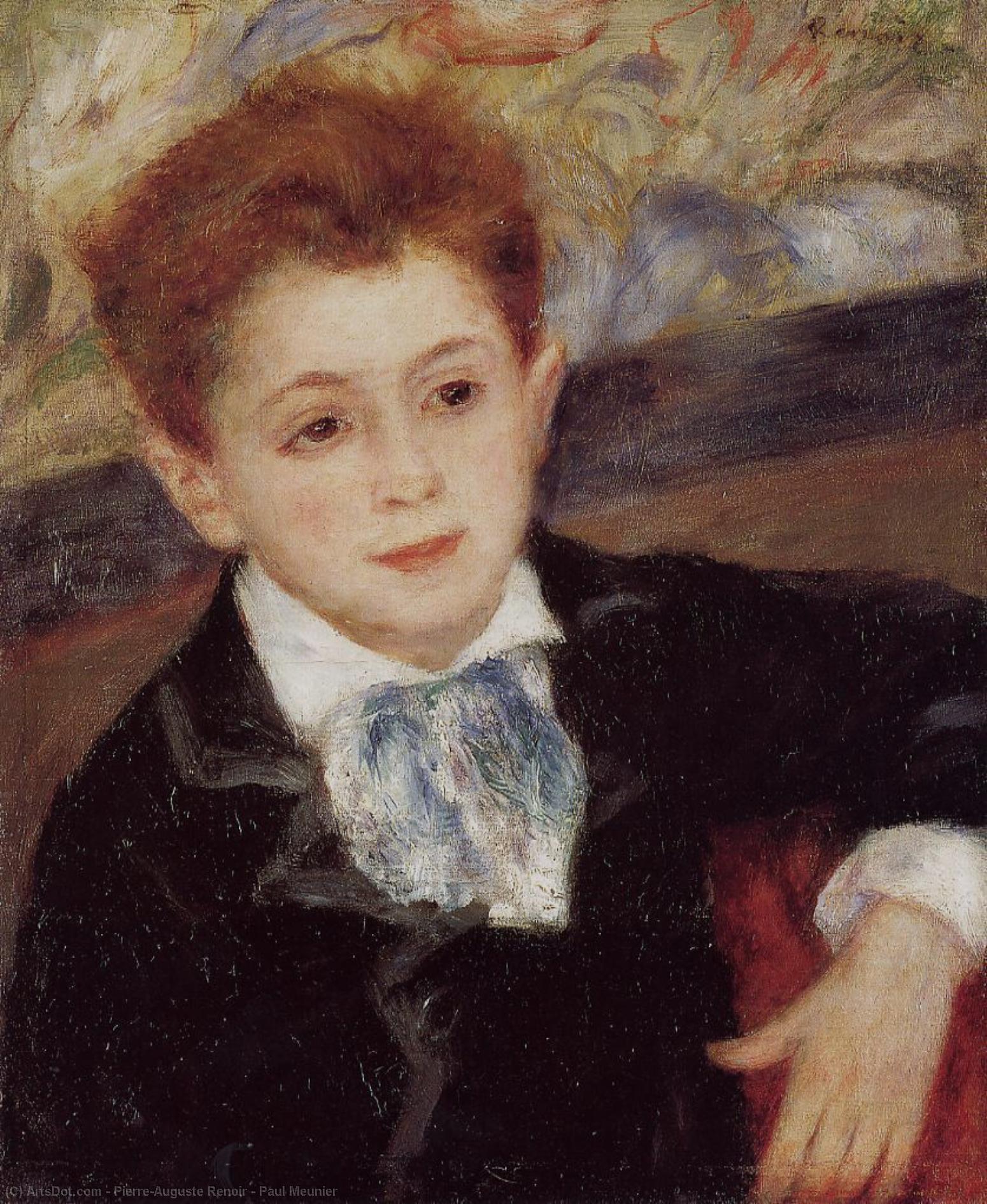
Experience Renoir's 'Paul Meunier,' a captivating 1877 Impressionist portrait of a young boy, rendered with soft brushstrokes and vibrant color. A timeless masterpiece by Pierre-Auguste Renoir.
A Snapshot of Parisian Elegance: Paul Meunier by Pierre-Auguste Renoir
Pierre-Auguste Renoir’s “Paul Meunier,” painted in 1877, stands as a quintessential example of Impressionism—a movement that sought to capture fleeting moments of light and color rather than meticulously detailing form. More than just a portrait, it's an embodiment of the Parisian atmosphere during its Belle Époque era, reflecting a fascination with youth and refinement.
- Subject Matter: The painting depicts Paul Meunier, a young boy radiating confidence and poise. Renoir skillfully portrays him in a suit and tie ensemble—a deliberate choice indicative of the social status prevalent at the time—complete with a bow tie that adds an element of aristocratic charm.
- Composition & Background: Unlike many portraits of its period which focused solely on the subject, “Paul Meunier” incorporates a subtle backdrop featuring other figures engaged in everyday activities. This layering contributes to depth and context, emphasizing Paul’s central position within the scene while simultaneously capturing the vibrancy of Parisian life.
- Artistic Style: Renoir's Impressionist technique is immediately apparent through his loose brushstrokes—a hallmark of the movement—and an unwavering dedication to portraying light as it dances across surfaces. The canvas utilizes oil paint, allowing for a rich textural quality that enhances the visual experience and brings the scene to life.
Technique & Materials: Impressionistic Brilliance
Renoir’s masterful manipulation of color is central to “Paul Meunier’s” success. He employs broken color—applying pigment in small, separate strokes rather than blending them seamlessly—to create an illusion of luminosity and vibrancy. The subtle gradations of hue capture the nuances of light filtering through windows, imbuing the painting with a palpable sense of atmosphere.
- Color Palette: Renoir utilizes a harmonious palette dominated by warm tones – reds, yellows, and browns – reflecting the warmth of Parisian interiors. These colors are juxtaposed delicately to create visual interest and convey an impression of serenity.
- Brushwork: The artist’s brushstrokes are visible yet blended harmoniously, creating a velvety surface that absorbs light and softens edges. This technique prioritizes capturing the ephemeral qualities of perception over precise representation.
Historical Context & Significance
"Paul Meunier" was created during Renoir's formative years as an Impressionist artist—a period marked by experimentation and a rejection of academic conventions. It exemplifies the movement’s desire to depict scenes from modern life with immediacy and spontaneity, capturing the spirit of its time.
- Belle Époque Paris: The painting reflects the optimism and cultural flourishing of the Belle Époque—the “Beautiful Era”—Parisian society.
- Renoir's Oeuvre: "Paul Meunier" is considered a cornerstone of Renoir’s artistic legacy, demonstrating his ability to convey emotion through subtle visual cues and establishing him as one of the foremost portraitists of his generation.
Emotional Resonance & Artistic Legacy
More than just a depiction of a boy in clothing, “Paul Meunier” communicates an aura of youthful confidence and grace—qualities that resonate deeply with viewers even today. Renoir’s masterful use of light and color elevates the portrait beyond mere likeness, transforming it into an evocative meditation on beauty and perception.
- Psychological Depth: The boy's gaze directs attention to the viewer, fostering a connection that transcends time and space—a testament to Renoir’s psychological insight.
- Influence on Art History: “Paul Meunier” continues to inspire artists and designers alike, serving as an enduring symbol of Impressionist elegance and demonstrating the transformative power of capturing fleeting moments of beauty.