Explore Pierre-Auguste Renoir's (1841-1919) luminous Impressionist paintings! Discover portraits, Parisian life & feminine beauty in his iconic artworks.
A Symphony of Light and Color: Exploring Pierre-Auguste Renoir’s ‘Peonies’
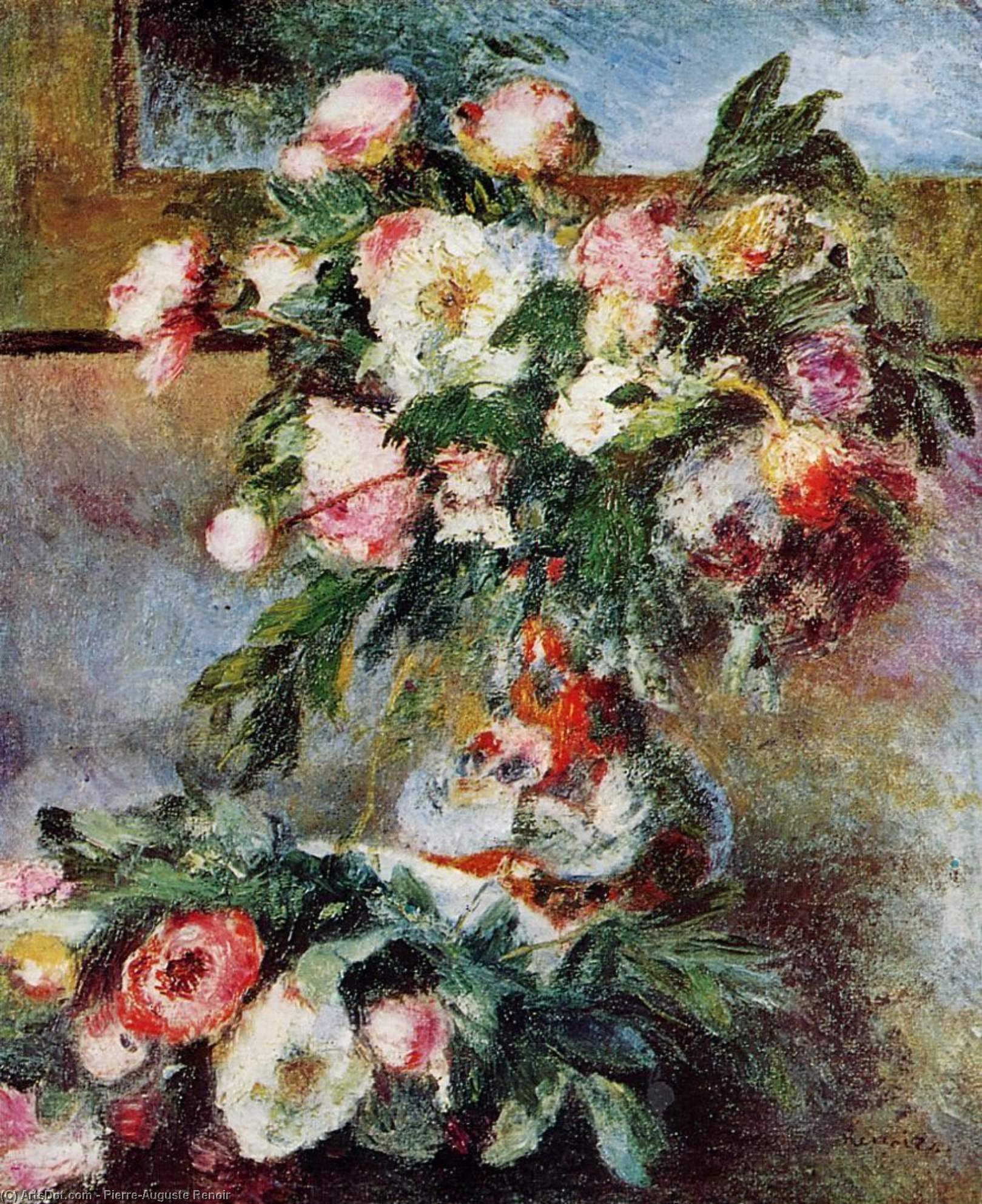
Pierre-Auguste Renoir's “Peonies,” painted in 1878, stands as a quintessential embodiment of Impressionist artistry—a captivating glimpse into the fleeting beauty of nature captured with unparalleled sensitivity. More than just a depiction of flowers, it represents a pivotal moment in artistic history, reflecting the movement’s core principles and establishing Renoir's enduring legacy as one of the most beloved painters of his era.
The Essence of Impressionism: Technique and Style
Renoir’s masterful approach to painting is immediately discernible through his characteristic brushstrokes—loose, feathery strokes that prioritize capturing the ephemeral qualities of light and color rather than meticulous detail. Unlike academic art traditions focused on precise representation, Impressionists sought to convey an immediate sensory experience, prioritizing atmosphere and emotion over photographic accuracy. The artist skillfully blends pigments wet-on-wet, allowing colors to mingle organically and creating a shimmering effect that mimics the dappled sunlight filtering through foliage—a technique perfected by Renoir during his formative years studying the works of Monet and Sisley. This deliberate disregard for traditional conventions underscores Renoir’s commitment to innovation and his profound understanding of how light transforms visual perception.
A Floral Ode to Tranquility: Symbolism and Composition
The peony itself holds significant symbolic weight within Eastern cultures, representing prosperity, honor, and longevity—themes that resonate powerfully in the artwork's serene composition. The vase serves as a focal point, drawing the viewer’s gaze inward towards the delicate blossoms arranged with meticulous care. Renoir’s palette is dominated by soft pastel hues – blush pinks, creams, and muted greens – creating an ambiance of tranquility and inviting contemplation. These colors aren’t merely decorative; they contribute to the painting's emotional impact, conveying a sense of peace and celebrating the ephemeral beauty of springtime.
Historical Context: The Parisian Belle Époque
“Peonies” emerged during the Belle Époque—a period of unprecedented optimism and artistic experimentation in Paris—marking a decisive break from the rigid formalism of earlier generations. Impressionism flourished amidst burgeoning industrialization, urbanization, and social change, fueled by advancements in scientific understanding of light and color. Artists like Renoir embraced plein air painting—working outdoors directly before their canvases—to immerse themselves in the immediacy of nature and to capture its fleeting impressions. This artistic rebellion against established norms reflects a broader cultural shift toward valuing sensory experience and embracing innovation.
A Timeless Masterpiece: Why ‘Peonies’ Endures
Ultimately, “Peonies” transcends its subject matter, becoming an emblem of Impressionist idealism—a celebration of beauty and emotion that continues to captivate audiences today. Renoir's ability to distill the essence of a flower into a luminous tableau speaks to the enduring power of art to evoke feelings of wonder and serenity. Its delicate colors, fluid brushstrokes, and harmonious composition exemplify the movement’s core values, securing its place as one of Impressionism’s most treasured achievements and ensuring Renoir's “Peonies” remains an inspiration for artists and collectors alike.