Place Clichy: A Snapshot of Parisian Modernity
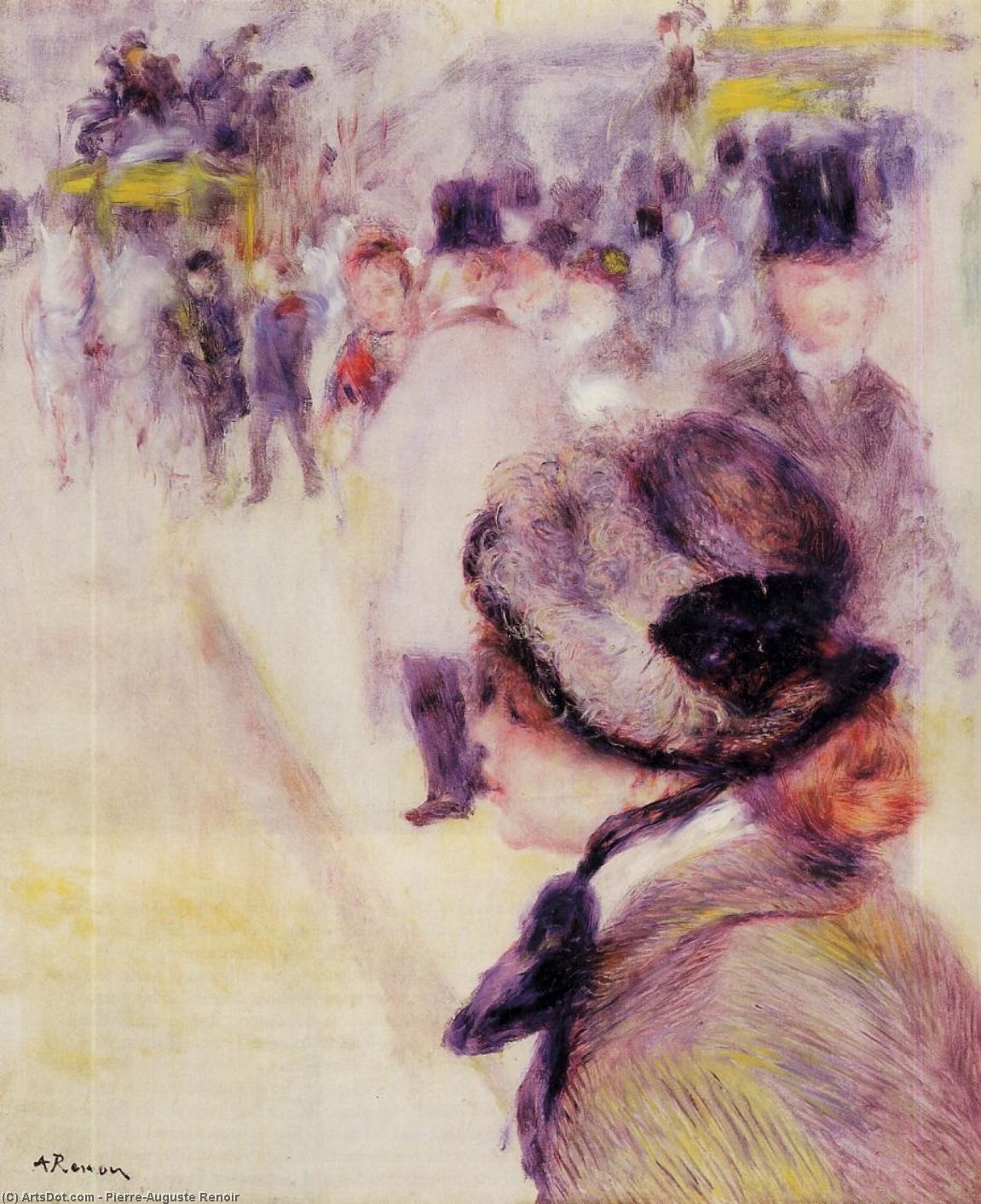
Pierre-Auguste Renoir’s “Place Clichy,” completed in 1880, stands as a quintessential example of Impressionist art—a vibrant testament to capturing fleeting moments and sensory impressions. Housed at the Fitzwilliam Museum in Cambridge, England, this painting offers more than just a visual spectacle; it encapsulates the spirit of late nineteenth-century Paris and Renoir’s masterful approach to portraying urban life.
Composition and Observation
The canvas depicts a bustling street scene on Place Clichy, brimming with pedestrians navigating their daily routines. Renoir skillfully employs perspective—a steep incline—to draw the viewer into the heart of the action. At its center is a woman dressed in a hat, seemingly lost in contemplation as she strolls along the pavement. Surrounding her are several other figures, some closer to the foreground and others receding into the distance, creating a dynamic interplay of spatial relationships. Two umbrellas punctuate the composition—one positioned near the upper left corner and another centrally located—adding visual interest and subtly hinting at the weather conditions of that particular day. Renoir’s meticulous attention to detail captures not just what is seen but also how it feels – the warmth of sunlight filtering through the buildings, the murmur of conversations, and the movement of people passing by.
The Impressionist Technique
Renoir's signature Impressionist technique—characterized by loose brushstrokes and a focus on capturing light—is evident throughout “Place Clichy.” He eschewed traditional academic painting methods, prioritizing spontaneity and immediacy. Instead of blending colors smoothly to create tonal gradations, Renoir applied pigment directly onto the canvas in broken patches, allowing the viewer’s eye to blend the hues optically. This technique brilliantly conveys the ephemeral quality of light and color—the way it dances across surfaces and transforms landscapes throughout the day. The resulting surface texture is palpable, inviting viewers to experience the painting as if they were actually present at Place Clichy itself.
Historical Context: Paris in Transition
“Place Clichy” reflects the transformative period in Parisian history following the Franco-Prussian War (1870–1871). The city was undergoing rapid industrialization and urbanization, reshaping its social landscape and influencing artistic sensibilities. Impressionists like Renoir sought to depict these changes—the dynamism of modern life—rather than idealized historical narratives or mythological subjects. By portraying ordinary Parisians engaged in everyday activities, Renoir challenged the conventions of academic art and championed a new aesthetic that prioritized observation and sensory experience. The painting’s subject matter aligns with broader artistic trends of the time, demonstrating Impressionism's commitment to capturing the beauty of the contemporary world.
Symbolic Resonance and Emotional Impact
Beyond its technical brilliance, “Place Clichy” possesses symbolic resonance—a subtle suggestion of contemplation amidst the hustle and bustle of urban life. The woman in the hat embodies a quiet dignity and introspection, inviting viewers to pause and consider the significance of their surroundings. Renoir’s masterful use of color—particularly warm yellows and oranges—creates an atmosphere of optimism and vibrancy, conveying the joyfulness of Parisian summers. Ultimately, “Place Clichy” succeeds in transporting the viewer back to a bygone era—a moment frozen in time—and reminding us of the enduring power of Impressionist art to capture both visual beauty and emotional depth.
- Artist: Pierre-Auguste Renoir
- Born: February 25, 1841
- Death: December 3, 1919
- Birth City: Limoges
- Birth Country: France
- Location: Fitzwilliam Museum (University of Cambridge), Cambridge, UK
- Style: Impressionism
- Medium: Oil on Canvas
- Size: Unknown