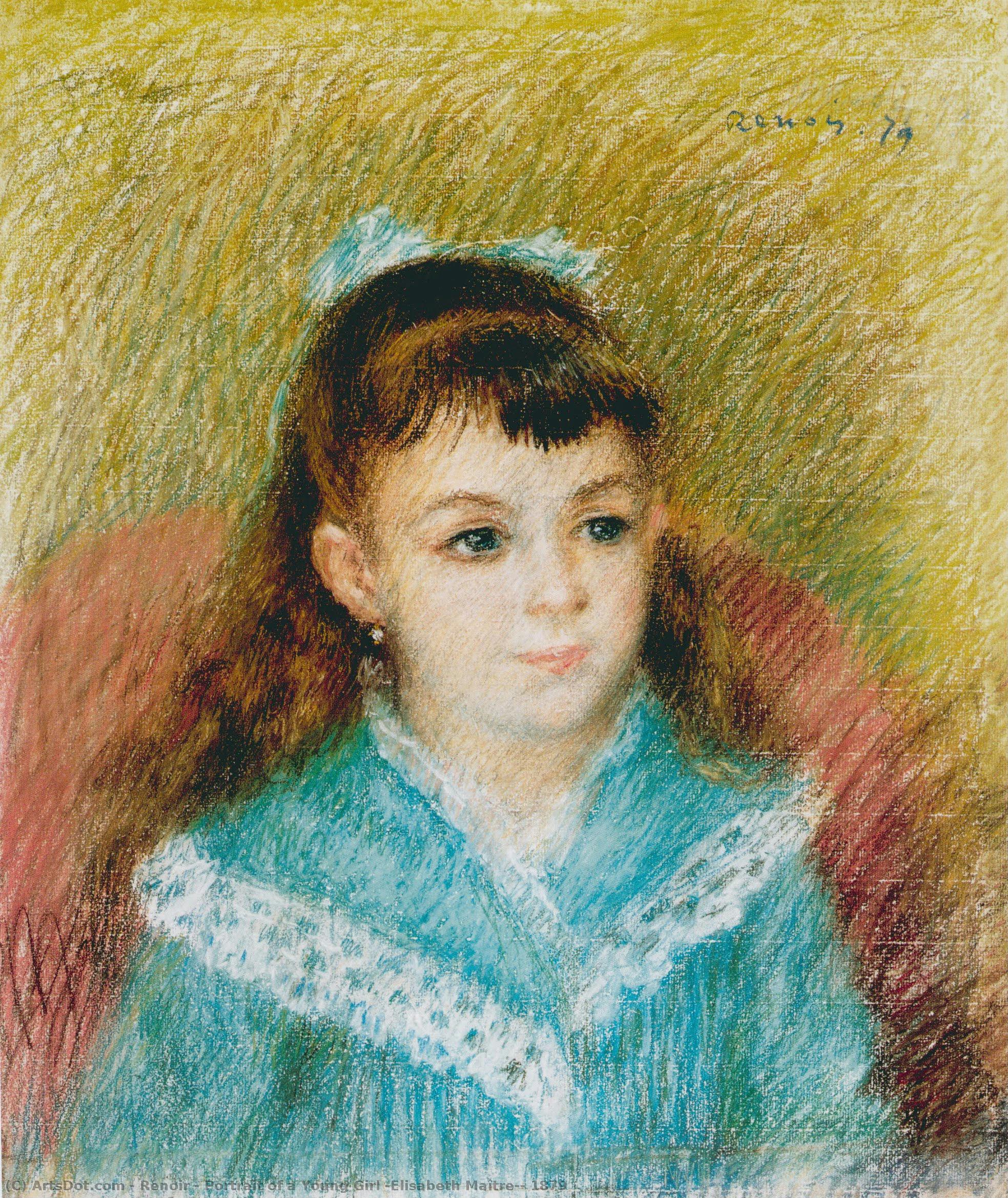
Research indicates that this portrait is housed in a private collection and aligns with Renoir's broader exploration of feminine beauty during the Impressionist era. WikiArt provides comprehensive information on Renoir and his artistic legacy, highlighting his influence on subsequent generations of painters.
Explore Pierre-Auguste Renoir's (1841-1919) luminous Impressionist paintings! Discover portraits, Parisian life & feminine beauty in his iconic artworks.
Explore art history's treasures at the Albertina Museum in Vienna! Discover stunning prints, drawings & masterpieces spanning centuries within its unique architectural spaces.
A Moment Frozen in Pastel Light
Pierre-Auguste Renoir’s “Portrait of a Young Girl” (Elisabeth Maître), completed in 1879, stands as an exquisite exemplar of Impressionism—a movement that sought to capture the fleeting beauty of everyday life through vibrant color and loose brushstrokes. More than just a depiction of a young woman, this pastel masterpiece embodies Renoir’s artistic philosophy: to distill emotion and atmosphere into visual form with remarkable sensitivity. The artwork resides in a private collection, ensuring its preservation for future generations to appreciate its enduring charm.
Composition & Technique – Embracing Impressionistic Fluidity
The portrait adheres to the classic bust-length format, positioning Elisabeth Maître slightly off-center—a subtle compositional choice that draws the eye and fosters visual engagement. Renoir’s technique is characterized by direct application of pastel onto paper in short, broken strokes, creating a palpable sense of movement and texture. Unlike academic painting's meticulous detail, Impressionism prioritizes capturing the effects of light and color; here, Renoir achieves this brilliantly through layering hues that blend seamlessly together. The blurred background serves as an intentional device—a deliberate concession to the immediacy of perception—allowing the girl’s face and figure to dominate the composition and conveying a feeling of intimacy.
Color Palette & Light – Warmth Illuminated
The pastel palette is dominated by warm tones—primarily yellows, oranges, reds, and browns—accentuated by delicate blues in Elisabeth Maître's dress and ribbon. These hues are applied with remarkable subtlety, producing a soft, diffused illumination that casts gentle shadows without creating harsh contrasts. Renoir skillfully utilizes color to evoke emotion; the warmth suggests comfort, nostalgia, and perhaps even tenderness – mirroring the serene expression on the girl’s face. The artist’s meticulous observation of light is evident in how he captures its nuances, transforming ordinary surroundings into a luminous tableau.
Symbolism & Emotional Resonance – Innocence Captured
Beyond its formal elements, “Portrait of a Young Girl” resonates with profound symbolic significance. The youthful subject embodies innocence and purity—themes frequently explored by Impressionist artists who sought to portray the beauty of childhood and femininity. Renoir’s loose brushstrokes convey not merely visual information but also an emotional state: a fleeting moment captured with heartfelt compassion. The artwork invites contemplation on themes of vulnerability, grace, and the ephemeral nature of beauty – qualities that continue to captivate viewers today.
Historical Context & Artistic Legacy
Created during the height of Impressionism’s popularity, “Portrait of a Young Girl” reflects the movement's core tenets—a rejection of traditional academic conventions in favor of subjective experience and perceptual observation. Renoir’s work stands alongside luminaries like Monet and Degas as pivotal contributions to art history, establishing a new aesthetic vocabulary that profoundly influenced subsequent generations of artists. Its enduring appeal testifies to Renoir’s ability to distill the essence of human emotion into a visually arresting image—a testament to Impressionism's lasting legacy.