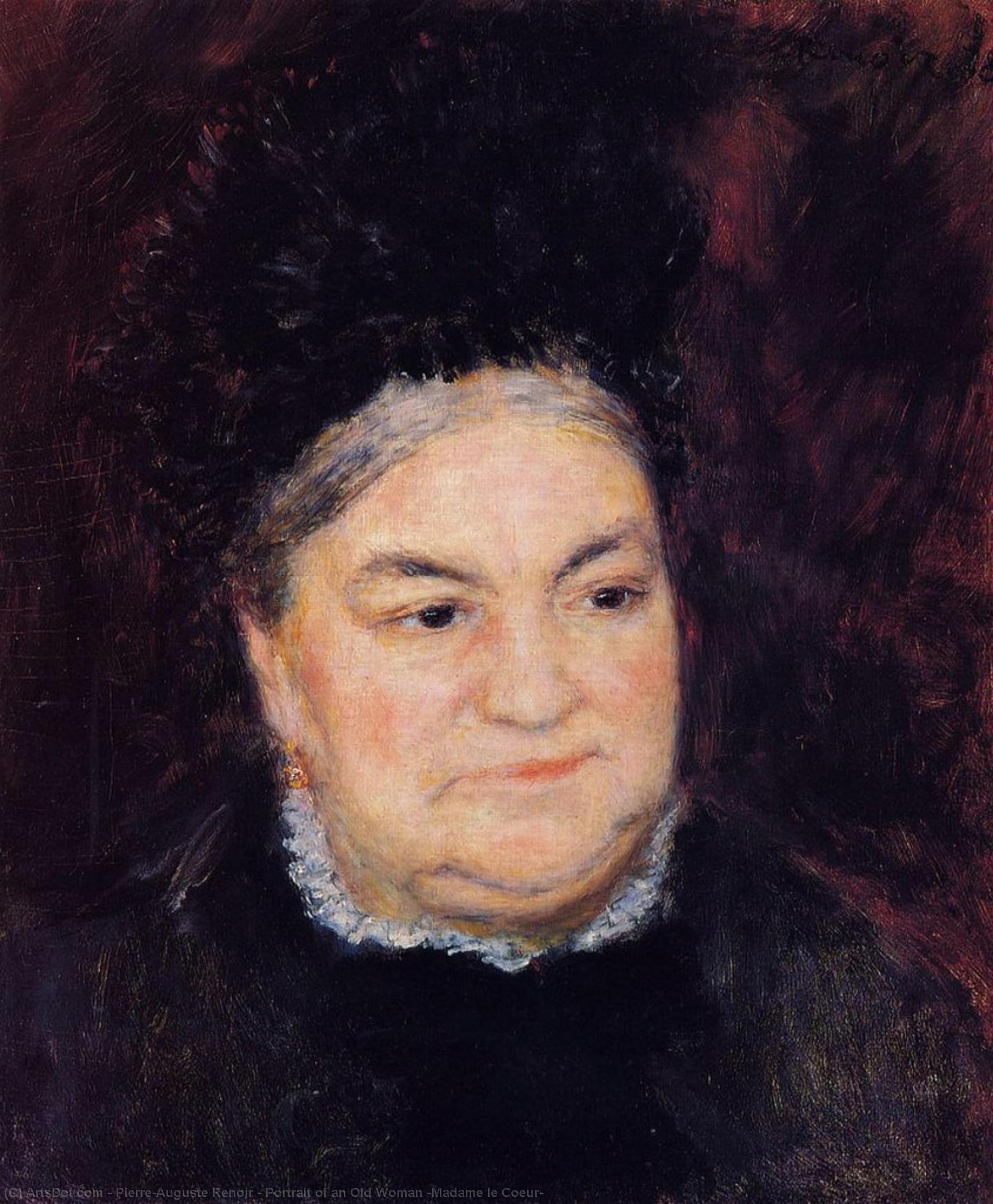
A Window Into Time: The Soul of Madame le Coeur
In the vast tapestry of Impressionism, few works capture the quiet dignity of human experience as tenderly as Pierre-Auguste Renoir’s Portrait of an Old Woman (Madame le Coeur). Painted in 1878, during the movement's most vibrant era, this masterpiece transcends a mere physical likeness to offer a profound meditation on aging, memory, and the enduring grace found within vulnerability. Unlike the rigid academic portraits of previous generations that sought to idealize their subjects through polished perfection, Renoir invites us into a moment of stillness. The subject’s gaze, heavy with the weight of lived experience, arrests the viewer, prompting a contemplative dialogue that feels both intimate and universal.
The technical brilliance of the piece lies in Renoir's masterful command of light and color. Eschewing harsh outlines, he employs the signature Impressionistic technique of broken color—applying small, distinct strokes of pigment that dance across the canvas to create an ethereal luminescence. Through a delicate palette of ochre, crimson, and violet, Renoir breathes life into the textures of the woman's attire and the soft contours of her face. The deep blacks of her dress are not merely shadows but are infused with subtle hues that provide depth, while the striking red background serves as a dramatic foil, heightening the emotional intensity of the composition. This interplay of light and shadow creates a palpable warmth that softens the melancholic undertones of the subject's introspective posture.
Historical Resonance and Emotional Depth
To understand this portrait is to understand the spirit of the Belle Époque. Emerging from a period of significant social transformation in France, Renoir’s work reflects the era's tension between the optimism of progress and the anxieties of a changing world. By focusing on an everyday figure with such profound respect, Renoir rejected the grand, often hollow narratives of Salon art in favor of honesty and immediacy. The slight slump of the woman's shoulders and her downward tilt suggest a soul lost in thought, perhaps revisiting cherished memories or mourning what has passed.
For the discerning collector or interior designer, this painting offers more than just aesthetic beauty; it provides an emotional anchor for any space. The juxtaposition of vibrant reds—symbolizing passion and vitality—with cooler, somber tones creates a sophisticated visual balance that commands attention without overwhelming its surroundings. Whether displayed in a sunlit gallery or a quiet study, Madame le Coeur serves as a timeless reminder of the beauty inherent in the passage of time, making it an exquisite choice for those who seek art that speaks to the heart and enriches the atmosphere of a home with depth and character.