A Moment Frozen in Light: Unveiling Renoir’s “Portrait of Margot”
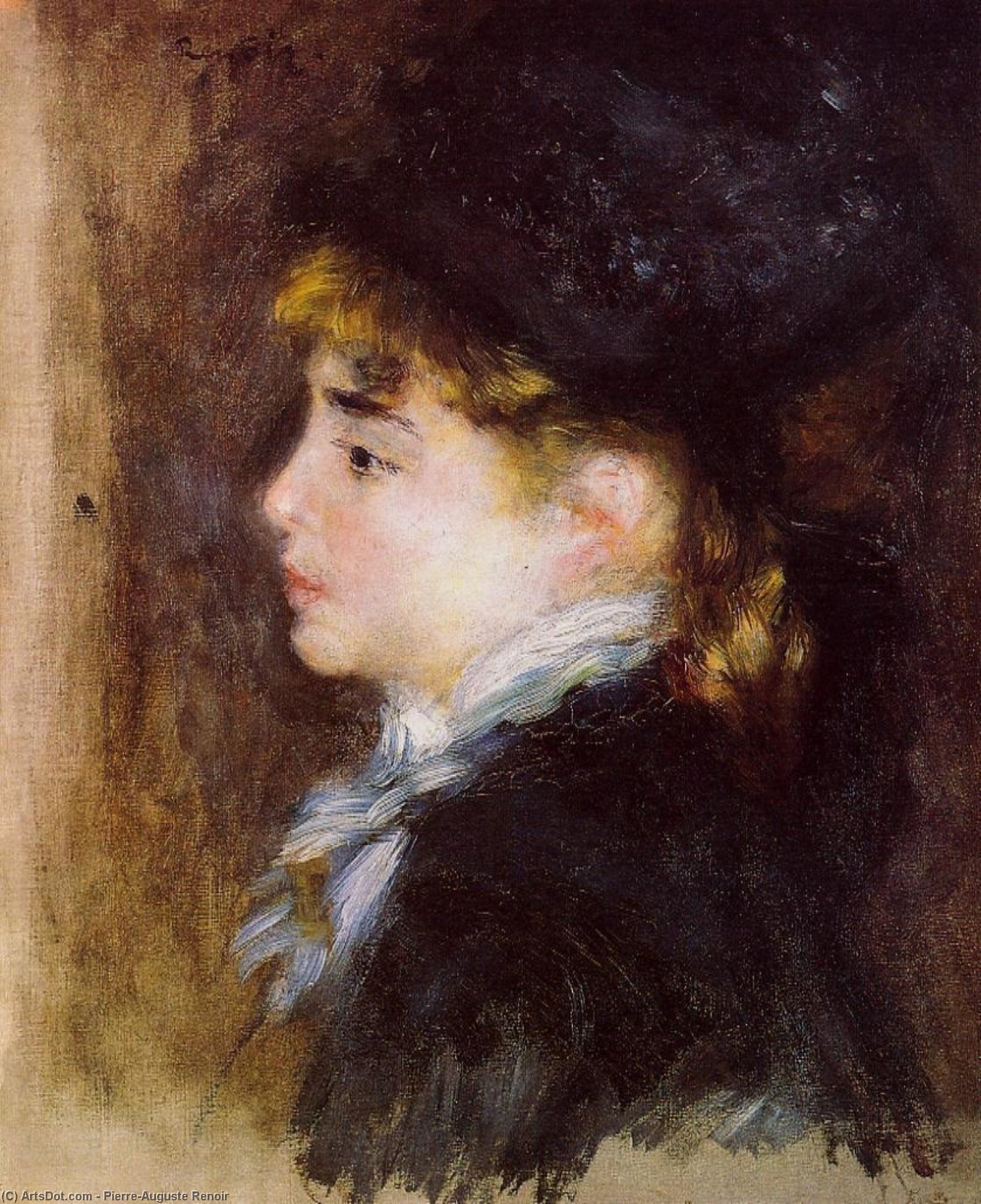
Pierre-Auguste Renoir's "Portrait of Margot," also known as “Portrait of a Model,” is more than just a painted likeness; it’s a shimmering distillation of Parisian life, a captured breath of elegance and quiet confidence. Completed in 1876, this intimate oil on canvas resides within the hallowed halls of the Musée d'Orsay in Paris, a testament to Renoir’s mastery of Impressionism and his profound ability to translate fleeting moments into enduring art. The painting immediately draws the viewer in with its soft, diffused light—a hallmark of Renoir’s technique—and the captivating gaze of Margot herself, a young woman radiating an understated poise that speaks volumes about her character.
At first glance, the composition appears deceptively simple: a woman stands before a neutral wall, her dark hat framing a face both delicate and strong. However, Renoir’s genius lies in his meticulous attention to detail—the subtle play of light on her skin, the carefully rendered folds of her dress, the almost imperceptible tilt of her head. He employs loose, broken brushstrokes, characteristic of Impressionism, allowing the colors to blend and shimmer before the eye, creating a sense of movement and vibrancy that defies stillness. The palette is dominated by warm earth tones—ochres, browns, and creams—interspersed with delicate pinks and blues, evoking a feeling of warmth and intimacy.
The Woman Behind the Portrait: Margot Frank
The identity of “Margot” has been a subject of fascination for art historians. While initially believed to be a model named Margot Betti Frank, recent research suggests she was actually Margot Frank, the elder daughter of Otto Frank—the man who would later provide the world with Anne Frank’s diary. This connection adds a poignant layer of historical significance to the painting, transforming it from a simple portrait into a silent witness to one of history's most heartbreaking stories. The fact that Renoir painted her just months before her untimely death at the age of 23 underscores the fleeting nature of beauty and life itself.
Margot’s expression is particularly noteworthy. She isn’t smiling, nor does she appear overtly posed; instead, she holds a direct, almost challenging gaze towards the viewer. This directness conveys an air of self-assurance and intelligence—a quiet dignity that belies her youth. Some scholars interpret this look as a subtle defiance, a refusal to be simply defined by her role as a model. It’s a captivating moment frozen in time, inviting us to contemplate the complexities of human character.
Renoir's Place in Impressionism and Beyond
Pierre-Auguste Renoir was a pivotal figure in the development of Impressionism, alongside artists like Claude Monet and Edgar Degas. He moved away from the rigid academic traditions of the Salon system, embracing a more spontaneous and subjective approach to painting. His focus shifted towards capturing the effects of light and atmosphere—the way sunlight filters through trees, the shimmer on water, the fleeting expressions of his subjects. “Portrait of Margot” exemplifies this shift, prioritizing sensory experience over precise representation.
Beyond portraiture, Renoir is celebrated for his depictions of Parisian life – scenes from the Moulin de la Galette and Bal du moulin de la Galette are iconic examples of his ability to capture the energy and vibrancy of modern urban existence. His work continues to resonate with audiences today, not only for its aesthetic beauty but also for its intimate portrayal of human emotion and experience. The painting’s enduring appeal lies in its ability to transport us back to a specific moment in time—a glimpse into the life of a young woman who, through Renoir's brushstrokes, has been immortalized in art.
Bringing “Portrait of Margot” Home: A High-Quality Reproduction
ArtsDot.com offers meticulously crafted hand-painted reproductions of "Portrait of Margot," allowing you to bring this masterpiece into your own space. Our skilled artisans replicate Renoir’s delicate brushwork and luminous palette with the utmost care, ensuring that every detail is faithfully reproduced. Available in a range of sizes, from intimate prints to large-scale canvases, our reproductions are perfect for collectors, interior designers, or anyone seeking to add a touch of Impressionistic elegance to their home.
Explore our selection today and discover the beauty of “Portrait of Margot” – a timeless work of art that continues to captivate and inspire generations. View the original painting at Musée d'Orsay, and then immerse yourself in a stunning reproduction from ArtsDot.com.