Explore Pierre-Auguste Renoir's (1841-1919) luminous Impressionist paintings! Discover portraits, Parisian life & feminine beauty in his iconic artworks.
Reclining Model: A Moment of Tranquility Captured by Renoir
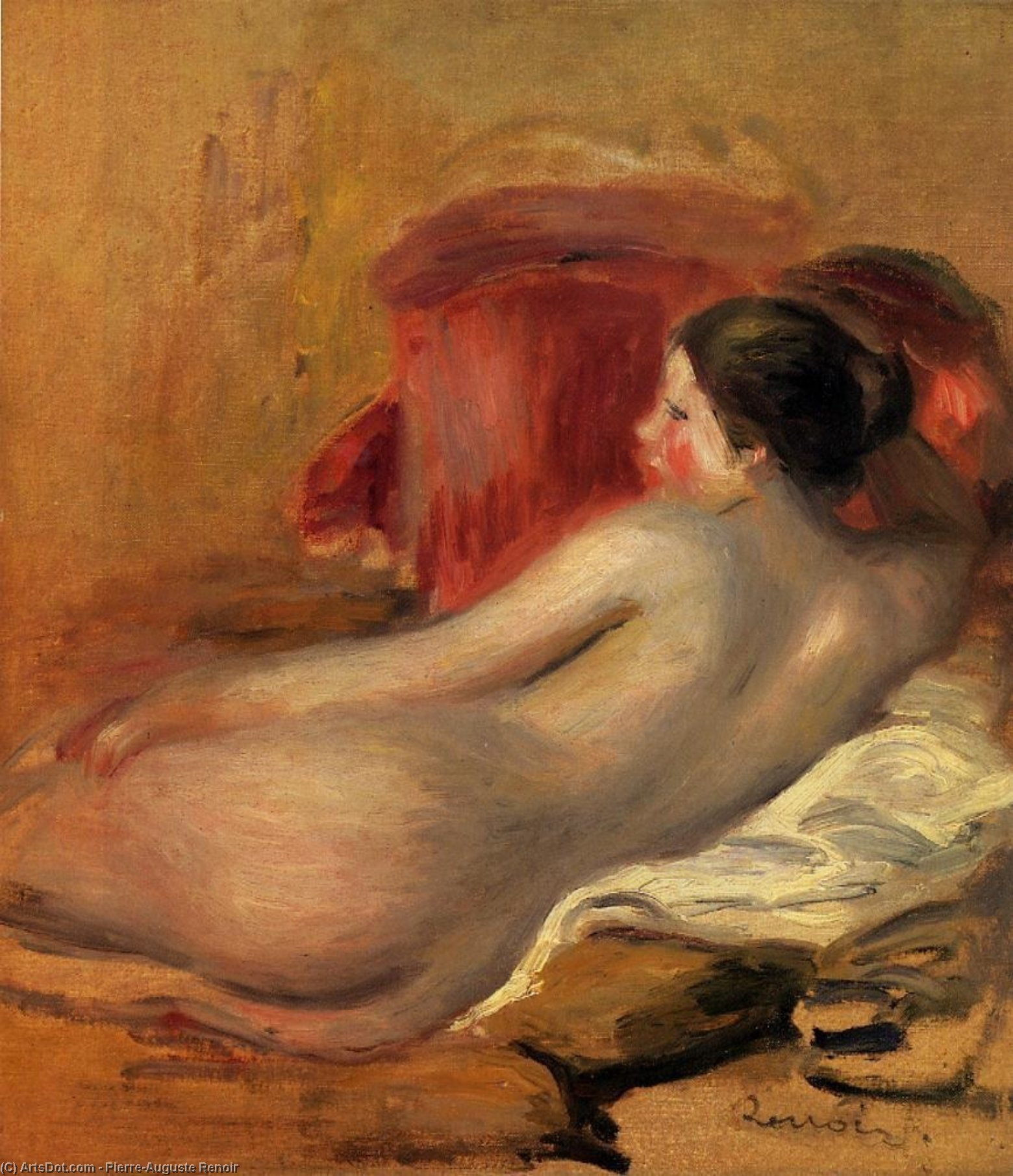
Pierre-Auguste Renoir’s “Reclining Model,” painted in 1906, stands as a quintessential embodiment of Impressionism—a movement dedicated to capturing fleeting moments of light and color rather than striving for photographic realism. More than just a depiction of a nude woman resting on a sofa, this artwork delves into the psychological landscape of repose and sensual pleasure, reflecting Renoir’s profound fascination with human emotion and beauty. Available for viewing at /en/art/show/art-8ewq78-en/ the painting invites contemplation on themes of comfort, intimacy, and artistic perception.
Composition and Elements: Harmony in Color and Form
The artist skillfully orchestrates a visual narrative centered around a nude woman gracefully positioned on her side against a backdrop of a vibrant red couch. Two chairs strategically placed—one to the left and another to the right—further contribute to the balanced composition, creating an environment that exudes serenity. Notably, a handbag rests upon the floor beside the reclining figure, adding subtle detail that hints at narrative depth. Renoir’s meticulous attention to light and texture is evident throughout; soft brushstrokes illuminate the woman's skin and drapery, capturing the diffused glow of natural illumination—a hallmark of Impressionist technique. The red couch serves as a focal point, injecting warmth and visual interest into the scene without disrupting its overall tranquility.
Artistic Style: Impressionism’s Delicate Dance with Light
Renoir’s stylistic approach aligns perfectly with the core tenets of Impressionism. Rejecting academic conventions favoring precise delineation, he prioritized capturing the ephemeral qualities of light and atmosphere—a conscious departure from traditional artistic pursuits. The brushstrokes are loose and blended, creating an illusion of shimmering surface texture rather than solid form. This technique allows Renoir to convey not only visual appearance but also emotional resonance; the painting’s luminous palette evokes feelings of peace and contentment. Comparing “Reclining Model” with Koide's "Narashige Koide's Reclining Nude" reveals a similar focus on capturing sensual beauty, albeit through a distinctly different stylistic lens—Koide employs bolder colors and more angular compositions to achieve a comparable expressive effect.
Historical Context: The Belle Époque and Artistic Exploration
Painted during the Belle Époque (roughly 1871-1914), “Reclining Model” reflects the cultural optimism and artistic experimentation characteristic of the era. Impressionism emerged as a reaction against academic art’s rigid formalism, championing instead subjective experience and capturing the immediacy of sensory perception. Renoir's work aligns with broader trends in French painting—a celebration of femininity and leisure—that mirrored societal shifts toward greater freedom and pleasure. The painting serves as a testament to Renoir’s artistic vision and his ability to translate emotional nuance into visual splendor, cementing his legacy as one of the most influential figures in Impressionist art history.
Symbolism: Comfort, Sensuality, and Artistic Reflection
Beyond its aesthetic beauty, “Reclining Model” carries symbolic weight—representing a retreat from worldly concerns into a realm of quiet contemplation and sensual indulgence. The woman’s posture conveys vulnerability yet also grace, embodying the ideal of feminine repose. The red couch symbolizes passion and warmth, contrasting with the coolness of the surrounding space. Ultimately, Renoir invites viewers to consider not merely what is seen but how it feels—a profound engagement with artistic expression that transcends mere visual representation. For those seeking inspiration or exploring exceptional art reproductions, visit https://ArtsDot.com/.