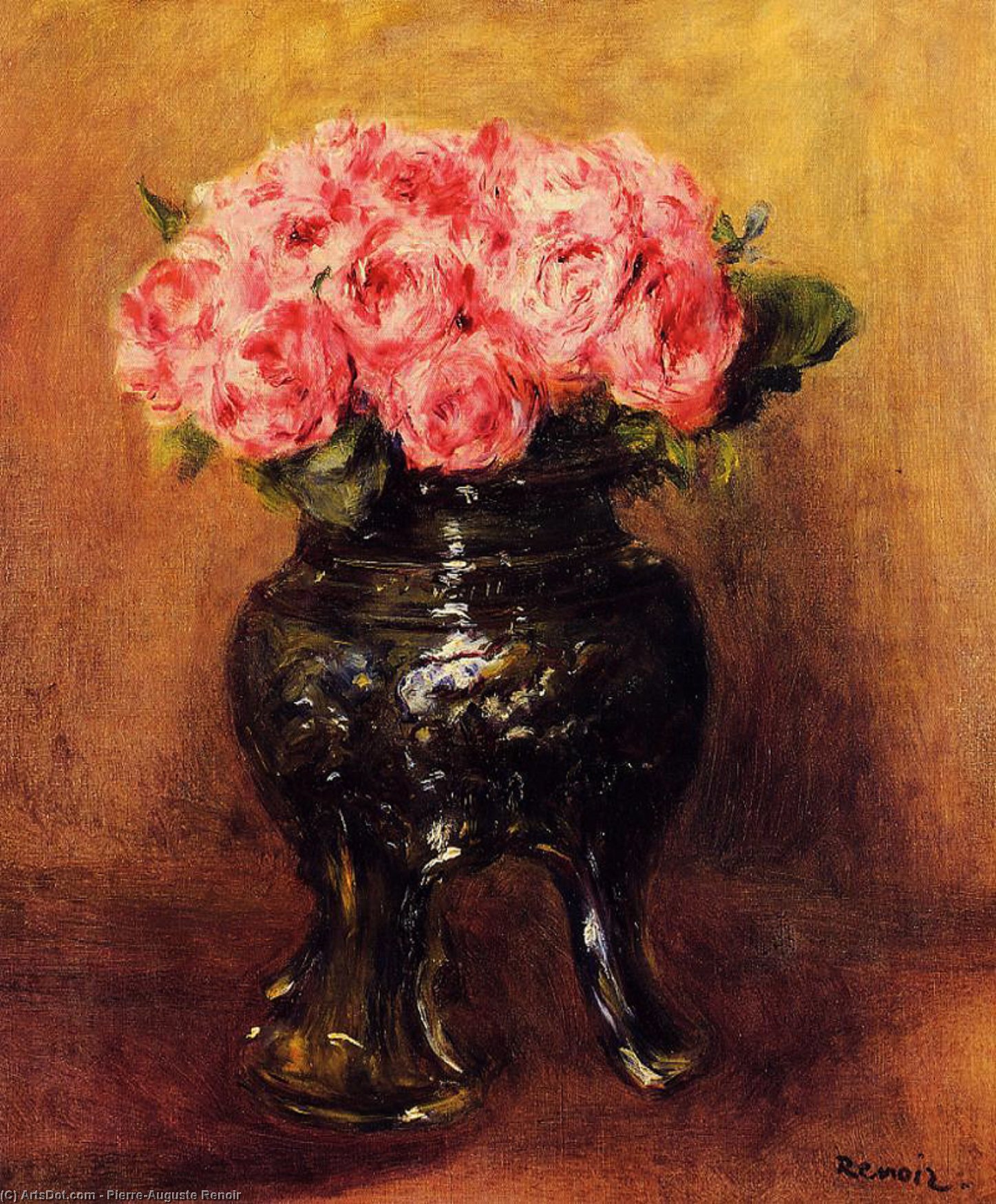
Roses in a China Vase: A Symphony of Light and Color
Pierre-Auguste Renoir’s “Roses in a China Vase,” painted in 1876, stands as an emblem of Impressionism—a movement that sought to capture fleeting moments of beauty and emotion rather than striving for photographic realism. More than just a depiction of flowers arranged in porcelain, this artwork embodies Renoir's masterful command of light, color, and brushstroke, reflecting the spirit of Japonisme and cementing his legacy as one of the most beloved artists of his era.
- Style & Technique: Renoir’s Impressionist style is immediately recognizable through delicate, loose brushstrokes that blend seamlessly together. The artist skillfully utilizes a muted palette—primarily pinks and creams—to create an atmosphere of serenity and tranquility. Notice how the light dances across the petals and vase surface, conveying a sense of immediacy and capturing the ephemeral quality characteristic of Impressionism.
- Historical Context: Created during the late 1860s and early 1870s, “Roses in a China Vase” emerged from a burgeoning artistic rebellion against academic conventions. Artists like Renoir rejected traditional methods of representation, prioritizing subjective experience and capturing the sensory impressions of the natural world. This painting exemplifies the movement’s fascination with everyday subjects rendered with vibrant color and luminous light—a deliberate departure from the grand narratives favored by earlier generations.
- Influence of Japonisme: The aesthetic sensibilities of Impressionists were profoundly impacted by Japonisme, a trend that celebrated Japanese art and design. Renoir's choice of black vase – reminiscent of Japanese ceramics – reflects this influence, emphasizing asymmetry and bold color contrasts. These stylistic elements signaled a willingness to embrace new artistic horizons and challenge established norms.
- Symbolism & Emotional Impact: Beyond its visual beauty, “Roses in a China Vase” carries symbolic weight. Roses are universally associated with love, passion, and remembrance—themes frequently explored by Impressionist artists. The vase itself serves as a container for these emotions, emphasizing the delicacy and fragility of human experience. Renoir’s ability to evoke feelings of peace and contemplation underscores the profound power of art to transcend mere visual representation.
- Legacy: “Roses in a China Vase” is considered a cornerstone of Impressionism, influencing artists like Claude Monet who similarly pursued capturing natural light and color. Its enduring appeal testifies to Renoir’s genius—a testament to his innovative techniques and subjects that continue to inspire admiration and contemplation centuries later.