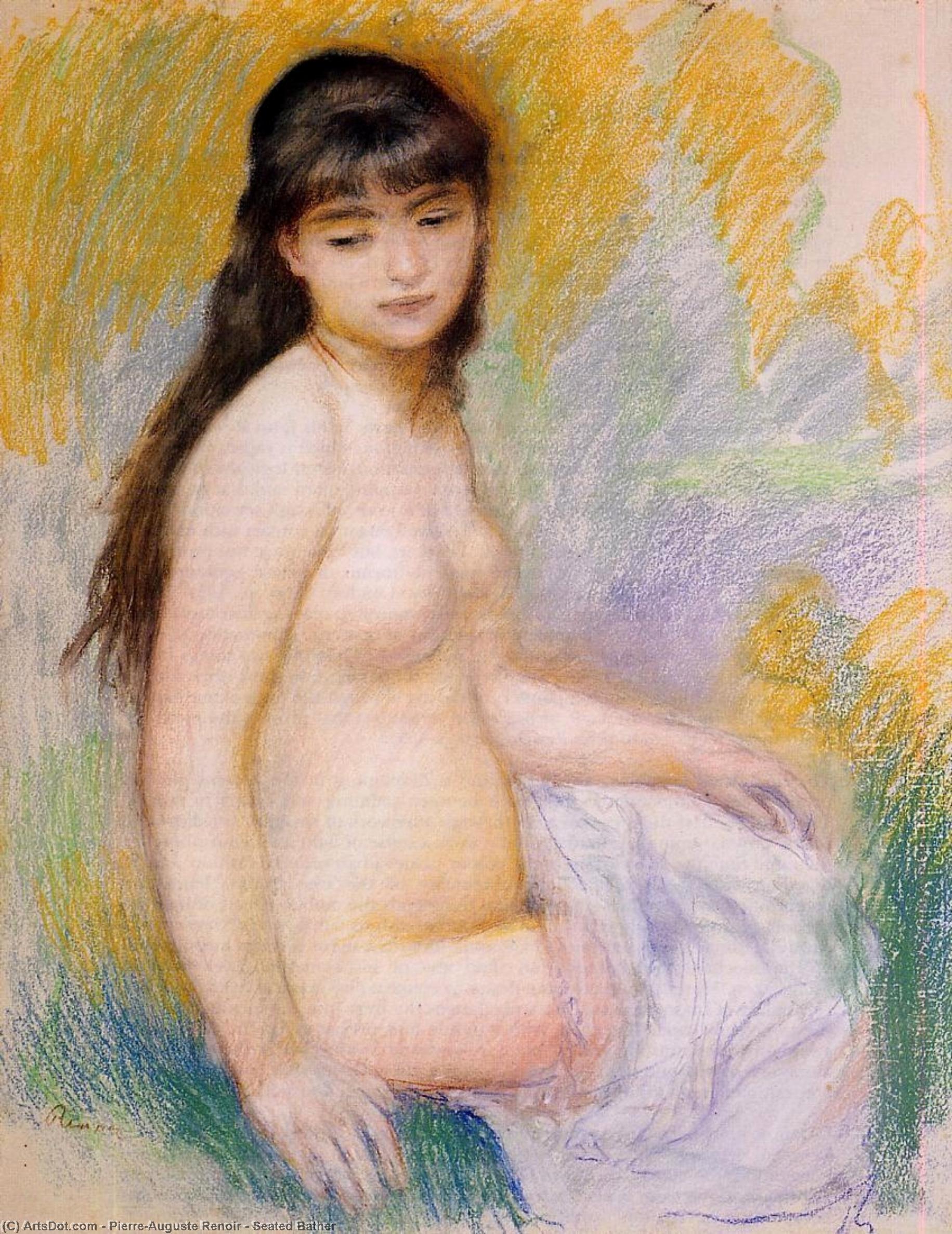
Seated Bather: A Study in Tranquility and Impressionistic Light
Pierre-Auguste Renoir's Seated Bather, painted in 1913, is a captivating example of his mature Impressionist style. Measuring 81 x 65 cm, this oil on canvas painting embodies Renoir’s lifelong fascination with the female form and his masterful ability to capture fleeting moments of beauty and serenity through light and color.
Composition and Subject Matter
The painting depicts a woman seated gracefully on the grass. While appearing nude, she is modestly covered by a sheet draped around her body. Her hair is neatly pulled back in a ponytail, drawing attention to her calm and direct gaze towards the viewer. The composition is deliberately simple, focusing entirely on the figure and its immediate surroundings. This simplicity allows Renoir to explore the nuances of light and shadow across the woman's skin and the surrounding foliage. The setting appears naturalistic, suggesting an outdoor scene bathed in soft sunlight.
Impressionistic Technique: Light, Color, and Brushwork
Seated Bather is a prime demonstration of Renoir’s Impressionist techniques. He employs short, broken brushstrokes to create a sense of movement and immediacy. The vibrant colors – predominantly greens, yellows, and flesh tones – are applied in layers, allowing light to play across the surface of the canvas. Renoir's use of color isn't about precise representation; instead, it’s about conveying the *impression* of light and atmosphere. Notice how he doesn't blend colors smoothly but allows them to remain distinct, creating a shimmering effect that brings the scene to life. The visible brushstrokes contribute significantly to the painting's texture and depth, preventing it from appearing flat or static.
Historical Context and Renoir’s Artistic Evolution
Painted towards the end of Renoir’s career, Seated Bather reflects a shift in his artistic style. While firmly rooted in Impressionism, there's a subtle move toward a more classical sensibility. The late Impressionist period saw artists experimenting with form and structure, anticipating developments in Cubism and other avant-garde movements. Renoir, however, retained his focus on beauty and sensuality, albeit with a greater emphasis on drawing and composition than in his earlier works. The painting can be seen as a bridge between the fleeting impressions of his youth and a more considered approach to form and structure.
Emotional Impact and Enduring Appeal
Seated Bather evokes a sense of tranquility, intimacy, and quiet contemplation. The woman’s calm gaze invites the viewer into her world, creating a moment of shared serenity. The painting's beauty lies not only in its technical mastery but also in its ability to convey a profound emotional resonance. It is a testament to Renoir’s enduring legacy as one of the most beloved and influential artists of the Impressionist era.