A Glimpse into the Soul: Renoir’s 1910 Self-Portrait
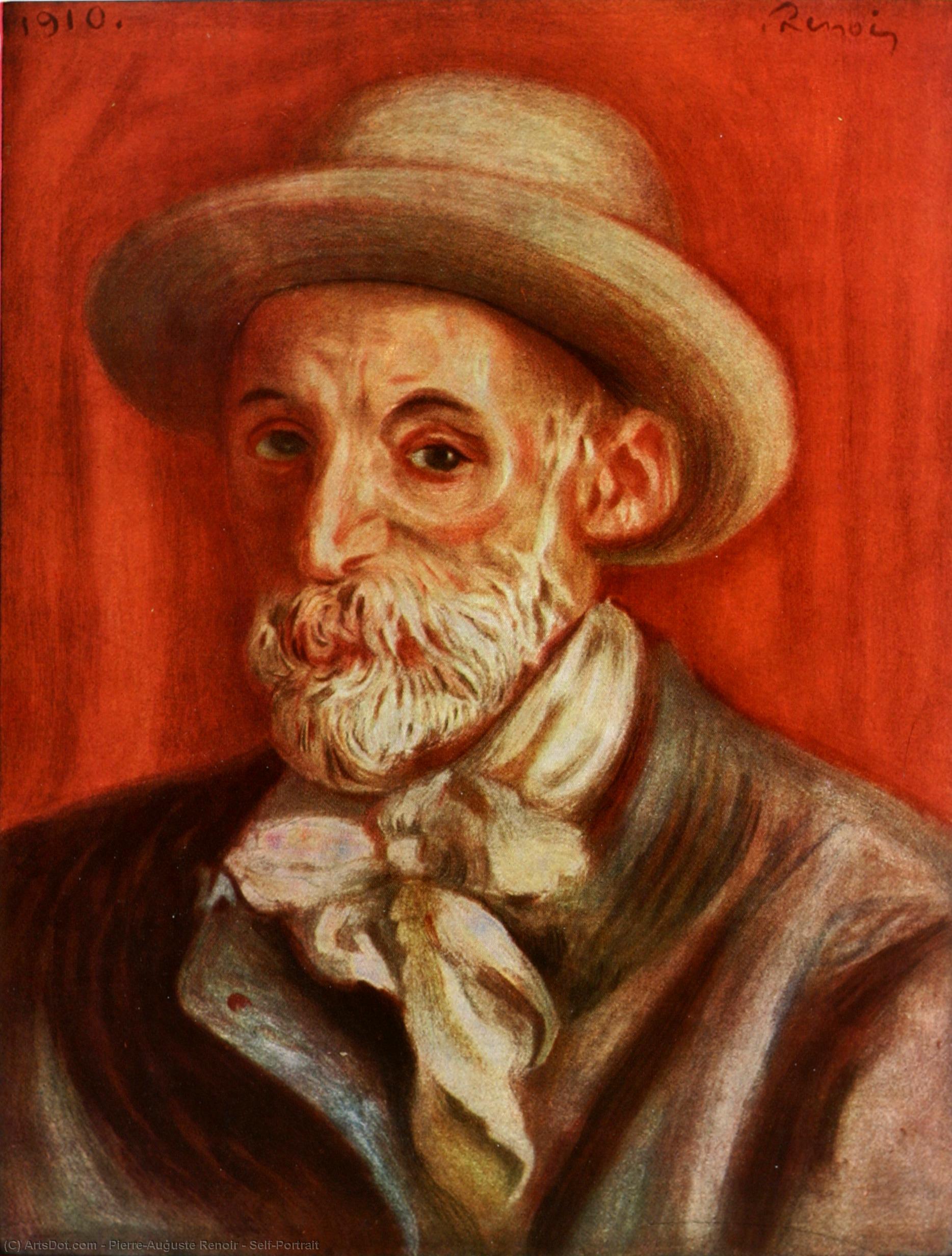
Pierre-Auguste Renoir's 1910 self-portrait is more than just a likeness; it’s a poignant meditation on time, artistry, and the enduring spirit of an aging master. Painted at the venerable age of sixty-nine, this oil-on-canvas work offers a rare and intimate window into the mind of one of Impressionism's most beloved figures. It transcends the simple act of portraiture, becoming a deeply personal statement rendered in the vibrant hues and expressive brushstrokes that define Renoir’s signature style.

The painting immediately draws the eye with its central figure – a distinguished gentleman, framed by a broad-brimmed hat that lends an air of quiet elegance to his appearance. His gaze is direct, almost challenging, inviting the viewer into a silent dialogue—a conversation across time and space. Renoir masterfully employs light and shadow, sculpting his features with subtle gradations of tone, revealing the delicate lines etched by age while simultaneously capturing the warmth and vitality that remained within him. The reddish tones of the background, a deliberate choice by the artist, create a harmonious counterpoint to the flesh hues of his face, adding depth and richness to the composition.
Impressionist Techniques: A Dance with Light
Renoir’s technique in this self-portrait is a testament to his mastery of Impressionism. Loose, expressive brushstrokes dominate the canvas, creating a sense of immediacy and movement—as if capturing a fleeting moment in time. These aren't carefully blended or smoothed; instead, they retain their individual character, contributing to the painting’s overall dynamism. He utilizes what is known as ‘planes of color,’ building up complex fields of hue through small, distinct brushstrokes. This technique isn’t merely decorative; it’s a fundamental principle of Impressionism—a deliberate attempt to capture the ephemeral effects of light and atmosphere. The interplay between these planes creates a subtle shimmer and depth, inviting the viewer to linger and examine the details.
A Reflection of an Era: Context and Legacy
This self-portrait is particularly significant within Renoir’s oeuvre, representing one of his final works in this genre. It offers a poignant glimpse into the artist's contemplative nature as he approached the later stages of his life. Renoir was deeply influenced by the artistic currents of his time, and his work reflects a continued exploration of Impressionist techniques while simultaneously retaining a distinctly personal voice. His innovative approach to color and light paved the way for subsequent movements like Fauvism and Cubism, demonstrating his profound influence on modern art. As Picasso famously remarked, Cézanne “is the father of us all,” acknowledging Renoir’s pivotal role in shaping the trajectory of 20th-century painting.
The Enduring Appeal: A Portrait of a Master
Renoir's 1910 self-portrait is more than just a beautiful image; it’s a powerful testament to the artist’s enduring legacy. It embodies his ability to capture not only the outward appearance but also the inner spirit of his subjects—in this case, himself. The painting invites us to contemplate the passage of time, the beauty of aging, and the profound connection between an artist and their work. It remains a captivating example of Impressionism at its finest, offering a rare and intimate glimpse into the soul of one of art history’s most beloved figures. Reproductions of this piece offer a wonderful opportunity to bring this evocative artwork into your home or office, adding a touch of timeless elegance and artistic inspiration.